Family TV Series - Page 272

Creepy Crawlies
1987
Creepy Crawlies
1987
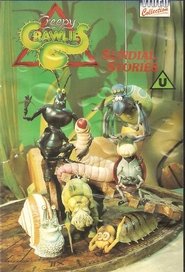
star 8.5Creepy Crawlies was a stop motion animation series created by Cosgrove Hall. The series consisted of 52 ten-minute episodes, which were broadcast on Children's ITV between 1987 and 1989. All episodes were written by Peter Reeves and directed by Franc Vose and Brian Little; narration and character voices were provided by Paul Nicholas. The series was based upon the daily goings-on of a group of common invertebrate creatures that lived at the bottom of a garden around an old sundial. And so another bright new day dawns upon the home of the Creepy Crawlies, Mr Harrison the snooty snail, Suppose the lowly red-nosed worm, Ariadne the spider, the irksome woodlouse-come-pill-bug called Anorak, meek Ladybird, Lambeth the brawny-but-brainless beetle and Ancient the aged caterpillar dwell right down at the bottom of the garden, near the shed, on and around an old broken sundial. Classic Cosgrove Hall stop-motion animation.In the Strand of Zayandeh Rud
2010
star 9A young football player named Mehran Sarang is going to Isfahan to sign a contract with an Isfahanian club (F.C.) and inadvertently kills a young Isfahan named Masoud Mosayeb, a cultural activist, in an accident. The story continues in this incident that...O Pequeno Alquimista
2004
O Pequeno Alquimista
2004
The film tells the story of João, a young man destined to become a great alchemist, but who prefers to play and invent new things.Mannequin
2019
Mannequin
2019
star 4.2They have always had great and beautiful love, great and dreadful enemies, the lover and the beloved have to face many sufferings for the sake of their poetic love…Bear Behaving Badly
2007
Bear Behaving Badly
2007
star 6.5Life at Barney's apartment would be fairly normal were it not for the talking koala, Crazy Keith, who lives under his floorboards and his flatmate, Nev the bear, who regularly aggravates the caretaker of the block; the allergy ridden and very grouchy Mr Angry Pants.Yalaza
2017
Comme par magie
2009
Comme par magie
2009
Love Me Licia
1986
Love Me Licia
1986
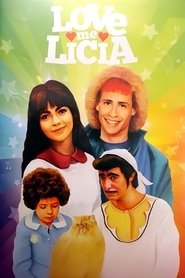
star 5Love me Licia is an Italian television series. It is one of the four live adpatiations of the Japanese manga Ai Shite Knight. Its sequels are "Licia dolce Licia," "Teneramente Licia," and "Balliamo e cantiamo con Licia".Having Many Children
2024
Having Many Children
2024
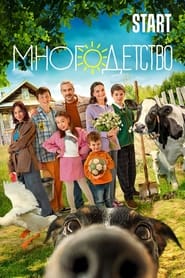
star 8The Gerasimov family is big and friendly. Pavel is an architect, father of five children, and dreams of a sixth. The only thing that hinders happiness is the cramped Moscow apartment where the characters live. Inspired by this pain, Pavel is developing a residential complex for large families. Developer Lev Borisovich likes the idea of the Ark residential complex, but only as a way to draw attention to the project. This puts Pavel in a difficult dilemma: to increase his living space by deceiving poor people like him, or to go into conflict with a very serious person. The family realizes that they are not capable of dealing with conscience, sells the apartment and leaves the city. They settle in the old house where Pavel's ancestors lived, and decide to build their own "Ark" with their own hands. This choice turns the family's life into a real adventure, revealing to them the power of a large, close-knit family and each of its members individually.Straty a nálezy
1974
Straty a nálezy
1974
Dodge's Pup School
2024
Dodge's Pup School
2024
Join Dodge at Pup School, a place full of mishaps and mayhem! Watch as Dodge and his pup pals turn school days into adventures with singing, silliness and occasional squeaky toys.PJ Masks: Music Videos
2016
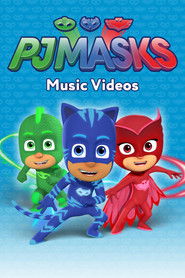
star 8.9When the city sleeps, Connor, Amaya and Greg’s pajamas magically transform and the kids become superheroes – here comes Catboy, Owlette and Gekko! Watch out nighttime baddies – the PJ Masks are on their way, into the night to save the day!Déjate querer
2022
Furever Yours
2024
Furever Yours
2024
Please Be Married
2021
Please Be Married
2021
star 7.5Ye Xiang Ge is a trainee under Linshan Entertainment. Before she made her official debut, she was caught up in a big scandal planned by her own good friend and her company decided to terminate the contract. After being jobless, Ye Xiang Ge met the cold-hearted CEO of Su Group, Su Mu Chen to be an intern at his company. Then something incredible happened, a 5-year-old boy named Su Zian comes to Ye Xiang Ge and says he is her son from the future. Then, Su Zian also said that his father was Su Mu Chen and Ye Xiang Ge was shocked. After Su Mu Chen knew about this, he has no choice but to live with them. In the process, Ye Xiang Ge and Su Mu Chen slowly fell in love with each other.Reunión de Superados
2025
Nanairo no Suisou
2021
Nanairo no Suisou
2021
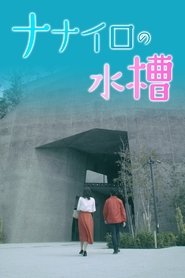
star 9The theatrical aquarium "átoa" that opened in Kobe is a new bayside landmark that offers new discoveries and impressions through exhibits that fuse art and aquarium. It is a new landmark in the bayside area of Kobe. A mini drama about a fish-viewing manual for modern people, set in an aquarium where you can be soothed by colorful creatures.Sofia the First: Magical Friends
2026
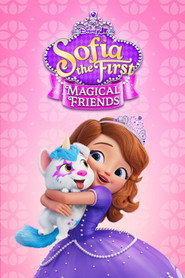
star 3Welcome to the Charmswell School for Royal Magic! Spend time with Sofia and her Royal Friends, where she takes you on a sparkling tour of her brand-new royal school, where every castle shines with its own special kind of magic. Along the way, she'll introduce you to her old and new friends - Pepper, Clover, Layla, Zane, and Camila - each with amazing talents and magical gifts of their own. With Sofia as your guide, there's no better way to discover the magic of Charmswell!Curiosity Shop
1971
Curiosity Shop
1971
star 9Curiosity Shop is an American children's educational television program produced by ABC-TV in 1971, capitalizing on the success of Sesame Street. Sponsored by the Kellogg's cereal company, Curiosity Shop was broadcast Saturday mornings from September 11, 1971, to January 6, 1973. The program featured three inquisitive children who each week visited a shop populated with various puppets and gadgets, discovering interesting things about science, nature and history. Each hour-long show covered a specific theme: clothing, music, dance, weather, the five senses, space, time, rules, flight, dolls, etc.