Family TV Series - Page 304

Sunday, Half Past Six
1988
star 8Young lawyer Sergei Krasheninnikov is assigned to a case involving the death of a young woman. As he questions people who saw her on the day she died, Sergei begins to realize that there is much more to the story than meets the eye.Palavras Cruzadas
1987
Panchatantram
2018
Panchatantram
2018
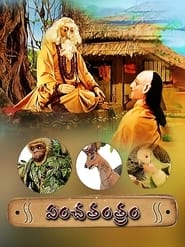
The Panchatantram is an ancient Indian collection of interrelated animal fables in Sanskrit verse and prose, arranged within a frame story. The surviving work is dated to about 200 BCE, but the fables are likely much more ancient. The text's author is unknown, but it has been attributed to Vishnu Sharma in some recensions and Vasubhaga in others, both of which may be fictitious pen names. This has made in to a show by ETV Telugu.Lucas etc
2017
No Escape, Let's Fight!
2013
Tin is the third child of a family of seven people. The family is poor and lives in a small wooden house in an austere neighborhood of Bangkok. The father, Den, used to be a construction worker, but he had an accident that prevented him from working and was fired, which led him to resort to alcohol because of his unhappiness. Thus, the family depends on the mother, who is a seller of rice and curry. Tin's life, worried about passing his university entrance exams, will revolve around that of his relatives, causing many problems.Sonny Soufflé chok show
1987
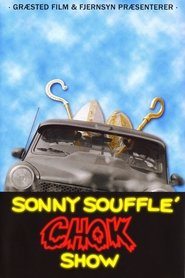
star 8Including the TV drama Tannhuser, in which Reinhardt and his son Kurt try to save their auto repair shop and gas station from Ilse von Tannhaser and her henchmen. Also featuring Bdr. Bisp, Godnathistorier, and much more.The Sebastian Show
2022
The Sebastian Show
2022
star 5.5Join Sebastian and his friends on a wacky adventure of silliness and chicanery.The Secret City
1985
The Secret City
1985
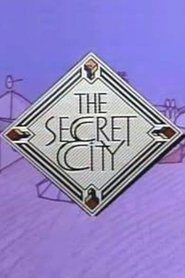
star 6The Secret City was a television program designed to teach children how to draw, starring Mark Kistler as as the fictional ‘Commander Mark’ who led viewers and in-studio club members through various drawing exercises in a sci-fi clubhouse setting full of fun, fantasy, and adventure. While the show’s format essentially prioritizes instruction over narrative, ongoing ‘drama’ is created by the frequent addition of new key features to the emerging scenery of the giant Secret City mural. Often Special Guests would appear on the show to demonstrate other art forms or practical applications for drawing skills. The show was created by John Price & Mark Kistler, based on Bruce McIntyre's AVDP. Much of the series was edited live in-camera and was shot in a somewhat semi-scripted format. It was produced at Maryland Public Television through private funding by Children's Video Associates, and intended for broadcast via national PBS syndication. It also aired on TVOntario.Feuerbohne e.V.
1988
Our Summer ~River Side Family~
2021
star 9In the summer of 2021, Otsu Akari returns home to Hirose Yana, surrounded by lush mountains and pure flowing water. The reason she returned home was to report an exciting job offer she had received. However, while reporting it, she is informed that the job offer has been cancelled due to the company going bankrupt. Akari is even more shocked when she discovers that her beloved grandmother Saeko is suffering from dementia. After a long absence, Akari's life at home with her family starts again...De Man Met De Hamer
2013
De Man Met De Hamer
2013
Aile İşi
2016
Aile İşi
2016
Child's Slave
2013
Child's Slave
2013
Clandestine Summer
1969
Clandestine Summer
1969
star 7.5Summer vacation. But Lars remain in town for his parents must work. One day as he bikes around, he hears a scream from a garden.Sint en Co
2016
Sint en Co
2016
Sint en Co is the Sinterklaas series of RTL Telekids. This series is all about adventure, humor, excitement, gingerbread and fun. In this series we follow Sinterklaas and the Piets in the run-up to Christmas Eve.Hengaillaan
2023
Hengaillaan
2023
star 7Hengaillaan is a Saturday night entertainment programme that combines quizzes, live music and taste tourism. Hosted by Jenni Poikelus and judged by Riku Rantala. Celebrity contestants will be taken on a journey to destinations in Finland, Europe and the world to test their knowledge in a series of changing questions. The topics include everything from contemporary entertainment to history, music, sport and geography. Master chef Kozeen Shiwan will put the teams' taste buds to the test with food questions inspired by the destinations. An intermittent live band will bring its own rhythm to the tracks.Dr. Seuss Beginner Book Video
2002
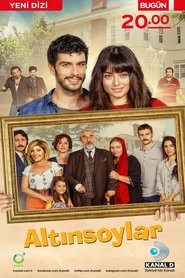
star 8Dr. Seuss Beginner Book Video is a 30-40 minute video series where the creators from Random House started a project by bringing Dr. Seuss' books to a video premiering series. The Dr. Seuss books are used as being on screen by computer animation and characters of the pages are moving at some point as the story from the book is being narrated.Altınsoylar
2016
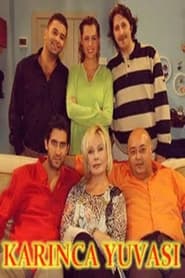
Karınca Yuvası
2006
Karınca Yuvası
2006