Family TV Series - Page 489

Chambard
1993
Chambard
1993
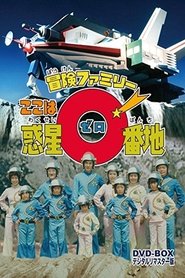
Adventure Family: Here is Planet 0
1977
Adventure Family: Here is Planet 0 is a 1977 family tokusatsu produced by Toei.The Incredible Adventures of Professor Branestawm
2014
star 5Eccentric inventor Professor Branestawm fights the forces of evil in this comedy adventure film, based on Norman Hunter's iconic children's books. Armed with a multitude of crazy inventions, and alongside his eccentric allies Colonel Dedshott, Mrs Flittersnoop and young apprentice Connie, Branestawm, the original mad professor, takes on scheming businessman Mr Bullimore and officious local councillor Harold Haggerstone, to try and stop their plans to bulldoze his workshop to make way for a giant munitions factory, right in the middle of town.Mann Ki Awaaz Pratigya 2
2021
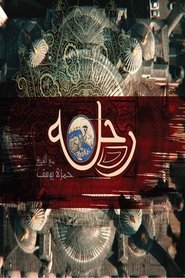
Nine years later, Pratigya finds herself conflicted between her duty as a public prosecutor and her emotions as a mother Which side will side will she choose?Rihla with Shaykh Hamza Yusuf
2016
Rihla, means "Journey" in Arabic. It followed US Islamic scholar Hamza Yusuf Hanson as he travelled around the globe. Mr Hanson, known as Sheikh Hamza, and presenter Eissa Bougary met the public and scholars in places from Cambridge in the UK to San Francisco in the US and Istanbul in Turkey.Clips
0000
Clips
0000
star 10Clips is a Canadian game show that aired on YTV from 1993 to 1996 and produced by The Robert Essery Organization, as was the case for its sister show, Video & Arcade Top 10, which also aired on YTV at the time. Clips was hosted by future CMT host Paul McGuire and was joined by co-hosts such as Krista Herman, Sarah Freudeman, Liza Fromer, Shaun Majumder, Andrea Menzies, Rob Pagetto, and others, many of whom worked on V&A Top 10. Just like V&A, Clips was taped before a live studio audience in Toronto, Ontario.Run the Risk
0000
Run the Risk
0000
Run the Risk was a BBC1 children's show, which aired from the latter half of 1992 until the beginning of 1998. It was aired on Saturday mornings during Going Live, and later Live & Kicking, and was later repeated as its own individual show. It was presented by Peter Simon for the entire run alongside Shane Richie, John Eccleston and Bobby Davro, for part of the run. The games the teams had to do involved gunge and were similar to those performed on It's a Knockout. Run the Risk borrowed much from its predecessor, Double Dare, which was also hosted by Peter Simon. The sections between the games were written by Paul Duddridge.King Koopa's Kool Kartoons
0000
King Koopa's Kool Kartoons was a local, American live-action children's television show broadcast in Southern California during the holiday season of 1989-'90. Produced by DIC Entertainment and in association with Nintendo, the show starred King Koopa, the central arch-villain from the Mario video game series. The 30-minute program was originally broadcast during late afternoon time slots on Los Angeles-based KTTV Fox 11. It was a spin-off to The Super Mario Bros. Super Show!4남매쇼
2018
4남매쇼
2018
3-2-1 Contact Extra
1989
3-2-1 Contact Extra
1989
3-2-1 Contact Extra is a collection of documentary‑style specials produced by the Children’s Television Workshop as an extension of the science series 3‑2‑1 Contact. Aired between 1989 and 1992, the specials were designed for older children and teenagers, tackling real‑world issues through science, personal stories, and expert insight. Each episode focused on a single topic—ranging from public health and environmental challenges to adolescence and social pressures—using interviews, on‑location reporting, and first‑person narratives. The series aimed to help young viewers understand complex subjects with clarity, honesty, and practical relevance.Green Screen Adventures
0000
Green Screen Adventures is a children's television series which premiered in 2007. The series was originally produced for local broadcast on WCIU-TV in Chicago, which is the flagship station of Weigel Broadcasting, and is designed to fit the FCC's educational and information programming requirements while also being produced locally in Chicago. However the program now also airs nationally on the This TV and Me-TV digital subchannel networks. Green Screen Adventures features stories and drawings by students in second through eighth grade using sketch comedy, story theatre, game shows, original songs, puppetry and more. Since their debut in 2007, they have featured stories written by almost 1,000 elementary school students. The show is set around the submissions of short stories, school reports, poetry, essays, basic academic questions and artwork from students in the Chicago Public Schools and other schools in the Chicago area between second and eighth grades. A parent or guardian then signs a standard release forGoucha
2021
Goucha
2021
말괄량이 삐삐 For EBS
2020
말괄량이 삐삐 For EBS
2020