Action Adventure TV Series - Page 265

Mobile Suit Gundam SEED C.E. 73: Stargazer
2006
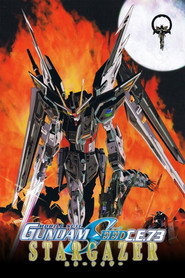
star 7.2Mobile Suit Gundam SEED C.E.73 -STARGAZER- is a side story to the anime TV series, Mobile Suit Gundam SEED Destiny. As of July 2006, it is being streamed on Bandai Channel as an original net animation. The show is directed by Susumu Nishizawa and written by Shigeru Morita, both staff members of Gundam SEED Destiny. The series consists of three episodes, each running at 15-minutes long. The web broadcast began in July 2006, with a new episode showing monthly. A DVD containing all three episodes as well as the two 5-minute long Mobile Suit Gundam SEED Astray animated shorts was released on November 24, 2006. This DVD also contained a different ending for Stage 3 in which several scenes after the Phantom Pain attack are shown. A manga adaptation of the series has been released in 2007. Authored by Naoki Moriya, it features an epilogue reveals the previously uncertain fate of Selene and Sven as they are shown to be alive and mostly unharmed from their ordeal. Sven joins the DSSD.Caged
2019
Caged
2019
star 7Sergey «Fidget» Yevdokimov returns home after serving 8 years in prison. Here, he has an autistic brother, an alcoholic mother, an ex-wife with a kid, and double crossing friends. While in prison, Sergey was a UFC fighter, but he wants to start over. His father returns at the same time, while actually fleeing from prosecution. Aleksandr «Doc» Yevdokimov is a former UFC champion who’s now a fitness instructor. Doc enters the world of UFC again to win and make money, but this time, with the help of his prot?g?s. He brings his mistress Vera along. Sergey has no desire to patch things up with his father and especially with his lover, but Doc convinces him to join the team and participate in underground fights.Terrahawks
1983
Terrahawks
1983
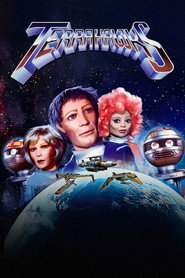
star 5.8Gerry Anderson & Christopher Burr's Terrahawks, simply referred to as Terrahawks, was a 1980s British science fiction television series produced by Anderson Burr Pictures and created by the production team of Gerry Anderson and Christopher Burr. The show was Anderson's first in over a decade to utilize puppets for its characters, and also his last. Anderson's previous puppet-laden TV series included Thunderbirds and Captain Scarlet and the Mysterons. Set in the year 2020, the series followed the adventures of the Terrahawks, a taskforce responsible for protecting Earth from invasion by a group of extraterrestrial androids and aliens led by Zelda. Like Anderson's previous puppet series, futuristic vehicles and technology featured prominently in each episode.Kaiketsu Zubat
1977
Kaiketsu Zubat
1977
star 7.4Kaiketsu Zubat, translated as Extraordinary Zubat or Magnificent Zubat, was a tokusatsu superhero series that aired in 1977. Created by Shotaro Ishinomori, this 32-episode series, harkens back to tokusatsu superhero shows of the 1950s, but with a late-1970s twist.Rough Riders
1997
Rough Riders
1997
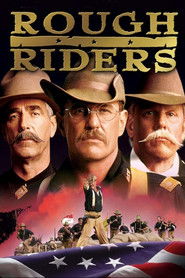
star 6.2Explores the journey of the cavalry group led by Theodore Roosevelt in a charge up San Juan Hill during the Spanish-American War.Legacy of the Storm
2025
Legacy of the Storm
2025
Set in the early Ming Dynasty, martial arts factions battle to claim the Four Sacred Artifacts. Hero Gao Lingfeng, while uncovering the truth about his past and a city's destruction, teams up with Sun Chenxi. Together, they thwart a conspiracy, recover one of the artifacts, and take on the mission to find the remaining ones to protect the world.Spring and Autumn
2020
Spring and Autumn
2020
star 7Ye Chen, who is an ancient god, has fallen from the world of the gods to the world of the blue world. Here, hundreds of thousands of countries are standing, and the heroes are fighting for hegemony. Ye Chen has been in this pale blue world for hundreds of years and has established a huge force. In Baizhou Qianguo, the existence of Ye Chen has always been a legend. But the power from the world of the gods slowly extended to the blue world, and a cruel dragon battle is about to begin. In the capital city of Nanzhou, the first battle of Tianbei State, Hong Xu and the Wulong two men of Nanzhou Shuangyuemen Gate competed outside the Huashen Palace, but they were defeated in the hands of Su Xiaoxiao, the group leader of the Huashen Palace. The Northern Army emerged in the eastern part of southern South China and wanted to break South. The defender will disregard the safety of the people of Nanzhou and the hurricane, and intends to open the city gate to surrender.Go Astro Boy Go!
2019
Go Astro Boy Go!
2019
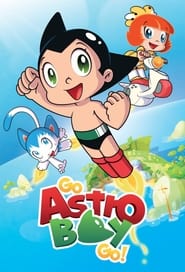
star 6A high-flying robot boy with superpowers gets ready to blast off into new adventures alongside Suzu and Astro Kitty to save the Earth from destruction.QP
2011
QP
2011
The main character of the manga was Ishida Kotori, also known as "QP", the most powerful gangster in his area. The drama will shift its focus onto Azuma Ryo, Kotori's close friend, who has some hidden ambitions.Kekko Kamen
1991
Kekko Kamen
1991
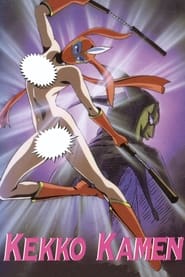
star 5.1No, that's not a skin-tight pink costume - it's her skin! She's Kekko Kamen, the dynamic denuded damsel who fights injustice in the altogether. Her mission? To expose rampant classroom corruption at the Big Toenail of Satan's Spartan Institute of Higher Education - all while repeatedly rescuing everyone's favorite victim, the beautiful (and often naked) Mayumi Takahashi, from the Institute's terrifying torture chamber!Here's Boomer
1981
Here's Boomer
1981
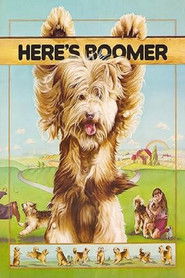
star 6.2Here's Boomer is an American adventure/drama series produced by Paramount that premiered on the NBC network on March 14, 1980. A television movie called A Christmas for Boomer aired on December 6, 1979 and served as the pilot. The show follows the adventures of the titular stray dog, "Boomer" and ran for two seasons, ending its run in August 1982, with the final original episode, "Flatfoots," airing on July 3 of that year.The Village
2023
The Village
2023
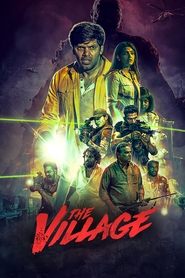
star 5In the desolate hinterlands of Tamil Nadu, a stranded urbanite enlists the help of three locals to find his missing family believed to have been abducted by nefarious beings of a cursed village. Meanwhile, a maniacal heir to a pharma empire sends a group of mercenaries to the same village to retrieve something long forgotten. Will they come out of this terror-stricken night alive?Packages from Planet X
2013
star 8Packages from Planet X is a US/Canadian animated television series produced by American Greetings and DHX Media that first premiered on Disney XD on July 13, 2013. A charismatic 15-year-old, Dan Zembrosky, from the bizarre town of Iron Bay suddenly receives strange, cryptic packages from an evil alien planet. The packages arrive in various forms and Dan and his two best friends use them to their own advantage, whether it be to make the soccer team, pass a test to avoid summer school or get out of trouble, all while keeping the mysterious contraptions out of the hands of Copernicus, an evil alien who is plotting to take over the world.Rising in The Fire
2025
Rising in The Fire
2025
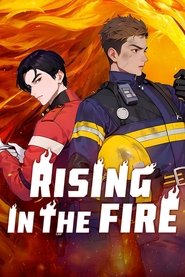
In times of crisis, the protagonists join hands with many comrades in arms to fight against evil with professional abilities and endless courage. In the end, justice is served and darkness has nowhere to hide...Gibiate
2020
Gibiate
2020
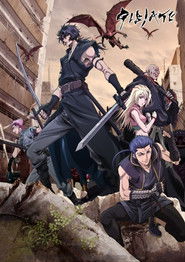
star 7In 2030, Japan. A virus has infected humans throughout the world. Infected people turn into different forms of monsters based on their ages, sexes and races. The virus is named 'Gibia' - after being rich in variety like gibia. Just then, a pair of samurai and ninja appeared in such a blighted wasteland of Japan. They both traveled from the early Edo period, fighting together with help from a doctor who tries to find cure for Gibia. Facing ceaseless attacks from Gibias, and outlaws that attack travelers for food, they start the dangerous journey with enemies all around.Vlad
2019
Vlad
2019
star 7.5Adrian, a young man who was unjustly jailed after his friends betrayed him during a heist, gets the chance at a new life, guided by Caesar, his mentor.The Mystic Knights of Tir Na Nog
1998
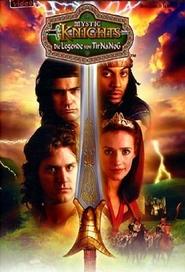
star 7.4Four young knights, Rohan, Deirdre, Angus and Ivar, defend their ancient homeland of Kells from attacks by the evil Queen Maeve who is intent on ruling the island kingdom. The knights bravely resist Maeve's dark sorcery, battling giants, ogres and evil mythical creatures. Their quest to restore peace to the land leads the knights to discover their mystic armor and their dragon ally, Pyre, who joins them on adventures filled with danger, magic, and the roguish little people who inhabit the enchanted underworld of Tir Na Nog.Arthur of the Britons
1972
star 8This series strips away the elaborate medieval view of Camelot, and presents Arthur as the chief of a small Celt tribe in Dark-Ages Britain, a century or two after the withdrawal of Rome. Arthur struggles to weave the scattered tribes of Celts, Jutes, etc. into a union that can effectively oppose the Saxon invaders who are arriving in Britain in growing numbers. He is aided by his adoptive father, Llud, and his foster brother, Kai, who is himself a Saxon foundling.WWE Velocity
2002
WWE Velocity
2002
star 6.4WWE Velocity was a professional wrestling television program produced by World Wrestling Entertainment. It replaced two syndicated WWE shows, Jakked/Metal. Once a weekly Saturday night show on Spike TV and on Sky Sports 2 in the UK on Sunday mornings, Velocity became a webcast from 2005 to 2006. The newest episode would be uploaded to WWE.com on Saturdays and be available for the next week. Older webcast episodes were also archived. It was the counterpart show to WWE SmackDown and WWE Raw and was recorded before the television taping of SmackDown. Get up to speed on the week's high-octane events from the SmackDown brand and see exclusive matches only on WWE Velocity.