Soap TV Series - Page 66

Vidas Robadas
2010
Vidas Robadas
2010
star 2Vidas Robadas is the title of a Spanish-language telenovela produced by the Mexican television network TV Azteca. It is internationally known as "Infamia". It stars Carla Hernandez, Andres Palacios and marks the return of the grand actress, Cristian Bach to the television screen.Susana Giménez
1987
Susana Giménez
1987
star 7Susana Giménez, often shortened to SG, is an Argentine television talk show that has run nationally since 1987. Owned and hosted by its namesake, Susana Giménez, it remains one of the highest-rated TV shows in Argentine television history. Due to the popularity of the show, Giménez is usually compared to Oprah Winfrey. The TV show is one of the most successful in Latin America. The TV show is the only one in Latin America to receive dozens of international stars of Hollywood and Europe. Inspired by Pronto, Rafaella, hosted by Rafaella Carrá, the show was originally called Hola Susana and then Hola Susana, te estamos llamando. It has combined interviews, sketch comedy, games and live musical performances. Giménez has received national and international stars in what is known as her "living". In 1998 the show entered Guinness World Records because of all the letters Giménez received in her show, 32 million in total. Furthermore, during the first years of the show, telephonRosa Baiana
1981
Savannah
1996
Savannah
1996
star 7.8Follows the lives of three best friends--Reese, Peyton, and Lane--who grew up together in Savannah, Georgia. SAVANNAH was an American prime time television drama that ran from January 21, 1996 to February 24, 1997 on The WB. It was created by Constance M. Burge and produced by Aaron Spelling.A Sombra de Rebecca
1967
Fight or Love?
2012
Fight or Love?
2012
star 8.7An inheritance of millions brings the fun-loving Charlô (Irene Raveche) and her bad-tempered cousin Otávio (Tony Ramos) closer than they ever expected. The inheritance, which includes a mansion and a chain of clothing stores, stipulates that the assets remain in the family. And since no one is willing to give up their part they decide to share the mansion and the business, despite the mortal hatred they harbor for each other. Charlô’s adopted son Felipe (Edson Celulari) also becomes caught up in the situation. However, he turns against his mother and becomes Otávio’s right-hand man at the company.Luisa Fernanda
1999
Luisa Fernanda
1999
star 6.8Luisa Fernanda is a Venezuelan telenovela that was produced by and seen on Venezuela's Radio Caracas Televisión. The writers of this telenovela are Xiomara Moreno, Luis Colmenares, Rossana Negrín, Xiomara Moreno. Its directors were Otto Rodríguez and Mateo Manaure. This telenovela lasted 130 episodes and was distributed internationally by RCTV International. It was a very loose version of the 1988's successful telenovela, Abigail.Kaleerein
2018
Kaleerein
2018
star 8A free-spirited girl who wants to live life on her own terms, Meera values her uniqueness and is in search of a suitor who will accept her for the person she truly is.Kisi Ki Nazarr Na Lage
2008
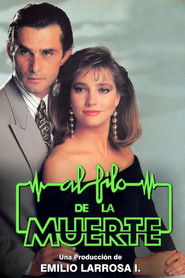
Kisi Ki Nazarr Na Lage is a Hindi language Indian drama television series that airs on DD National channel. The series is produced by Raja Mukherjee, brother of the Bollywood actress Rani Mukherjee. The story is of a joint Bengali family and spans three generations of characters. The series airs every Monday - Friday at 1pm IST.Al Filo de la Muerte
1991
Al Filo de la Muerte
1991
star 6.7Al filo de la muerte is a Mexican telenovela produced by Emilio Larrosa for Televisa and originally broadcast on Canal de las Estrellas from June 17, 1991, to February 21, 1992. Created by Fernanda Villeli and Marcia Yance, the telenovela stars Humberto Zurita and Gabriela Rivero. The story follows Tracy López, a young nurse living in Los Angeles whose life is turned upside down after she witnesses her boyfriend commit a murder. Placed in the Witness Protection Program under the new identity of Mariela Foret, she flees to Mexico City, where she begins working at a prestigious hospital. There she meets cardiologist Francisco Riquer, and despite their difficult first encounters, they fall in love while facing danger, revenge, and the lingering threat of Tracy's criminal past.Miss XV
2012
Miss XV
2012
star 8Miss XV follows the story of two teenage best friends, Valentina and Natalia, (who were born on the same day at the same hour), who dream of the perfect quinceañera birthday party, and long to become the girlfriends of their respective crushes, Niko and Eddy.Salário Mínimo
1978
Degrassi Junior High
1987
Degrassi Junior High
1987
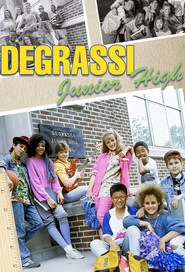
star 7.6Degrassi Junior High is a Canadian CBC Television teen drama series that was produced from 1987-1989 as part of the Degrassi series. The show followed the lives of a group of students attending the titular fictional school. Many episodes tackled difficult topics such as drug use, child abuse, teenage pregnancy, homosexuality, homophobia, racism, and divorce, and the series was acclaimed for its sensitive and realistic portrayal of the challenges of teenage life. The cast comprised mainly non-professional actors, which added to the show's sense of realism. The series featured many of the same actors who had starred on The Kids of Degrassi Street a few years earlier, including Stacie Mistysyn, Neil Hope, Anais Granofsky, Sarah Charlesworth and others. However, their character names and family situations had been changed, so Degrassi Junior High cannot, therefore, be considered a direct spinoff. The legal counsel for all the episodes was Stephen Stohn who later became the executive producer of Degrassi: The Next GenGrosse Pointe
2000
Grosse Pointe
2000
star 8This "show-within-a-show" comedy from Darren Star takes a satirical look at the action behind the scenes of a teen prime-time soap. It centers on the on and off-camera antics of five actors who star in a fictional high school drama called Grosse PointeEsa no soy yo
2015
Esa no soy yo
2015
star 6After finding her twin sister Anahi's dead body with no clue of the perpetrator, Judith impersonates her with the hope that living her sister's life will unveil the murderer's identity.Paulo, o Apóstolo
2025
Paulo, o Apóstolo
2025
star 8.3It follows Saul of Tarsus, a young Pharisee who undergoes a profound transformation, a story of redemption, spiritual battles, and human-divine relationships, highlighting love, betrayal, and sacrifice.Por Tu Amor
1999
Por Tu Amor
1999
star 7A wealthy and handsome man named Marco Durán arrives in a small coastal town called San Carlos, partly to consolidate his businesses in the area and partly to get away from Miranda Narváez, his obsessive and unstable ex-girlfriend. María del Cielo Montalvo is a beautiful and tasteful young woman, whose strength of character arouses the admiration of all the men in the sector and the love at first sight of Marco who does not hesitate to ask for her hand immediately after seeing her for the first time. She is the woman he has always dreamed of; However, for Cielo he is just another man like many who has come to poison the quiet life of San Carlos with his money and does not hide the contempt she feels for him, being also a woman engaged to Sergio Zambrano, her lifelong boyfriend.Imperio De Mentiras
2020
Imperio De Mentiras
2020
star 7.5Elisa Cantú never imagined that, upon returning to Mexico from New York, where she resides, she would encounter an unexpected tragedy that changes her life. The night Elisa would celebrate her birthday, fate leads her to meet Leonardo Velasco, a policeman in love with Julia, a teacher, to whom he was to marry. At the end of the evening, Leonardo receives an emergency call, in which the discovery of two bodies is reported, one of them is that of his fiancée, who lies next to the body of Augusto Cantú, millionaire businessman and father of Elisa. Elisa and Leonardo will come together to search for the truth of what happened.Pé de Vento
1980
Raja Paarvai
2021
Raja Paarvai
2021
Raja Paarvai is an Indian Tamil television series on Star Vijay. It premiered on 22 March 2021. It is a remake of Star Jalsha's Bengali series Sanjher Baati starring Munaf Rahman and Rashmi Jayaraj.