War Politics TV Series - Page 19

Dates That Made History
2018
star 8.6Historian Patrick Boucheron revisits the most important dates in history through the prisms of memory and collective imagination.Enemy at the Door
1978
Enemy at the Door
1978
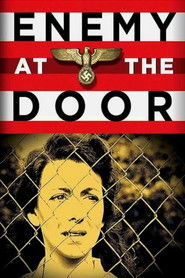
star 8.2Enemy At The Door is a British television drama series made by London Weekend Television for ITV. The series was shown between 1978 and 1980 and dealt with the German occupation of Guernsey, one of the Channel Islands, during the Second World War. The programme generated a certain amount of criticism in Guernsey, particularly for being obviously filmed on Jersey despite being ostensibly set on Guernsey. The series also marked the TV debut of Anthony Head as a member of the island resistance. The theme music was by Wilfred Josephs.Caliphate
2020
Caliphate
2020
star 7.4National Security agent Fatima receives a tip that a terrorist attack against Sweden is in the planning stage. Meanwhile Sulle, a teenage girl in Stockholm, gets interested in her student assistant who opens doors to a new and fascinating world - the true path. Kalifat is a thriller about the intermingled fates of five young women who get caught up in the seducing and destroying force of religious fundamentalism.腾飞五千年
2014
Eu Prometo
1983
Strategist KANBE
2014
Strategist KANBE
2014
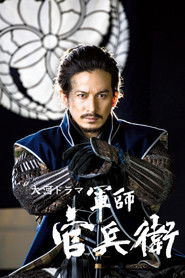
star 9.4July 1590, Odawara. Toyotomi Hideyoshi's army had surrounded the Odawara Castle for over 3 months, hoping to conquer this last obstacle to his dream of the country's unification. Standing at the gate of the castle, a lone man facing the menacing guards shouted out: "Do not throw your lives away. Treasure living!". Not long after, the castle gates opened and the reigning lord surrendered. The name of that man is Kuroda Kanbee. An excellent military strategist, he worked hand-in-hand with Hideyoshi to unify the country.Decisive Victory
2021
Decisive Victory
2021
star 7.3For the first time, the drama "Decisive Victory" presents a panoramic view of the three major battles of Liaoshen, Huaihai and Pingjin in the form of a TV series, presenting a dramatic battle of China's destiny. It presents the three battles in three dimensions by telling the stories of strategy, tactics and battles and presents a vivid individual in the grand war through colorful characters.Samurai Banners
2007
Samurai Banners
2007
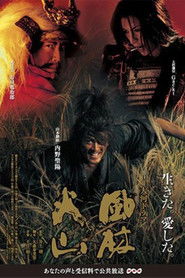
star 7.6Fūrin Kazan was the 46th NHK Taiga drama beginning on January 7, 2007. It was aired throughout 2007. The four characters from left to right are wind, woods, fire, and mountain. The title is a reference to the war banner used by Takeda Shingen, which in turn was taken from Sun Tzu's The Art of War. It means "Swift as the Wind, Silent as a Forest, Fierce as Fire and Immovable as a Mountain."The Wars of the Roses
1965
star 9An epic chronicle of the dysfunctional Plantagenet family from the accession of the young Henry to the death of Richard, last of the Plantagenets. The vacillations of the priestly Henry lead to ungentlemanly behaviour, civil war, treason, murder, regicide, fratricide, and the relentless pursuit of power so characteristic of the Renaissance.Senda de gloria
1987
Cleopatra
1999
Cleopatra
1999
star 6.6Cleopatra, the famed Egyptian Queen born in 69 B.C., is shown to have been brought by Roman ruler Julius Caesar at age 18. Caesar becomes sexually obsessed by the 18 year old queen, beds her, and eventually has a son by her. However, his Roman followers and his wife are not pleased by the union. In fact, as Caesar has only a daughter by his wife, he had picked Octavian as his successor.Holocaust
1978
Holocaust
1978
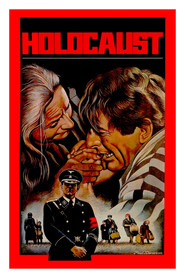
star 7.3Berlin, Germany, 1935. The day Karl Weiss, a Jewish painter, and Inga Helms, a Christian woman, marry, is the one in which both of them and the entire Weiss family are caught up in the maelstrom of the Nazi regime, the storms of World War II and the horrors of the criminal Final Solution, the Holocaust, the Shoah; while Erik Dorf, an ambitious lawyer, undertakes his fall into hell at the hands of the sinister Reinhard Heydrich.Nuremberg
2000
Nuremberg
2000
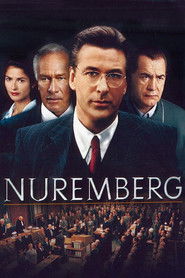
star 7.4Justice Robert H. Jackson leads Allied prosecutors in trying 21 Germans for Nazi war crimes after World War II.Siege in Fog
2018
Siege in Fog
2018
star 4.7An arrogant third master of a powerful family falls in love at first sight with a pretty young maiden and uses every means possible to force her hand in marriage, despite her harboring a crush on another man. In the beginning of a coerced marriage, she resents him and rejects all his advances and gestures of love, but their love story slowly develops after going through obstacles in times of war and chaos. However, things get complicated when her old flame returns and becomes her husband’s assistant.聪明的顺溜
2016
The Gray House
2026
The Gray House
2026
star 4.4The untold true story of four brave women who served as key espionage agents and turned the tide of the American Civil War in favor of the North, risking life and liberty to help win the war and preserve democracy. A Richmond Socialite and her daughter, a formerly enslaved African-American, and a courtesan build the first successful female spy ring.Legends of History
2021
Legends of History
2021
star 8Epic stories of historical heroes who became legendary with their strugglesMobile Suit Gundam SEED C.E. 73: Stargazer
2006
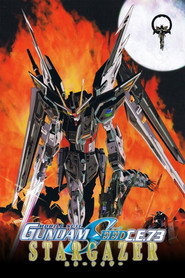
star 7.2Mobile Suit Gundam SEED C.E.73 -STARGAZER- is a side story to the anime TV series, Mobile Suit Gundam SEED Destiny. As of July 2006, it is being streamed on Bandai Channel as an original net animation. The show is directed by Susumu Nishizawa and written by Shigeru Morita, both staff members of Gundam SEED Destiny. The series consists of three episodes, each running at 15-minutes long. The web broadcast began in July 2006, with a new episode showing monthly. A DVD containing all three episodes as well as the two 5-minute long Mobile Suit Gundam SEED Astray animated shorts was released on November 24, 2006. This DVD also contained a different ending for Stage 3 in which several scenes after the Phantom Pain attack are shown. A manga adaptation of the series has been released in 2007. Authored by Naoki Moriya, it features an epilogue reveals the previously uncertain fate of Selene and Sven as they are shown to be alive and mostly unharmed from their ordeal. Sven joins the DSSD.Roadkill
2020
Roadkill
2020
star 6.4Politician Peter Laurence's private life is falling apart. Shamelessly untroubled by guilt or remorse, he seeks to further his own agenda whilst others plot to bring him down. Can he out-run his own secrets to win the ultimate prize?Awaiting Kirin
2020
Awaiting Kirin
2020
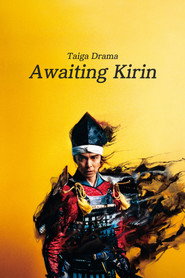
star 8.4After the Onin War, the world is plunged into chaos. Amid this situation, heroes of the warring states begin to emerge in an attempt to unify the country and rule in these turbulent times. In the mid-1540s, there is a young wandering samurai in Mino which is strategically located between the East and West. His name is Akechi Mitsuhide. At this time, there is plenty of internal strife within the Toki clan which rules Mino. Surrounded by the Oda of Owari, the Imagawa of Suruga and the Asakura of Echizen, Mino has constantly faced the risk of invasion. Mitsuhide is pulled into battle and destroys the enemy. His bravery as well as stratagem catches the attention of Saito Toshimasa, the chief retainer of the Toki clan, and he is singled out. This man who is also known as Saito Dosan will go on to takeover the Toki and make Mino his own.