War Politics TV Series - Page 49

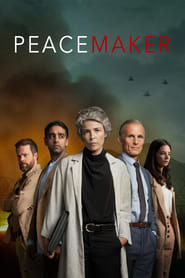
Peacemaker
2020
Peacemaker
2020
star 5Finnish peace negotiator Ann-Mari Sundell has recently retired from her post as a crisis response adviser in the Ministry for Foreign Affairs. Suddenly, she is invited by the UN mandate to lead an international conflict resolution process in Turkey. As the peace talks proceed, Ann-Mari has to reconcile with her past before her personal life comes in the way of the whole peace process.The Embassy
2016
The Embassy
2016
star 6.2Luis Salinas, the new ambassador to Thailand, who knows he's going to get his hands dirty in the next four years – if he makes it that long. He's accompanied by his wife, Claudia, and their daughter Ester. Aware that the familiar constellation of life in the embassy is about to change radically, the staff gear up in nervous anticipation. Life does change, but in a way that Luis would never have imagined it. He must not only cope with the chaos and corruption he was expecting, but also with the implosion of his family life, as Claudia and Ester become involved in affairs that might seriously damage relations between Spain and Thailand. Will the glamorous, globe-trotting diplomatic life swallow up Luis or will he continue to fight for integrity and morals?FutureWeapons
2006
FutureWeapons
2006
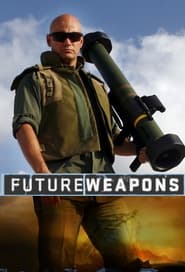
star 7Future Weapons, sometimes also written as FutureWeapons and Futureweapons, is a television series that premiered on April 19, 2006 on the Discovery Channel. Host Richard "Mack" Machowicz, a former Navy SEAL, reviews and demonstrates the latest modern weaponry and military technology. The program is currently broadcast on the Discovery Channel and Military Channel.Secrets & Spies: A Nuclear Game
2024
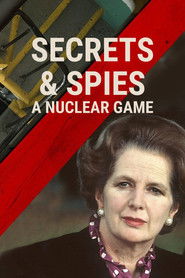
star 6.3Betray your country, save the world. Spies and traitors play a dangerous game in the 1980s as the Cold War brings two superpowers to the brink of nuclear war.Toge no Gunzo
1982
Toge no Gunzo
1982
The Cupid Strikes
1979
The Cupid Strikes
1979
star 6Zhan Meng-bai's father is assassinated by a mysterious archer, and his love interest is killed by the same assassin. Determined to avenge them both and discover the archer's secret, Meng-bai meets his supposedly deceased mother and many other renowned martial artists. Meanwhile, he falls in love with the daughter of the leader of the Emperor's Valley. Eventually, Meng-bai learns the identity of the archer and learns that the archer intends to die in battle with him.Putin's secret weapons
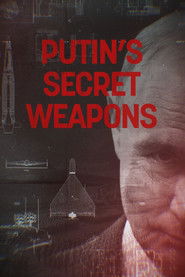
2026
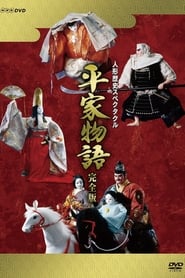
star 7.5The Russian army has no shortage of weapons despite sanctions: With an arsenal mixing old Soviet stocks and modern hypersonic weapons, the country could strike Europe in minutes. An opaque network of spies, shell companies and oligarchs ensures its war capacity through the arms trade, technology theft and state-organized policy of terror.Historical Puppet Spectacle: The Tale of the Heike
1993
star 10A stop-motion animated TV series based on the novel by Eiji Yoshikawa, featuring puppet art by Kihachirō Kawamoto. This is a historical picture scroll depicting various human characters, breathtaking battles and political struggles from the rise to fall of the Heike clan.沸腾的群山
2017
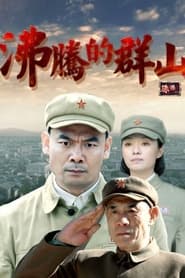
沸腾的群山
2017
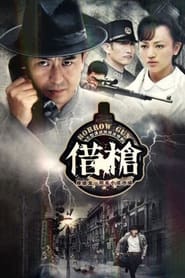
Borrow Gun
2011
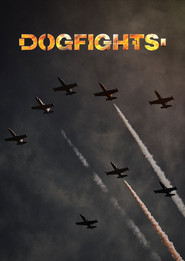
Dogfights
2006
Dogfights
2006
star 7.9Dogfights is a military aviation themed TV series depicting historical re-enactments of air-to-air combat that took place in World War I, World War II, the Korean War, and the Vietnam War, as well as smaller conflicts such as the Gulf War and the Six-Day War. The program, which airs on the History Channel, consists of former fighter pilots sharing their stories of actual dogfights in which they took part, and uses computer-generated imagery to give the viewer a better perspective of what it is like to partake in aerial combat The series premiered on November 3, 2006.Kennedy
1983
Kennedy
1983
star 6.3Kennedy is a five-hour miniseries written by Reg Gadney and directed by Jim Goddard. The miniseries was produced by Central Independent Television and originally aired in the United States starting on 20 November 1983 around the time of the 20th anniversary of the Kennedy assassination. The TV miniseries was a biography of the 1961-1963 presidency of John F. Kennedy. The mini-series stars Martin Sheen as President John F. Kennedy, John Shea as Robert F. Kennedy, Blair Brown as Jacqueline Kennedy, E.G. Marshall as Joseph P. Kennedy, Vincent Gardenia as J. Edgar Hoover and Kelsey Grammer as Stephen Smith amongst many others. The series was broadcast on NBC, and was also sold to 50 Countries, with 27 of them broadcasting the series simultaneous. The series was nominated for 3 Golden Globes and 4 BAFTA, and won Baftas for Best Drama Series and Best Make Up.Hojo Tokimune
2001
Hojo Tokimune
2001
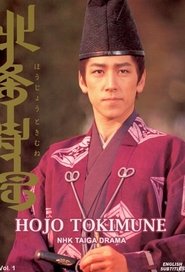
star 8The 40th NHK Taiga Drama is Hojo Tokimune. It tells the dramatic and turbulent life of young shikken Hojo Tokimune, and his successful defense of Japan from invasion by Mongolia in the 1200's. It is a tragic story of betrayal and clan wars and Hojo Tokimune is at the center of it all. The main focus of the story is Hojo Tokiyori's older sons, their relationship, and their views and actions concerning Kublai Khan's attempted invasion. The two brothers, Tokimune and Tokisuke, are torn apart by politics.烈火刀影
2017
烈火刀影
2017
The Spy War
2016
The Spy War
2016
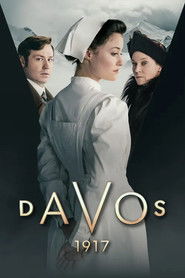
Davos 1917
2023
Davos 1917
2023
star 7.7More determined than ever to live her life in accordance with her deepest desires, nurse Johanna Gabathuler finds herself embroiled in a spy conspiracy with international implications. There’s a high price to pay and it’s risky to say the least, but she will do anything it takes to find her daughter and, ultimately, secure her freedom.Quanta guerra!
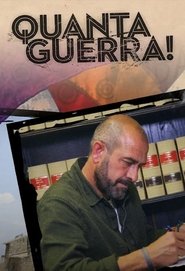
2022
Quanta guerra!
2022
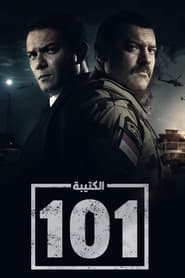
Battalion 101
2023
Battalion 101
2023
star 10The series revolves around real facts, represented by the 101 Battalion's valor in confronting the takfiri and terrorist organizations in North Sinai. The story begins on January 28, 2018, when the takfiris attacked an important military site in the city of Arish in North Sinai.