War Politics TV Series - Page 58

Courage and Mercy
1986
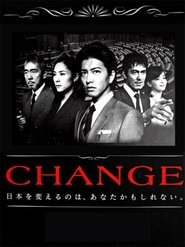
CHANGE
2008
CHANGE
2008
star 8.8CHANGE is a Japanese television drama which aired on Fuji TV starting May 12, 2008.Snapphanar
2006
Snapphanar
2006
star 5.7Snapphanar is a Swedish miniseries which aired in three parts on Sveriges Television during Christmas 2006, directed by Måns Mårlind and Björn Stein. The historical drama is about the Snapphane peasant rebel movement which fought against the Swedish rule of Scania in the 17th century. The "Snapphanar" was a rebellion people, who fought secretly for Denmark during 1660-1700. The miniseries were criticised by historians due to a perceived lack of historical accuracy. The Scanian nationalist attitudes portrayed in the series did not exist in the 17th century, and the term snapphane, which is used for self-identification in the series, was in fact a derogatory term used by Swedes.Son of the Morning Star
1991
star 7.1The story of George Custer, Crazy Horse and the events prior to the battle of the Little Bighorn, told from the different perspectives of two women.On the Nameless Height
2004
star 2.5The location is the Belarusian forests, close to the Polish border, during Operation Bagration in the summer of 1944. The Red Army is preparing to advance, but on one segment of the front there are two serious obstacles: an unnamed hill, and a highly skilled German sniper. The local commander, Major Inozemtsev, suspects that the hill is a trap.Doppelganger. The Double
2024
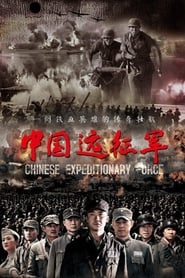
star 7.7The story of a special service agent who steals another man's identity. Posing as someone he is not, he builds a successful undercover career中国远征军
2011
Wrath of the Wolf
2015
Wrath of the Wolf
2015
我的娜塔莎
2012
Welcome Back
2023
Welcome Back
2023
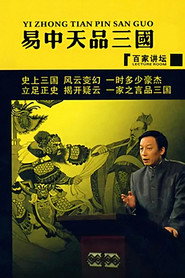
star 6.4After the death of her husband, Jalal, in Canada, Dr. Samiha decides to return to Egypt after more than 25 years, accompanied by her children, Sameh and Samah, to recover their inheritance.Yi Zhongtian: Analysis of the Three Kingdoms
2006
star 9CCTV-10 Lecture Room series: Pin San Guo (品三国; Analysis of the Three Kingdoms). "Yi Zhongtian's Analysis of the Three Kingdoms" is a CCTV-10 historical broadcast program and one of the "Hundred Forums" series. The main speaker, Yi Zhongtian, restored the real Cao Cao, defended Zhou Yu's false accusations, spoke up about Zhuge Liang, and re-evaluated Sima Yi. When talking about the world, there are only three points of gossip. Discuss the merits and demerits carefully, and summarize the gains and losses of successes and failures. Professor Yi Zhongtian of Xiamen University will use stories to tell characters, characters to tell history, history to tell culture, and culture to tell human nature. Discuss the major events of the Three Kingdoms and carefully analyze the success and failure of the heroes. Professor Yi Zhongtian will explain it from a civilian perspective.Blind Ambition
1979
Blind Ambition
1979
star 6.3The Watergate crisis as viewed by John Dean and his wife Maureen, based on their personal accounts -- his best-seller, her book on how it affected their marriage -- and distilled into an eight-hour drama with all of the political figures of the day parading by as Dean relates his story to his attorney when his world, based on blind ambition, begins crashing down on him.The Excavator
1996
The Excavator
1996
As the Israeli forces occupy Sinai prior to the War of Attrition, they use an excavator to dig deep in the land, under the pretext they're searching for oil. When the Egyptian authorities discover their true intentions, they try to stop the excavator from reaching Bab El-Mendab.Ahl Iran
2026
Ahl Iran
2026
Narratives of Being Iranian in a Time of War. An episodic collection of war narratives that tell the story of staying Iranian, the hope, and the people's resistance in the midst of the fire.Jue Mi Shi Ming
2021
Jue Mi Shi Ming
2021
In order to support the Central Soviet Area in breaking the Kuomintang’s military "encirclement and suppression" and economic blockade, the Central Committee of the Communist Party of China decided to establish a red communication line from Shanghai to the Soviet Area via Hong Kong and Shantou. Zou Zuo Ren is the head of the Bogongao station of the transportation line. Together with other large, medium and small transportation stations, he is carrying out the top-secret mission of transporting personnel and scarce supplies to the Soviet area and also transporting funds and intelligence from the Soviet area to the Shanghai Party Central Committee. Under the leadership of Zou Zuo Ren, the traffic men battled wits with the enemy.Code Name
2016
Code Name
2016
In 1941. Feng Jiusi, the young police officer working within the British Concession, witnessed the death of a member of the underground Chinese Communist Party and was unfortunately marked as a suspect by the CCP. Meanwhile, the Japanese were amid clearing the anti-Japanese factions in Tianjin as they prepared to take over the British-French concession. As an undercover CCP member in the police force, Feng Jiusi must prove his loyalty to the CCP as he works to uncover the plot of the Japanese.Adieu camarades !
2012
Nordkoreas Geheimnisse
2026
North Korea's Secrets offers a comprehensive look into the secretive regime of Kim Jong-un. The first episode, The Dictator's Weapons, explores North Korea's rise as a nuclear power, its growing alliance with Russia, and the human cost of the regime's military buildup. The second episode, A Glimpse into a Closed Country, presents the stories of four defectors who share their experiences of oppression, forced labor, and survival. Satellite images reveal the stark contrast between the elite's luxurious life and the majority's suffering, painting a vivid picture of life in North Korea under Kim Jong-un's rule.Drawing Sword 3
2020
Drawing Sword 3
2020
Wang Yunshan is the leader of the Eighth Route Army Regiment. Although uneducated and hot tempered, he possess an extraordinary military mind. He dared to fight hard and taking an unorthodox strategy, he was able to win against the Japanese army.War
2023
War
2023
star 4The events revolve around a member of an extremist terrorist group called Al Zafer, who is trying to carry out a number of terrorist operations in Egypt, but he gets pursued by the security services.