Animation TV Series - Page 361

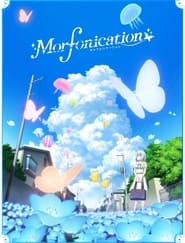
BanG Dream! Morfonication
2022
star 4Two special episodes featuring the violin rock band Morfonica. The Morfonica members are excited for the concert-packed summer vacation. Meanwhile, Toko secretly plans what she calls the "Summer Morfonica Plan" with Nanami and Tsukushi.Monkey Magic
1998
Monkey Magic
1998
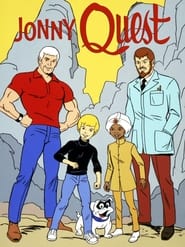
Monkey Magic was an anime series that aired in the 1990s based on Journey to the West. It is an incarnation of the famous ancient Chinese novel, Journey to the West, in which it follows the novel's story to a high extent.The New Adventures of Jonny Quest
1986
star 7.6Jonny, his scientist father, bodyguard "Race" Bannon, Indian pal Hadji and comic-relief family bulldog Bandit travel the world, investigate strange cases, and battle a plethora of foes (including old enemy Dr. Zin).A Foreign Love Affair
2007
star 5The young leader of the Oomi group, Ranmaru, was forced to marry Kaoru, the daughter from another group. The couple went to Italy, and had their wedding on a ship. However, neither of them actually liked the marriage, and Ranmaru was kicked out by his newlywed wife Kaoru on their first night. Al (Alberto), an Italian man on the ship, took an interest in Ranmaru, and the story revolves around the romance between the two men, Ranmaru and Al.Welcome to Pia Carrot!! 2 DX
1999
star 8Kouji wants to work part-time, so, when he saw a cute girl with the Pia Carrot uniform, he tried to get a job there. When he's on the way, he accidentally bumped Azusa, and with some misunderstanding, they literally hate each other. What is the surprise of Kouji when he finds that she also got a job in the Pia Carrot, facing her daily. But as time passes, he will discover that 'hate' is not the appropriate word to describe his feelings...Mom, I'm Sorry
2024
Mom, I'm Sorry
2024
star 7"Mom, I'm sorry. Please don't die." When Henry realizes death is at his mother's doorstep, he strikes a deal with a lifespan dealer to give years of his own life to his ailing mother. Now, his mother is a 20-year-old college student with a full life ahead of her, and Henry devotes his remaining days to helping her live life to the fullest. But things turn complicated when his friend falls in love with her!Shining Star
2017
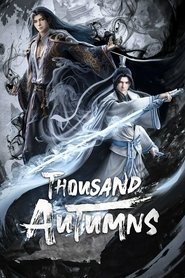
Thousand Autumns
2021
Thousand Autumns
2021
star 7.1Pushed to his limits, Shen Qiao must decide if his belief in goodness can survive Yan Wushi’s twisted world.人造昆虫カブトボーグ VxV
2006
Pariah Nexus
2023
Pariah Nexus
2023
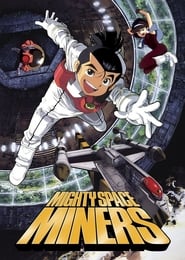
star 7.9An Imperial Shrine World in the Pariah Nexus has been invaded by the Necrons. The invaders have emerged triumphant and only a few pockets of surviving imperials remain to resist the invading Xenos.Mighty Space Miners
1994
Mighty Space Miners
1994
star 7.5In the mid-21st century, mankind has begun the exploration of space, and one company, Planet Catcher Corporation, has pioneered capturing asteroids and comets to mine the resources within them for use on Earth. On one such asteroid, Tortatis, lives 12-year-old Nanbu Ushiwaka - the only child ever to be born in space and survive.Hey, Your Cat Ears Are Showing!
2018
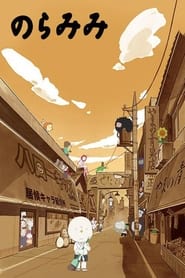
star 7Daisū is a a manga creator who grew up in an orphanage, and whose works do not sell very well. Daisū lives each lonely day in boredom, but one day he meets a young man named Myō who has cat ears, and his everyday life completely changes. Myō gets in trouble every day, but for the first time in his life, Daisū’s heart experiences "warmth."Noramimi
2008
Noramimi
2008
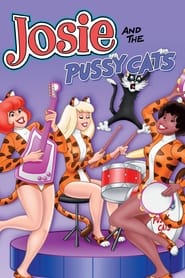
Josie and the Pussycats
1970
star 7.1Josie and the Pussycats is an American animated television series, based upon the Archie Comics comic book series of the same name created by Dan DeCarlo. Produced for Saturday morning television by Hanna-Barbera Productions, sixteen episodes of Josie and the Pussycats aired on CBS during the 1970-71 television season, and were rerun during the 1971-72 season. In 1972, the show was re-conceptualized as Josie and the Pussycats in Outer Space, sixteen episodes of which aired on CBS during the 1972-73 season and were rerun the following season. Reruns of the original series alternated between CBS, ABC, and NBC from 1974 through 1976. This brought its national Saturday morning TV run on three networks to six years. Josie and the Pussycats featured an all-girl pop music band that toured the world with their entourage, getting mixed up in strange adventures, spy capers, and mysteries. On the small-screen, the group consisted of level-headed lead singer and guitarist Josie, intelligent tambourinist Valerie, and air-headeKevin
2026
Kevin
2026
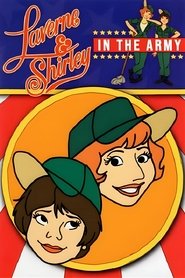
A life-long housecat decides that he doesn’t want to live with people anymore. Loosely inspired by a real break-up and the cat caught in the middle, Kevin dares to ask himself, "Is there a world where I don’t do the owner thing and am just… single for the rest of my life?"Laverne & Shirley in the Army
1981
star 7.5Laverne & Shirley in the Army is a 1981 Hanna-Barbera cartoon series based on the TV show Laverne & Shirley, with the title characters voiced by Penny Marshall and Cindy Williams. The show aired on Saturday mornings for one season of 13 episodes on ABC. The series was produced in association with Paramount Network Television. The following season, the series was re-titled Laverne & Shirley with The Fonz and combined with a half-hour adaptation of the 1978–1982 sitcom Mork & Mindy to form the Mork & Mindy/Laverne & Shirley/Fonz Hour, which lasted for one season.[2] During the second season, Laverne and Shirley were joined by the characters of The Fonz (voiced by Henry Winkler) and his anthropomorphic dog Mr. Cool (voiced by Frank Welker; from the 1980–81 animated series The Fonz and the Happy Days Gang) working as mechanics in the army camp's motorpool.Monkart
2017
Monkart
2017
star 3.5Jin and his dragon monster Draka set out on a racing adventure and try to save the kingdom from evil forces.Human Crossing
2003
Human Crossing
2003
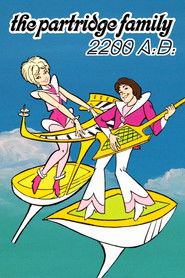
star 4.7Though seemingly unconnected, the characters in HUMAN CROSSING all have something in common. They are dealing with the sometimes joyous, but often horrific realities of everyday life.Partridge Family 2200 A.D.
1974
star 4.3The adventures of a futuristic version of the Partridge Family.Wildfire
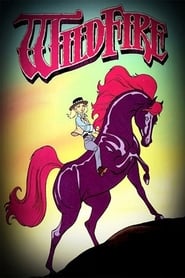
1986
Wildfire
1986
star 6.7Wildfire is an American animated series produced by Hanna-Barbera in 1986. The series follows the adventures of Sara, a 13-year-old girl growing up in the American West, as she discovers her true identity as a princess-in-hiding from another realm who is destined to fight an evil witch. The show was first broadcast on CBS for a single 13-episode season from September 13 to December 6, 1986.