Animation TV Series - Page 359

Meganebu!
2013
Meganebu!
2013
star 5.5At Himaraya Third Technical School, five bespectacled members of the Glasses club are crazy about eyewear. Their leader, Akira Souma, founded the club to develop the X-ray glasses of his dreams, but their research has been slow in between getting into quirky escapades and fighting off student body president William Satou's attempts to further cut their tight club funding. With unbounded youthful passion, these friends set their minds on making their project a resounding success.Cute High Earth Defense Club Hi-CARA!
2025
star 6.7The time is Taisho – an era filled with the scent of romance, where people's hearts still know compassion.Tales of Exorcism
2017
Tales of Exorcism
2017
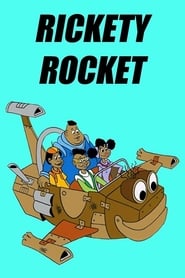
star 5.5The 19-year-old tomboy exorcist Hua Jiu got to know 'evil spirit' Seven Lord and forced him to be her spirit servant when cleansing spirits. Later the human being and the spirit set forth on a journey of ranting each other and cleansing spirits. However, Hua Jiu's enemy started insidious revenge at the same time...Rickety Rocket
1979
Rickety Rocket
1979
star 5Rickety Rocket is an animated television series, produced by Ruby-Spears Productions, and ran from 1979 to 1980 as a segment on The Plastic Man Comedy/Adventure Show.Chinese Almanac Master
2020
Huangli Shi, according to legends, refers to a Fangshi who can alter the effects of seasonal solstices, solar terms, and festivals, and is able to predict each day's fortune. Xiao Nanzhu, an unemployed young man, decided to take on his usual job that has been passed down for generations, after being inspired by his childhood friend. Now he just wants to call 110. Chuxi: What are you looking at? You don't want to live past new year's eve? Chuba: Today's fortune is terrible, nothing's going to turn out right. I'm afraid there might be a… bloody disaster.Re:Stage! Dream Days♪
2019
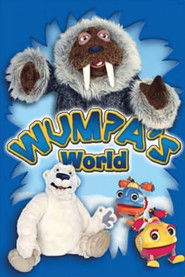
star 5The story centers around the first-year student Mana Shikimiya as she pursue her dreams of winning at the Prism Stage, the competition that determines the top middle-school idol.Wumpa's World
2001
Wumpa's World
2001
A children's television series for three to five year olds that stars a collection of puppet characters who live in the Canadian North: Wumpa the walrus, Tiguak the polar bear, Seeka and Tuk the snow hares, and Zig and Zag, a pair of fun-loving snowmobiles. Wumpa the Walrus opens the episode with a concept and proceeds to tell a story concerning that concept. Each episode has a specific message or lesson within it.Pleasant Goat and Big Big Wolf: Happy Formula
2013
star 7.7A mysterious force landed on the Green Green Grassland, and the Goats on the grassland were each gifted a unique vehicle of their own. Not only can their new vehicles express emotions, but they even have their own thoughts: they soon become friends with the Goats. However, the Wolffy is always after the Goats; he also made himself a high-tech vehicle. and thus creates an exciting adventure in the Green Green Grassland.Good Vibes
2011
Good Vibes
2011
star 7.2Transplanted Jersey boy Mondo and his best buddy Woodie live out their California dreams in the colorful beach community of Playa Del Toro, where the likeable, down-to-earth duo search out the wildest parties, prettiest girls and biggest waves. While Mondo tries to look the part among the tanned, sculpted rich kids, his portly frame is sometimes a source of embarrassment, especially when he tries to impress super-cool Jenna. Through thick and thin, however, Woodie and his heart of gold is always by Mondo's side. "I've never had a bro before,'' Woodie says. "I've always been kind of a loner, but it's fun being loners together.''Rebibbia Quarantine
2020
Rebibbia Quarantine
2020
star 7A tragic reportage from the quarantine of North East Rome. All the episodes of Rebibbia quarantine, the cartoon series written and directed by Zerocalcare.Boys be...
2000
Boys be...
2000
star 5.6Boys Be... is a manga created and written by Masahiro Itabashi and illustrated by Hiroyuki Tamakoshi, which was in 2000 adapted into a 13 episode anime series by Hal Film Maker. Three different Boys Be... manga series were serialized by Kodansha in Shukan Shōnen Magazine. In 2009 Kodansha announced a fourth series, Boys Be... Next Season, starting in the November 2009 issue of Magazine Special. The second manga series is licensed in North America by Tokyopop. The anime first aired on WOWOW in April-June 2000. It was licensed by The Right Stuf International. The first DVD volume of the series was released in North America on February 28, 2006. Comcast and several other cable providers have shown Boys Be On Demand in the United States through the Anime Network. This series was aired on AXN-Asia before it handed all anime broadcasting duties to ANIMAX Asia, and, unlike other AXN anime making it to ANIMAX, was never retained. It also aired on Spanish networks Jonu Media and K3.Muzik Tiger in the Forest
2025
star 5.5In the Muzik Forest, by a beautiful lake, live three tigers—Toffee, Tiffy, and Teffi— along with a mouse named Willy and a moon rabbit called Polmi. They lead a carefree life, not working, but every day is filled with fun and fascinating momentsArmor Shop for Ladies & Gentlemen
2018
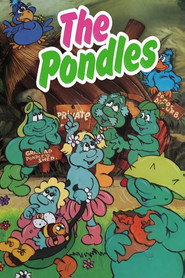
star 6.5In a world of sword and sorcery a young villager named Kautsu comes upon a unique armor shop that only deals with a certain kind of equipment for female adventurers.The Pondles
1987
The Pondles
1987
star 5There you'll find Pip, always ready for adventure, and his clever little sister Daisy, along with Grandpa, who has an extraordinary old barn filled with everything anyone could possibly need.Yippee, Yappee and Yahooey
1964
star 5.5Yippee, Yappee and Yahooey is a Hanna-Barbera animated television series that premiered September 16, 1964. It was presented as a segment of The Peter Potamus Show, along with Breezly and Sneezly and Peter Potamus.JOJO英语启蒙
2021
Miami Guns
2000
Miami Guns
2000
star 7.5Miami Guns is a manga and anime series. The anime takes place in Miami City, which is similar to Miami, Florida, except for several locale changes. It's mainly about the life of two female Miami City police officers having to stop crimes before they get worse. The setting thus has some similarities to that of the popular TV show Miami Vice.Lucy, the Daughter of the Devil
2005
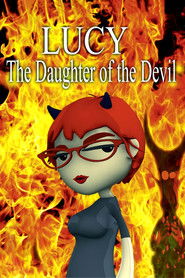
star 7Lucy is the 21 year old daughter of Satan in this dark comedy.The Night Beyond the Tricornered Window
2021
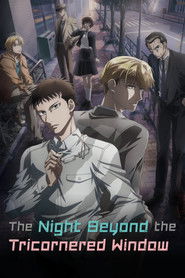
star 7Shy bookstore clerk Kosuke Mikado has the ability to see ghosts and spirits, an ability he wishes he didn't have, since what he sees usually terrifies him. Rihito Hiyakawa, an exorcist whose supernatural powers are as strong as his social graces are weak, doesn't seem to fear anything, mortal or otherwise. When this odd couple gets together to solve the bizarre cases that come their way, their work methods may not be entirely safe for work!