Drama TV Series - Page 141

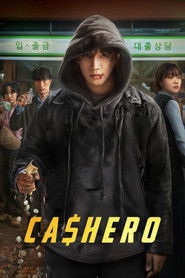
Cashero
2025
Cashero
2025
star 7.3An ordinary man who inherits super strength discovers a greater evil out to steal his power. The one catch? Every use drains money from his wallet.Love Your Enemy
2024
Love Your Enemy
2024
star 7.7Born on the same day and with the same name, Seok Ji-won and Yoon Ji-won have been enemies for generations, and reunite after 18 years.Tarzan
1966
Tarzan
1966
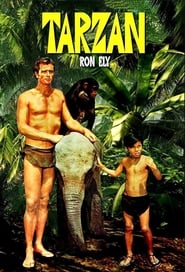
star 6.7Tarzan is a series that aired on NBC from 1966 – 1968. The series portrayed Tarzan as a well-educated character, one who, tired of civilization, had returned to the jungle where he had been raised. The show retained many of the trappings of the classic movie series, including Cheeta, while excluding other elements, such as Jane, as part of the "new look" for the fabled apeman that producer Sy Weintraub had introduced in previous motion pictures starring Gordon Scott, Jock Mahoney, and Mike Henry. CBS aired repeat episodes the program during the summer of 1969.Seven Days
1998
Seven Days
1998
star 6.9"Ever wish you could live your last week all over again? Well, my name's Frank B. Parker, and I do it all the time. I work for a secret government project experimenting in time travel. When things really get screwed up, I'm the guinea pig they send back to take care of it. The catch is, I can only go back 7 days."Sisi
2021
Sisi
2021
star 7.4"Sisi" follows the extraordinary life of Empress Elisabeth of Austria. Modern, honest, and authentic. Told from the perspective of her closest confidants, the series takes a new look at the empress' life and reveals a multi-layered woman.Godless
2017
Godless
2017
star 7.7A ruthless outlaw terrorizes the West in search of a former member of his gang, who’s found a new life in a quiet town populated only by women.Antihero
2024
Antihero
2024
star 8Japan has a conviction rate of 99.9% for criminal cases that go to trial. A lawyer (Hiroki Hasegawa) is able to defeat those odds and obtain an acquittal for his client, even though there's conclusive evidence that says otherwise. Sometimes, due to minor things, good and evil can switch sides and good people can become bad people.The Blossoming Love
2025
The Blossoming Love
2025
star 7.9In ancient times, the Human Emperor, Zhao Ming, petitioned on behalf of the people and sacrificed himself to resist the divine realm. After Zhao Ming's fall, his beloved, Hun Dunzhu, risked her life to save a wisp of his soul, setting up the cycle of reincarnation for eternity. In the distant future, Zhao Ming reincarnated as Xie Xuechen, the leader of the Immortal Alliance, while Hun Dunzhu became the Holy Maiden Mu Xuanling in the Dark Domain. The two finally reunited in the mortal realm but had forgotten their past, becoming adversaries in a "righteous versus evil" struggle. Mu Xuanling saved the heavily injured Xie Xuechen in the Dark Domain and coerced him to travel together in gratitude for saving his life.On The Waterfront
1980
On The Waterfront
1980
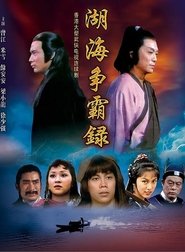
Gao Tianyuan and his wife Zhuo Feng'er live in seclusion in the Tian Shan mountains due to his father's dismissal from officialdom. They go down the mountain to reunite with his father but he is suddenly killed, and Feng'er defects to Tianzheng Sect's leader, Ren Wo weihuai. Devastated, Tianyuan starts a new life under a false identity until he meets Sikong Aoshi and becomes involved in the martial world again. He decides to seek revenge for his father's death and becomes an official, but his impatience leads to a dangerous mistake. Later, he discovers that the real culprit wants to rebel and dominate the martial world, and he teams up with Aoshi to eliminate the threat.Colorina
1980
Justice
1971
Justice
1971
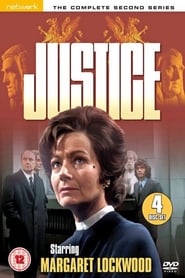
star 6Justice is a British drama television series which originally aired on ITV in 39 hour-long episodes between 8 August 1971 and 16 October 1974. Margaret Lockwood stars as Harriet Peterson a female barrister in the North of England. It was made by Yorkshire Television and was based loosely on Justice Is a Woman, an episode of ITV Playhouse broadcast in 1969 in which Lockwood had previously also played a barrister. The theme music was Crown Imperial by William Walton.Adamas
2022
Adamas
2022
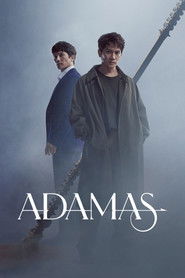
star 6.6Twin brothers Woo-sin and Soo-hyun lose their father in a murder case. Twenty-two years later, the brothers seek to clear their father's name.She and Her Perfect Husband
2022
star 8.2Elite lawyer Qin Shi and resident homebody Yang Hua who got "married" for their own purposes unexpectedly find true love in each other. Together, they walk hand in hand towards a happy and fruitful life.Sharp Objects
2018
Sharp Objects
2018
star 7.8Reporter Camille Preaker confronts the psychological demons from her past when she returns to her hometown to investigate the murders of two young girls.Butterfly
2025
Butterfly
2025
star 7.1David Jung, a mysterious former US intelligence operative living in hiding in South Korea, has his life blown to pieces when the consequences of an impossible decision from his past come back to haunt him, and he finds himself hunted by Rebecca, a deadly young assassin, and Caddis, the sinister spy organization she works for.One Step Toward Freedom
2020
star 8Our Main Character was transported to another world and the first thing that happened thing to him was that he was forced into a marriage to allow a woman to inherit a family Heritage. A Magic Scroll enters the head of the main character and the adventure for him begins. Through continuous CULTIVATION Yao Yan climbs up the ladder of power to challenge many enemies and even some eventual friends for varying rewards.Swords Into Plowshares
2026
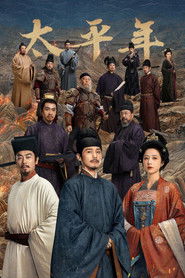
star 9During the tumultuous period of the Five Dynasties and Ten Kingdoms, three determined youths—Qian Hongshu, Zhao Kuangyin, and Guo Rong—navigate the chaos of political upheaval and war as they strive to overcome the suffering caused by endless conflict.The Legend of Chusen
2016
The Legend of Chusen
2016
star 7.1Can a man love a woman but still take down her father? Zhang Xiao Fan and his childhood friend Lin Jing Yu were the only survivors of the Grass Village massacre that wiped out both of their families. Taken in by the Qing Yun Sect, the boys were trained in the ways of the Immortal Sword. Xiao Fan falls in love with Bi Yao, the daughter of the Ghost King. But when the Ghost King tries to grow his power by overthrowing the Qing Yun Sect, Xiao Fan must choose between protecting his people and hurting the woman he loves.The Black Swindler
2022
The Black Swindler
2022
star 7.4In a time where fraud is an imminent threat, societal issues give rise to a slew of elaborate scams. Kurosaki is a man who lost his family to a "white swindler", which is a professional swindler who scams people out of their money. In order to exact revenge, Kurosaki becomes a "black swindler", a swindler who tricks other swindlers. He swears to scam every white swindler in the world and takes on foe after foe, but can he find his ultimate enemy who robbed him of his family? This riveting revenge drama exposes the very emotions that scams exploit.Monsters
1988
Monsters
1988
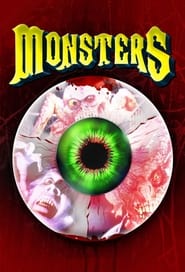
star 7.1Monsters is a syndicated horror anthology series which originally ran from 1988 to 1991 and reran on the Sci-Fi Channel during the 1990s. As of 2011, Monsters airs on NBC Universal's horror/suspense-themed cable channel Chiller in sporadic weekday marathons. In a similar vein to Tales from the Darkside, Monsters shared the same producer, and in some ways succeeded the show. It differed in some respects nonetheless. While Tales sometimes dabbled in stories of science fiction and fantasy, this series was more strictly horror. As the name implies, each episode of Monsters featured a different monster which the story concerned, from the animatronic puppet of a fictional children's television program to mutated, weapon-wielding lab rats. Similar to Tales, however, the stories in Monsters were rarely very straightforward action plots and often contained some ironic twist in which a character's conceit or greed would do him in, often with gruesome results. Adding to this was a sense of comedy often lost on horror produc