Drama TV Series - Page 467

Unsung Cinderella, Midori, the Hospital Pharmacist
2020
star 7.6Aoi Midori is a pharmacist and in the 8-year span of her career, she has worked according to her strong belief that "One must know the patient well in order to prescribe the correct medication as medicine is the bond that connects the patient's today to his/her daily life henceforth". Due to that, Aoi usually takes a long time in her consultations with the patients, and this causes her to be complained by her colleagues for being too inefficient in her work. Aoi shrugs off the complaints as her goal is to help the patients regain the daily life that they once took for granted.Undekhi
2020
Undekhi
2020
star 8Show depicts the two aspects of the society - the power-drunk influential people who think they can get away with anything and the oppressed, subjected to years of torture, who finally decide to bring themselves to justice24 JAPAN
2020
24 JAPAN
2020
star 7.6Japanese adaptation of the American TV Series "24". Genba Shido is the director of Team A in the Counter Terrorist Unit (CTU). He is excellent at his job and a reasonable person, but he often has to make drastic decisions to save lives.Stockholm - Båstad
2011
Seoyoung, My Daughter
2012
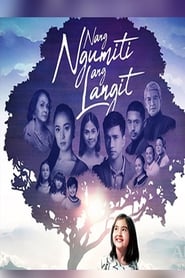
star 6.6Seoyoung cuts off her cable with her incompetent and troublesome father, trying to get out of her misery. Family is tied not only by blood but also by love.Nang Ngumiti Ang Langit
2019
Nang Ngumiti ang Langit is a 2019 Philippine drama television series starring Sophia Reola. The series premiered on ABS-CBN's PrimeTanghali noontime block and worldwide on The Filipino Channel from March 25 to October 18, 2019, replacing Playhouse.Mensonges
2014
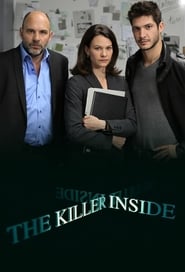
Mensonges
2014
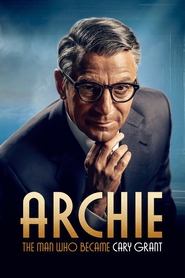
star 4.4Psychological crime series following the investigations of interrogation experts Julie Beauchemin and Maxime Moreli.Archie: The Man Who Became Cary Grant
2023
star 6.1The four-part drama series will tell the story of Cary Grant’s life, from his humble beginnings as Archie Leach in Bristol, England to the Hollywood leading man he became.War Sailor
2023
War Sailor
2023
star 7.7When WWII erupts, two sailors on a Norwegian merchant ship face brutal conditions as they fight to survive a conflict they were never asked to join. Based on true stories of Norwegian merchant sailors and their families during and after World War II.Cold Blood Warm Heart
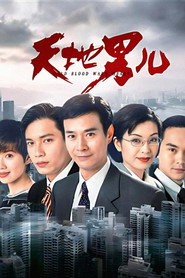
1996
star 7Bong (Adam Cheng) blamed Sing (Kwan Hoi San) for abandoning his mother and refused to acknowledge him as his father even he was one of the richest men in town. He loved and admired his foster father Kin (Bow Fong), who was a retired cop. He and his brother Lap (Gallen Lo) followed Kin’s footsteps and joined the force. Bong’s half-brother Kei (Poon Chi Man) was involved in a murder case and Bong in turn got suspended since his superior Kin (Julian Cheung) suspected he was Kei’s conspirator. Fortunately, he was proved innocent by Hang (Eddie Cheung)......Noble House
1988
Noble House
1988
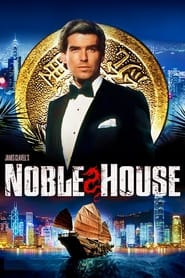
star 7.1Despite its impressive history and reputation, the international trading company Struan's is in trouble. Overextended by the previous management, new tai-pan Ian Dunross has had to issue public stock to improve the company's financial standing. Even this, however, has not given him the capital he needs. As a result, he is courting a private investor, American billionaire Linc Bartlett. Bartlett decides secretly to back Dunross' arch enemy, Quillian Gornt, who will stop at nothing to destroy Struan's. When Dunross realises that Gornt is suddenly strong enough to ruin the Noble House, he must urgently forge new alliances or reshape ancient ones.The Law of Nature
2026
The Law of Nature
2026
star 9Yaman and Doğa’s paths cross once again, years after a disastrous first encounter during a job interview. As two strong-willed people from completely different worlds, their initial clash gradually turns into an inevitable connection as fate begins to reshape both of their lives.Mother Teresa
2003
Mother Teresa
2003
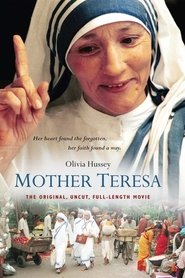
star 4.7In poverty-ravaged Calcutta, Sister Teresa, a teacher at a boarding school for wealthy girls, feels God's call to leave everything behind to devote herself to those most in need. With determination, she defies church rules and plunges into the crowded streets, bringing comfort to the sick and marginalized, thus beginning her extraordinary mission of charity.Your House Helper
2018
Your House Helper
2018
star 7.5Kim Ji-Woon was born to a lawmaker father and doctor mother. He then went on to work at a big company, but he quit his job and stopped talking to his parents. Kim Ji-Woon meets a woman and begins to work as a housekeeper at her home. While doing his job, he listens to his customer's worries and gives advice to help them solve their problems.ABG
2002
The Troubleshooters
1959
The Troubleshooters
1959
star 10The Troubleshooters is an American 26-segment half-hour adventure series starring Keenan Wynn as Kodiak and Bob Mathias as Frank Dugan. The show aired on NBC Television from September 11, 1959, to April 10, 1960. Based on events at international construction sites, the program was directed by Robert Altman early in his career. It was the first TV series offered by United Artists. It starred Chet Allen as Slats, Roland "Bob" Harris as Jim, Bob Fortier as Scotty, and stunt actor Carey Loftin as Skinner. Forrest Compton also appeared in two episodes as Davis.The Flood
2017
The Flood
2017
star 7The Mandoah family leads a humble life, with the mother, Safia, bringing up her children after the death of her husband. Her husband has left a piece of land in Ismailia that turns out to be part of the planned area for the Suez Canal project, which causes the price of the land to skyrocket to 300 million pounds. They each find themselves owning millions in the blink of an eye. What will come next?Thief
2006
Thief
2006
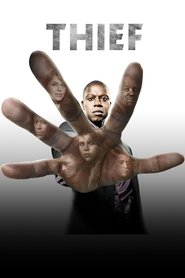
star 6.6Nick Atwater, the leader of a robbery crew, is balancing his personal life with the planning of a major heist while being targeted by a relentless cop and the Chinese mafia.Solos
2021
Solos
2021
star 6.7Anthology series telling character-driven stories set at different moments in time, aiming to showcase that during people's most isolated moments, and in disparate circumstances, the human experience connects everyone.Kangxi Dynasty
2001
Kangxi Dynasty
2001
star 8.4Kangxi Dynasty is a 2001 Chinese television series based on the novel Kangxi Da Di by Eryue He. The series is a prequel to the 1997 television series Yongzheng Dynasty, and was followed by Qianlong Dynasty in 2002.