Comedy TV Series - Page 418

American Woman
2018
American Woman
2018
star 4.8This 1970s period dramedy inspired by the real life Kyle Richards and set amid the sexual revolution and the rise of second-wave feminism follows Bonnie, an unconventional mother struggling to raise her two daughters after leaving her husband. With the help of her two best friends, Kathleen and Diana, these three women will each discover their own brand of independence in a world reluctant to give it.Insert Name Here
2016
Insert Name Here
2016
star 6.7Comedy panel show about people with the same first name, hosted by Sue Perkins.Your Neighbor's Wife
2013
Your Neighbor's Wife
2013
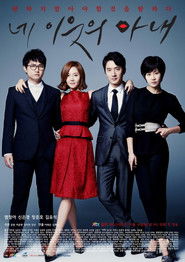
star 7Imagine a charming person moves in next door and starts flirting with you! A married couple was once very much in love. However, after spending a long time together, they have become indifferent toward one another and are desperately in need of something new. Song Ha is a competent working woman with two children, married to Sun Kyu, a narrow-minded idealist. One day, a couple moves in next door. One is Kyung Joo, a dedicated housewife who is all about housekeeping and supporting her family, and the other is her husband Sang Shik, a patriarchal man. Song Ha and Sun Kyu, who were frustrated with each other, are attracted to their new neighbors, who are totally different from their spouses. What will these couples get up to with their whirlwind of emotions? They have nowhere to run or hide! From romance to sexy comedy, mystery, and even thrilling situations!Bremner, Bird and Fortune
1999
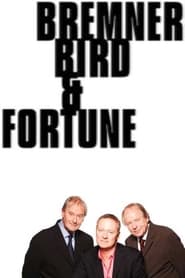
star 7.5Bremner, Bird and Fortune is an award-winning satirical British television programme produced by Vera Productions for Channel Four, uniting the longstanding satirical team of John Bird and John Fortune with the satirical impressionist Rory Bremner, and to date has 16 series.Kamen Rider Wizard in Magic Land Seriously!?
2013
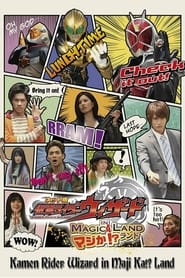
star 7.5To promote the film, Toei is releasing a series of online shorts titled Kamen Rider Wizard in Magica Land (ネット版 仮面ライダーウィザード イン マジか!?ランド, Netto-ban Kamen Raidā Wizādo In Maji ka!? Rando, (マジか!?, Maji ka!?) means "Really!?"), featuring several unbelievable stories. The Kamen Rider Cops (仮面ライダー刑事(デカ), Kamen Raidā Deka) films feature past Kamen Riders as part of Rinko's police force. The Kamen Rider Mage (仮面ライダーメイジ, Kamen Raidā Meiji) films feature Shunpei as the hero. The Search for Magic Riders! (魔法ライダーを探せ!, Mahō Raidā o Sagase!) looks at past mystically-themed Kamen Riders. The Koyomi's Room: Premium (コヨミの部屋・プレミアム, Koyomi no Heya Puremiamu) films show Koyomi's various interests outside of helping Haruto.Sam
2016
Sam
2016
star 6Sam is an atypical teacher who has been cured of cancer and faces life's challenges through her outspoken manner, especially from her three children, who don"t look upon her as reverentially as Sam's students.Magikano
2006
Magikano
2006
star 4.2Magikano is a manga series by Takeaki Momose, which was later adapted into an anime series, directed by Seiji Kishi and written by Hideki Mitsui. The anime series was also broadcast by Animax, who adapted and dubbed the series into English for broadcast across its English language networks in Southeast Asia and South Asia from February 2007, where the series received its English language premiere. ADV Films has licensed the rights for the North American release of Magikano on DVD for $65,000, and released the first volume on December 4, 2007. ADV Films' Anime Network began airing the anime on January 3, 2008 on their Subscription On Demand platform. On March 6, 2008 the anime began airing on their Free On Demand platform. In July 2008, the series became one of over 30 ADV titles to be transferred to Funimation.Pataclaun
1997
Desus & Mero
2016
Desus & Mero
2016
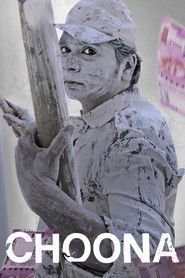
star 4.9The Bronx's very own Desus Nice and The Kid Mero, aka the Bodega Boys, give you their takes on politics, sports, entertainment and other subjects they don't really know about. The brand is strong! Watch this because Mero has mad kids and Desus loves sneakers and they’re funny and the other late night shows are corny AF.Choona
2023
Choona
2023
star 6.9When an unlikely group of misfits discovers a common enemy in the same ruthless yet superstitious politician, they plot a heist to exact revenge.Super Robot Monkey Team Hyperforce Go!
2004
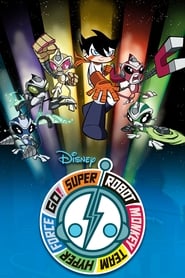
star 7.3Super Robot Monkey Team Hyperforce Go! is an American/Japanese animated television series, and was created by Ciro Nieli, one of the directors of Teen Titans, with animation being done by a Japanese studio known as The Answer Studio. Set mainly on the fictional planet of Shuggazoom, the series follows the adventures of five cyborg monkeys and a human boy named Chiro as they struggle to protect their planet - and the rest of the universe - from the forces of evil. As is obvious from the visual appearance of the show, there is a significant anime influence present, despite being produced for American television. It was also influenced by Star Trek, Super Sentai, Voltron, and Star Wars. The show also contains various references to pop culture, a notable example being the episode "Season of the Skull", which is a parody of the 1970s thriller The Wicker Man.Ciega a citas
2014
Ultraman Kids: 30 Million Light-Years in Search of Mother
1991
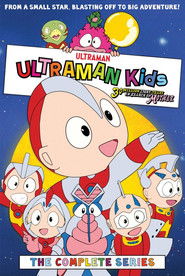
star 10The Ultraman Kids are a lovable bunch of outer space kids on a quest through the galaxy to find their leader Mar’s missing parents. Along the way they have fun and adventures and even learn a thing or two! Mar is the leader of the Ultraman Kids. He’s a curious fun-loving little boy with a taste for adventure and a talent for mischief. Pico is a bright clever girl, capable of anything the Ultra Boys can do. Tar is the strongest of the Ultraman Kids. Unfortunately he’s somewhat lacking in brain power. Sebu is the Ultraman Kids’ resident scientific genius. He’s complete, concise and well-organized, the exact opposite of Mar. Pigco is a lovable, squeezable creature and a fine friend to all the Ultraman Kids. Pigco is always seen together with little Midori. Sometimes it seems as if the two of them are two parts of one strange creature. Varu is the self-proclaimed head of the monster crew. He’s conceited, short tempered and determined to spoil the Kids’ fun.Leap of Faith
2002
Leap of Faith
2002
star 8.5Leap of Faith is a half-hour single-camera comedy that aired on NBC in early 2002, right after Friends on NBC's Thursday comedy block at 8:30 PM EST, as part of Must See TV. One of the highest rated shows to be cancelled, the series ended after just six episodes, despite ranking 12th for the season and having an average of 16.5 million viewers per episode.Fighting Beauty Wulong
2005
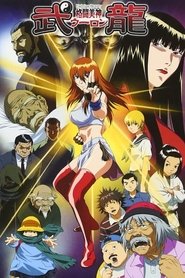
Mao Ran, a girl of Chinese origin born and raised in Japan, has been trained in the secret martial art of her family by her drunken lecherous grandfather Master Mao Hung. Her grandfather has promised her that he'll tell her what happened to her parents to encourage her to train and fight. Without her knowledge, her grandfather signs her up to participate in a televised martial arts competition between female martial artists known as "Prime Mat".Valentine's Day
1964
Valentine's Day
1964
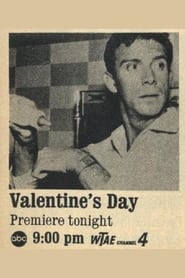
star 8Valentine's Day is a 1964 comedy television series that appeared on ABC's schedule. The series starred Tony Franciosa as Valentine Farrow, a swinging Manhattan publishing executive, and Jack Soo, later of Barney Miller as Rocky Sin, Farrow's poker-playing con-artist valet. The show was created by Hal Kanter and lasted only one season. One noteworthy episode was produced as a tie-in to the movie Rio Conchos, in which Franciosa co-starred; he played both Valentine and his Mexican character from the feature.Cómplices
2025
Cómplices
2025
star 7.3María José, Paula, Roberta, and Stacy, four women work in the production of a television talk show. Their lives take an unexpected turn when the show's producer—a man who has tormented them for years—appears dead. From that moment on, they become suspects in the crime. Although they proclaim their innocence, this unexpected situation becomes the spark that unites them, pushing them to rediscover themselves and embrace life with more freedom and humor.Cinderella Boy
2003
Cinderella Boy
2003
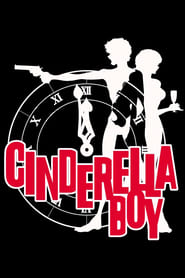
star 7.5Cinderella Boy follows the adventures of impoverished private detective Ranma Hinamatsuri and his thrill-seeking rich girl partner Rella "Cindy" Shirayuki in a futuristic city named "Kirin Town". Kirin Town is a lawless European city-state with its own currency with the name of the city being a pun on the English word for "killing". The two are badly injured when they stumble across an organised crime operation and are put back together into the same body by a mysterious doctor. Every night the stroke of midnight, their shared body changes both form and identity. Ranma becomes Rella, or vice versa. Neither is aware of any actions or situations their partner is involved in, completely losing consciousness until twenty-four hours later, when the change comes around to them again.Trait d'humour
2016
Trait d'humour
2016
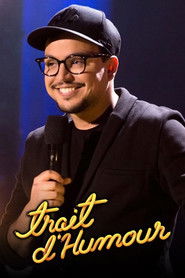
Trait d’humour gives carte blanche to up-and-coming comedians. In every episode, a comedy star welcomes four young comics who perform their stand-up acts.Fitil (Film Magazine)
1962
star 7.5A satirical film magazine produced by various film studios in the USSR from 1962 to 1991 and in the CIS from 1992 to 2003. The magazine's issues consisted of various stories: feature films, documentaries (with dubbed characters), and cartoons.