Western TV Series - Page 18

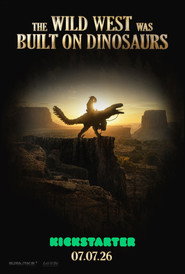
Dinosaurs of the Wild West
2027
Dinosaurs of the Wild West is an alternate-history adventure media franchise and cinematic universe project blending American frontier mythology with a world where humans and dinosaurs have coexisted and shaped civilization together for generations.老旦是一棵树
1998
老旦是一棵树
1998
Born to the Wind
1981
Born to the Wind
1981
star 7The series, set on the American frontier in 1825, follows the lives of a tribe of Plains Indians who call themselves The People.The Young Pioneers
1978
The Young Pioneers
1978
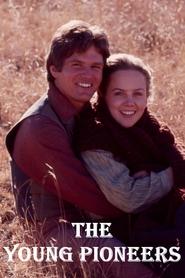
star 6.5The Young Pioneers is a three-episode ABC western television series starring Linda Purl and Roger Kern in the role of young newlyweds Molly and David Beaton, who settle in the Dakota Territory during the 1870s. The program was based on novels of Rose Wilder Lane, daughter of Laura Ingalls Wilder, whose work inspired NBC's Little House on the Prairie starring Michael Landon. The Young Pioneers aired at 7 p.m. Eastern on Sundays on April 2, 9, and 16, 1978. The recurring cast included Robert Hays as Dan Gray, Robert Donner as Mr. Peters, Mare Winningham as Nettie Peters, Michelle Stacy as Flora Peters, and Jeff Cotler as Charlie Peters. A Martinez portrayed the Indian Circling Hawk. Geno Silva played another Indian, Fool's Crow. The episodes are entitled "Sky in the Window", "A Kite for Charlie", and "The Promise of Spring".The Boys of Twilight
1992
The Boys of Twilight
1992
star 6.7The Boys of Twilight is an American televisions series that aired on CBS in 1992. The series follows the adventures of two aging lawmen who attemps to maintain order in Twilight, Utah.Lucky Luke
0000
Lucky Luke
0000
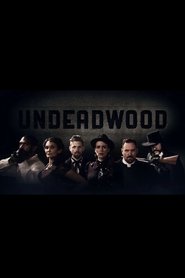
UnDeadwood
2019
UnDeadwood
2019
star 6.5In the not-so-sleepy town of Deadwood, where rumors of supernatural happenings and illegal mining activity have come to a head, five strangers to each other are hired to investigate supernatural rumors by a local community pillar, fight an evil they've never encountered — and will fight to save their very souls in the process.Kung Fu
1972
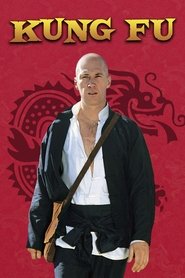
Kung Fu
1972
star 7.7The adventures of a Shaolin Monk as he wanders the American West armed only with his skill in Kung Fu.Präriejäger in Mexiko
1988
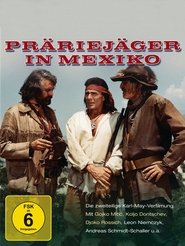
star 7.2Mexico in the 1870s. The French expeditionary force lands in Mexico. Emperor Napoleon III of France and local conservatives establish a monarchy in the country and decide to place their protégé, Archduke Maximilian of Habsburg, on the Mexican throne. In the ensuing war of national liberation, the freedom-loving Indians, the Maztecs, led by their chief Bear's Eye, side with the legitimate deposed president of Mexico, Benito Juárez.The Marshal of Gunsight Pass
1950
star 8The Marshal of Gunsight Pass is an American 1950 live broadcast western television series starring Russell Hayden, former Country music singer Eddie Dean, and Riley Hill as Marshal #1, Marshal #2, and Marshal #3, respectively. Hayden is not identified by a character name. Dean uses his own name in the series, and Hill is known as "Riley Roberts". The program hence went through three leading actors in its six-month run. Roscoe Ates played Deputy Roscoe; Andy Parker, Andy, and Bert Wenland, Bud Glover. Jan Sterling, then Jane Adrian, appeared at the age of twenty-nine as Ruth, the girlfriend of the 55-year-old Roscoe. The Internet Movie Data Base lists only the premiere episode of The Marshal of Gunsight Pass: "Shotgun Messenger", which aired on March 12, 1950. Other actors appearing in the episode were Hugh Hooker as David Clay, Marshall Reed as Larry Thomas, and Steve Conte as The Road Agent. Three actors made their only career screen appearances on The Marshal of Gunsight Pass: Eddie Coffman as "The Gunfighter",Saturday Roundup
1951
Saturday Roundup
1951
star 6.5Saturday Roundup is an American Western television program that aired on NBC on Saturday night from June 10, 1951 to September 1, 1951 at 8:00 p.m Eastern time .U.S. Marshal
1958
U.S. Marshal
1958
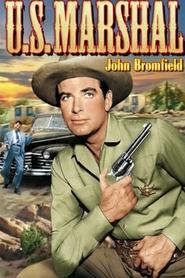
star 6United States Marshal (renamed from Sheriff of Cochise) is a crime drama set in Tuscon, Arizona about a U.S. Marshal fighting crime. After "U.S. Marshal" ended its run in 1960, both it and its predecessor series "The Sheriff of Cochise" were syndicated under the unified title "The Man from Cochise". This series was created when the title character of the 1956-58 TV series The Sheriff of Cochise (1956), a role also played by John Bromfield, accepted the position of U.S. Marshal based in Yuma, AZ.Saddle Rash
2002
Saddle Rash
2002
star 5Saddle Rash is a canceled comedy animated series. The pilot episode was featured on March 24, 2002 on Cartoon Network's "Adult Swim" programming block. Saddle Rash was created by Loren Bouchard, co-creator of Home Movies. It uses the same low-budget Flash animation technique found in seasons two and up of Home Movies.Durgo Rawhoshyo
2023
Durgo Rawhoshyo
2023
Seeds of crime, ploys of destruction, and legends of a hidden treasure lurk in an erstwhile royal fort of Jankigarh. Shotyaneshi Byomkesh Bakshi returns, along with Ajit and Satyabati, to unravel the mysteries in the dark hallways of the mysterious fortress.Meowment
2026
Meowment
2026
The Adventures of Oky Doky
0000
star 8The Adventures of Oky Doky is an American children's television program that aired on the DuMont Television Network on Thursdays at 7pm ET from November 4, 1948 through May 26, 1949. Sometime in early 1949, the time slot for the show went from 30 minutes to 15 minutes. In March, the show was cut back to Tuesdays and Thursdays at 6:45pm ET. The show had many similarities with Howdy Doody, including a frontier/western theme and a cowboy puppet as the title character.Kauda Boy (Lucky Luke)
2008
Kauda Boy is a Sinhala-dubbed animated series that brings the Wild West to life with action-packed adventures and witty humor. Following the exploits of a lone cowboy, the show delivers thrilling encounters with outlaws, clever showdowns, and lighthearted moments that have captivated audiences. Originally adapted from Lucky Luke, this Sri Lankan rendition has entertained generations with its distinctive style and engaging storytelling.Silia Prinsessia
2013
Wrangler
1960
Wrangler
1960
star 7Wrangler is an American Western television series starring Jason Evers that aired on the NBC television network from August 4 to September 15, 1960. In Wrangler, Evers played Pitcairn, a wrangler who roamed the Old West, finding adventures along the way. However, Wrangler did not have much of a chance to find adventure because the series lasted only for six episodes. It was a summer replacement series for The Ford Show Starring Tennessee Ernie Ford, but did not garner high enough ratings to become a full-fledged series. Guest stars included Tyler McVey in the episode "Incident at the Bar M". Three years after Wrangler, Evers landed the lead in the 26-episode ABC drama Channing set on a fictitious college campus.Hurt
2026
Hurt
2026
The town is Reddington, there’s nothing much left of the place. With Mayor Mason and his crime and corruption soaking up what’s left, a young man named William could be the only one to change it, that’s until everything he has is taken away from him. Out for revenge and redemption, he won’t stop until he’s finished with the people who wronged him.