Mysterie TV Series - Page 84

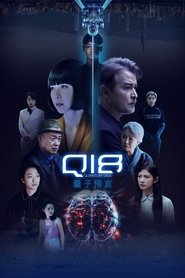
Q18 Quantum Dice: Allegory of The Quantum
2024
star 10Dr. Ko creates two quantum AIs, Black and White, designed to grow alongside his cryogenically frozen son and form a unique friendship. As they navigate Q18, Black and White gradually learn about human nature, consciousness, and emotions. By connecting the quantum computer with the human brain, they help the boy with cryogenic syndrome experience love and friendship. However, as this utopian existence takes shape, Dr. Ko fears that technology has spiraled out of control and decides to destroy Black and White, leading to an intense conflict with his son.Lover or Stranger
2021
Lover or Stranger
2021
star 6.3After an avalanche, a young violinist loses her memory. Facing her mysterious entrepreneur fiancee and their upcoming wedding, she must find herself again amidst the confusion and secrets.Spiral
2005
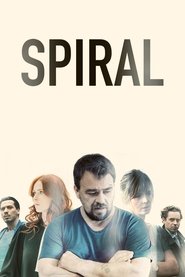
Spiral
2005
star 7.9This gritty crime drama set in the dark underbelly of Paris follows police officers and lawyers as they investigate and prosecute crimes. Throw any romantic notion of Paris out the window. Crime is dark. The legal system is darker. This is Spiral.My Beautiful Bride
2015
My Beautiful Bride
2015
star 6.6This drama is about a husband, Kim Do Hyung who desperately searches for his wife, Yoon Joo Young who suddenly disappears. Meanwhile, Cha Yoon Mi is the detective on the case who helps him along the way.Dear Child
2023
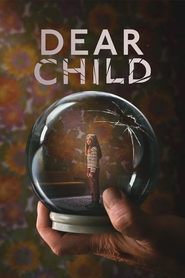
Dear Child
2023
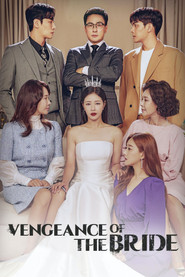
star 7.3A mysterious woman's escape from her harrowing captivity points investigators toward the dark truth behind an unsolved disappearance 13 years earlier.Vengeance of the Bride
2022
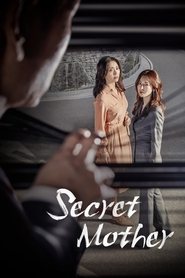
star 5.3The story of a woman who becomes the daughter-in-law of an enemy for desperate revenge.Secret Mother
2018
Secret Mother
2018
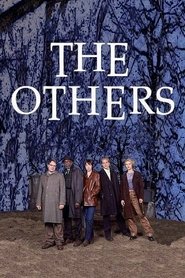
star 4.4Story of a mysterious surrogate mother who enters the home of a woman holding the secret behind her child's death.The Others
2000
The Others
2000
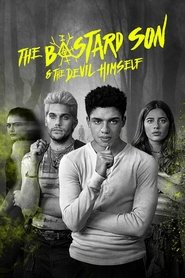
star 6.2The Others is an American TV series created by John Brancato and Michael Ferris, and produced by Delusional Films, NBC and DreamWorks Television. It ran for 13 40-minute episodes from February 5, 2000 to June 10, 2000, airing on NBC in the US, Five in the UK and on Nine in Australia. It concerned a group of people with various psychic talents as they encountered different, and often evil, paranormal forces, Essentially an ensemble show.The Bastard Son & the Devil Himself
2022
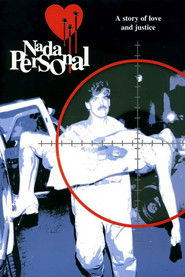
star 7.4Caught between two warring clans, the son of a notorious witch responsible for a deadly massacre tries to find his place in the world — and his powers.Nothing Personal
1996
Nothing Personal
1996
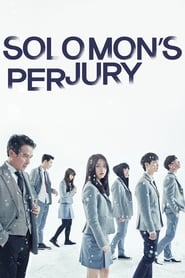
star 7Police chief Fernándo Gomez Miranda kills his friend, the well-respected lawyer and likely candidate for Attorney General, Raúl de Los Reyes and his youngest daughter of only thirteen in a vehicle ambush. Gomez' son, Luis Mario – a sad-eyed broadcast journalist of passionate conviction – arrives on the scene soon after with his camera and discovers a wounded survivor in the car; Camila, the eldest daughter of de Los Reyes. Luis rushes her to the hospital, saving her life and thereby creating a bond between them that he cannot escape. Luis' half-brother, police detective Alfonso Carbajal, is assigned to the case. An old schoolmate of Camila's, Alfonso has long been in love with her and conflicts arise when all evidence points to Camila being involved in the drug trade. The two brothers find themselves caught between their professional duty that would require them to expose Camila and their desire to protect her.Solomon's Perjury
2016
Solomon's Perjury
2016
star 7.1A male student's body is found at school. Authorities assume that the student killed himself in a fall. Other students at the school hold a trial to uncover the truth behind his death.Johnny Staccato
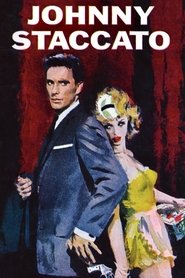
1959
Johnny Staccato
1959
star 5Jazz pianist Johnny Staccato supplements his meager musician's income by working as a private detective. The background for many of the episodes is his friend "Waldo's" jazz club in New York City's Greenwich Village, featuring performances by the Pete Candoli jazz combo which included Barney Kessel, Shelly Manne, Red Mitchell, Red Norvo and Johnny Williams. The theme was composed by Elmer Bernstein.Monster
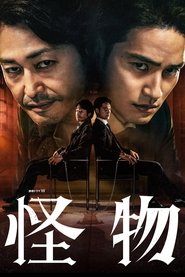
2025
Monster
2025
star 8.3Twenty-five years after a college student vanishes—leaving only the first joint of her finger behind—the case remains unsolved. Her twin brother, now a local police officer, is forced to team up with a transferred elite cop he doesn’t get along with. When a call leads them to search for a missing elderly man, they uncover clues that may finally unravel the long-buried truth.The Truth
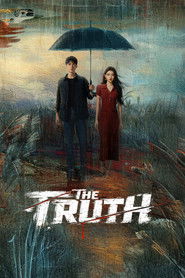
2026
The Truth
2026
star 6.4The Forensic Unit of the Yunxi City Police Department is where the most major and baffling cases converge. Led by Captain Leng Qiming, a team of young, sharp investigative minds—including Ye Qian, Si Yuanlong, Jiao Lei, and Zhang Ziwu—tackles each puzzle. As they peel back the layers of one bewildering crime after another, they expose not just the truth but the raw nature of those involved. Yet just when one mystery seems solved, another emerges from within it. Step by step, as the truth comes to light, so too does the real face of human nature.YES OR NO
2021
YES OR NO
2021
star 7"Yes or No" is a reasoning variety show that reveals the truth behind strange stories through a simple question-and-answer format. It breaks away from the complicated setups of traditional mystery programs, focusing on straightforward reasoning to uncover each story’s truth. Each episode features five guests—four detectives and one client. The client briefly reenacts the story of the episode, while the four detectives search for the truth by asking questions that can only be answered with “yes” or “no.” The show centers on the process of logical deduction, allowing the guests to get closer to the truth through each exchange. With a runtime of about ten minutes per episode, it simplifies complex formats and brings reasoning to its most concise form.Chambers
2019
Chambers
2019
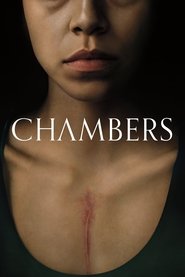
star 6.6Haunted by eerie visions and sinister impulses after a heart transplant, a teenager tries to unmask the truth behind her donor's mysterious death.Nine: Nine Time Travels
2013
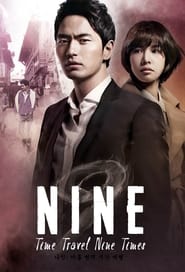
star 7.6Park Sun-Woo works as an anchorman at a TV broadcasting station. He is in love with newsreporter Joo Min-Young, who is bright and honest. Park Sun-Woo then obtains 9 incense items, which allows him to go back 20 years in time. Park Sun-Woo travels to the past.Shade of Darkness
1994
Shade of Darkness
1994
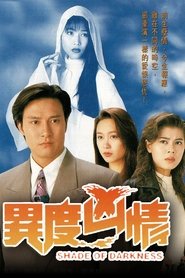
star 10Shade of Darkness is a 1994 horror series by Hong Kong television broadcaster TVB. Produced by Mui Siu-ching it featured a cast which included Canti Lau, Kenix Kwok and Ada Choi.Mickey Spillane's Mike Hammer
1958
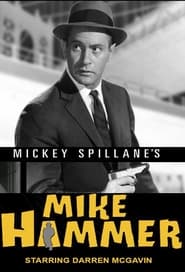
star 6.6Mickey Spillane's Mike Hammer is the title used for two syndicated television series that followed the adventures of fictional private detective Mike Hammer. The gritty, crime fighting detective—created by American crime author Mickey Spillane—has also inspired several feature films and made-for-TV movies.Vacation Playhouse
1963
Vacation Playhouse
1963
star 7The concept of the series was the showing of unaired and unsold television pilots that did not make the television lineup for CBS. The show was successful during its first few seasons due to the fact that the show's concept, airing unsold and unaired television pilots, was a popular concept in the 1960s. But during its last two seasons on the air, the series did find some trouble due to the fact that the series were running out of pilots to air and, in their 4th season, they began airing repeats from the three seasons prior. During its 1966 summer run, the series aired eights new pilots and two repeats and during its last year airing five new pilots and four repeats.