Documentary TV Series - Page 425

Edit 2018
2018
Edit 2018
2018
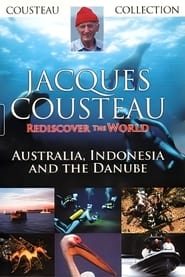
Jacques Cousteau: Rediscover the World II | Australia, Indonesia and the Danube
1992
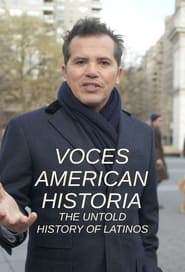
Oceanographer Jacques-Yves Cousteau and the Calypso set sail to research far-off cultures and species of aquatic life in the second installment of the explorer's nature series 'Cousteau's Rediscover the World'.VOCES American Historia: The Untold History of Latinos
2024
star 5.5New three-part series follows John Leguizamo’s continued quest to uncover the history and often overlooked contributions of Latino people.Ukiyoe EDO-LIFE
2018
Ukiyoe EDO-LIFE
2018
Centuries ago, Tokyo was known as Edo. More than a million people enjoyed life in this small but abundant city. They live on in ukiyo-e woodblock prints. Each episode is a deep dive into a single print, and an exploration of the soul of Old Tokyo. We examine works by artists like Hokusai and Hiroshige not just for their aesthetic and historical value, but for the stories they tell of everyday life. That is how the people of Edo themselves enjoyed this mass-produced medium.La Aventura del Pensamiento
2013
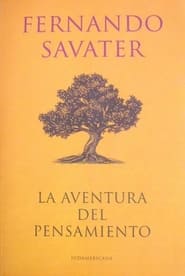
star 7La Aventura del Pensamiento is a philosophy series presented by Fernando Savater about great occidental philosophers.Černá sanitka
2008
Černá sanitka
2008
Black Market
2016
Black Market
2016
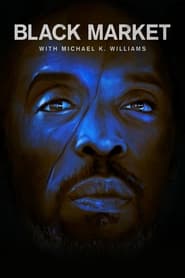
star 6.1In his most personal project to date, Michael K. Williams explores underground economies in America and around the world.States of Undress
2016
States of Undress
2016
star 6.8Hailey Gates explores global fashion and issues the industry often ignores, showing us what the world wears, and why.Life After Life
2020
Life After Life
2020
"Life After Life" is a different program about death and the other world on Chaharsima network for mystical minutes before breaking the fast. "Life after life" is the narrative of people who, in a near death experience (English equivalent: Near Death Experience), left the physical body and returned to the physical body after observing the boundless passages of the unseen world. In this program, by traveling to different parts of Iran and the world, the audience of the program becomes guests of the amazing narratives of near-death experiencers from another world.Greatest Mysteries
2013
Greatest Mysteries
2013
History explorer and museum enthusiast Don Wildman travels the globe to some of the most iconic and carefully-guarded places in the world where he will share many of their fascinating stories.Banned! The Mary Whitehouse Story
2022
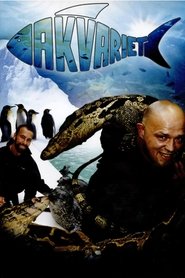
star 7In 1963, armed with just a typewriter, a Midlands housewife began a 30-year battle against the permissive society. But how successful was the original 'cancel culture' warrior?Akvariet
2007
Akvariet
2007
Art Traffickers: Treasures Stolen from the Tombs
2021
star 6.5Through a combination of interviews and studio reconstructions, recount the gripping stories behind those who have excavated and stolen masterpieces.Futari no Ultraman
2022
Futari no Ultraman
2022
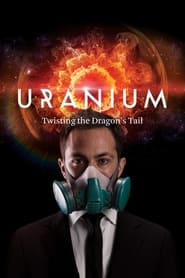
A docudrama about Tetsuo Kinjo and Shozo Uehara, two writers who worked on the original Ultraman series. It also features interviews with other production staff.Uranium: Twisting the Dragon's Tail
2015
star 7A stunning new documentary series exploring the incredible story of uranium, from its creation in an exploding star to its deployment in nuclear weapons, nuclear power, and nuclear medicine. It’s a journey across nine countries and more than a century of stories, to discover the rock that made the modern world. It’s part science, part history, and all epic adventure. Join physicist and YouTube phenomenon Dr. Derek Muller as he reveals the untold story of the most wondrous and terrifying rock on Earth.Killing Bigfoot
2017
Killing Bigfoot
2017
star 1.4Under Bobby Hamilton and Jim Lansdale's leadership, the Gulf Coast Bigfoot Research Organization (GCBRO) is on a mission to help families terrorized by Bigfoot and prove once and for all that the fabled creature exists by killing one specimen - and providing a body of definitive scientific proof.The History of the Greek Railways
2022
star 9It all starts on 1830, when young George Stephenson manufactures the first steam engine and the first railway networks are built soon after. Railway becomes a crucial factor in the development of trade and military strength for a country, with its ability to quickly transport soldiers and munitions. Railways expand rapidly in Europe and arrive soon in Greece.Europa Selvaggia
1980
Europa Selvaggia
1980
The Film Chronicle of BAM
1991
The Baikal-Amur Mainline is known as one of the largest railway lines in the world. The construction of the main part of the railway, which took place in difficult geological and climatic conditions, took more than 12 years. By the decree of the Central Committee of the CPSU and the Council of Ministers of the USSR dated July 8, 1974 "On the construction of the Baikal-Amur railway", the necessary funds were allocated for the construction of the first category railway with a length of 3,100 km, the second Taishet—Lena track — 740 km, the Bamovskaya—Tynda and Tynda — Berkakit lines - 400 km. BAM was declared an All-Union Komsomol construction site, and masses of young people were sent here for internships.Greenland
2020