New Action TV Series - Page 449
All Services
Free Services
 Netflix
 Amazon Prime Video
 Apple iTunes
 Apple TV Plus
 Disney Plus
 Google Play Movies
 Paramount Plus
 Hulu
Hulu
 HBO Max
 YouTube
 fuboTV
 Peacock
 Peacock Premium
 Amazon Video
 The Roku Channel
 AMC+
AMC on Demand
AMC+
AMC on Demand
 Kocowa
 Hoopla
 The CW
 Vudu
Vudu
 Starz
Starz
 Showtime
 PBS
PBS
 Pantaflix
 FXNow
FXNow
 Tubi TV
 Kanopy
 Comedy Central
 Crunchyroll
 Microsoft Store
 Redbox
 Sun Nxt
 ABC
ABC
 DIRECTV
 Crackle
 Fandor
 Plex
Plex
Netflix
Amazon Prime Video
Apple iTunes
Apple TV Plus
Disney Plus
Google Play Movies
Paramount Plus
Hulu
HBO Max
YouTube
fuboTV
Peacock
Peacock Premium
Amazon Video
The Roku Channel
AMC+
AMC on Demand
Kocowa
Hoopla
The CW
Vudu
Starz
Showtime
PBS
Pantaflix
FXNow
Tubi TV
Kanopy
Comedy Central
Crunchyroll
Microsoft Store
Redbox
Sun Nxt
ABC
DIRECTV
Crackle
Fandor
Plex

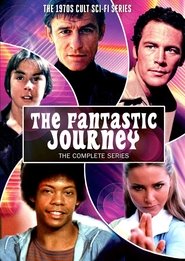
The Fantastic Journey
1977
star 6.2The Fantastic Journey was an American science fiction television series that was originally aired on NBC from February 3 through June 17, 1977.Kaiketsu Zubat
1977
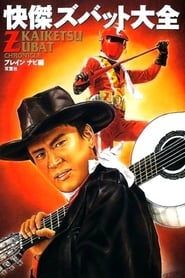
Kaiketsu Zubat
1977
star 7.4Kaiketsu Zubat, translated as Extraordinary Zubat or Magnificent Zubat, was a tokusatsu superhero series that aired in 1977. Created by Shotaro Ishinomori, this 32-episode series, harkens back to tokusatsu superhero shows of the 1950s, but with a late-1970s twist.The Hardy Boys / Nancy Drew Mysteries
1977
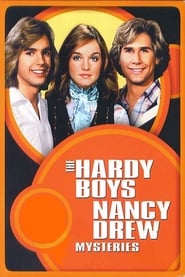
star 7.1The Hardy Boys/Nancy Drew Mysteries is a television series which aired for three seasons on ABC. The series starred Parker Stevenson and Shaun Cassidy as amateur sleuth brothers Frank and Joe Hardy, respectively, and Pamela Sue Martin as girl detective Nancy Drew. The Hardy Boys/Nancy Drew Mysteries was unusual in that it often dealt with the characters individually, in an almost anthological style. That is, some episodes featured only the Hardy Boys and others only Nancy Drew.O Espantalho
1977
Code R
1977
Code R
1977
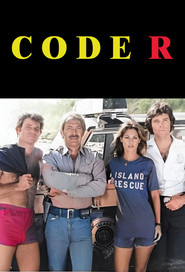
star 8Code R is an American action-adventure television series that aired on CBS from January 21 to June 10, 1977. Code R focuses on the emergency services of the California Channel Islands. The series stars James Houghton, Martin Kove and Tom Simcox and ran for a single season of thirteen episodes.The Drummer's Fate
1977
Wings
1977
Wings
1977
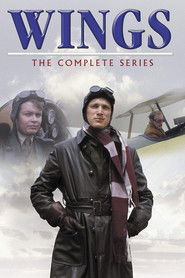
star 8.3The trials and tribulations of a daring group of young pilots in the Royal Flying Corps as they prepare for battle in World War I. The lead character joins the RFC without being the right class for some of his fellow pilots.Les Carnets De L'Aventure
1977
star 10Les Carnets de l'Aventure is a cult French television program of adventure and extreme sports documentaries broadcast on Saturday afternoons on Antenne 2 (France 2) between 1980 and 1989. At the beginning of the 80s, in full transformation of mountain activities into high level sports, Les Carnets de L'Aventure revealed from to the country that invented alpinism to the whole world the "French-Touch" of these talents of the new approach to the mountains and its new disciplines. Patrick Edlinger and solo free climbing with the film La Vie au Bout des Doigts, directed by Jean-Paul Janssen in 1982. But also his brother in arms Patrick Berhault, Christophe Profit in the solo ascent of Les Drus, the trilogies of Jean-Marc Boivin in hang-gliding, the Himalayan expoits of Marc Batard but also those of Patrick Gabarrou, opener of routes in the Alps and elsewhere, Patrick Vallencant and his extreme skiing, Paul-Émile Victor and many others...Przygody kota Filemona
1977
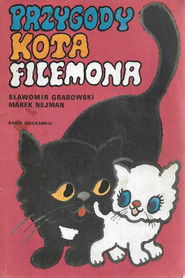
star 7.3The two main characters are: Filemon, a little white kitten, young and naïve; and Bonifacy, an old, serious black tomcat. Other characters are: the Grandmother, the Grandfather, the Puppy, a fox, mice, 'monsters from the attic', and other creatures. The cartoon is rich in elements of Polish folk legends and traditions.Time Bokan Series: Yatterman
1977
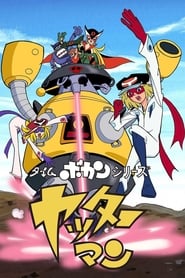
star 6.4The Yatterman duo and an evil trio led by the beautiful Florina engage in a struggle to obtain the Skull Stone—which is said to reveal the location of a gold mine. The trio seem to constantly have the upper hand, but are always foiled by Yatterman, who are able to stop their evil schemes.I tre moschettieri
1976
I tre moschettieri
1976
Curro Jiménez
1976
Curro Jiménez
1976
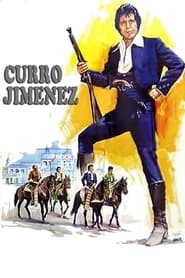
star 7.3Curro Jiménez was a successful Spanish TV series that aired on TVE1 from 22 December 1976 to 1979. Its main theme was Andalusian "bandolerismo" in the 19th century, located in the Ronda mountains. The main characters were four bandits, Curro JiménezThe Outsiders
1976
The Outsiders
1976
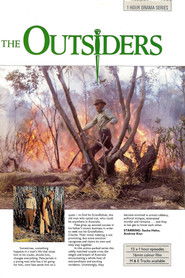
Charlie Cole and his grandson Pete Jarrett travel around outback Australia in a beaten-up ute, finding itinerant work along the way. In each place they befriend locals and become involved in an adventure, culminating in their solving a mystery, crime or local conflict. THE OUTSIDERS was the name of an Australian-German co-production which was made in Australia in 1976. It starred Andrew Keir as Charlie Cole and German actor Sascha Hehn as Pete Jarrett. It also featured other prominent Australian actors including John Jarratt of Wolf Creek fame, Wendy Hughes, Leonard Teale, Ray Barrett, Peter Cummins of Sunday Too Far Away, John Meillon of "Crocodile" Dundee fame, Megan Williams of The Sullivans fame, John Ewart, Judy Morris, Vincent Ball of A Town Like Alice, Jason Donovan's father Terry, Serge Lazaraff of Cash and Company fame, Peta Toppano, and David Gulpilil. The series was shot in English and Sascha Hehn was dubbed by Australian actor Andrew Harwood .Omaruru
1976
WWF on MSG Network
1976
WWF on MSG Network
1976
WWF on MSG Network (also advertised as WWF from Madison Square Garden) was a professional wrestling television program produced by the World Wrestling Federation (WWF). It was a series of monthly (or otherwise sporadic) television specials that aired live from New York City's Madison Square Garden on the MSG Network from August 7, 1976, to March 16, 1997. It featured live wrestling matches, interviews with WWF wrestlers, updates of current feuds, and even several major title changes also took place on the show.The New Avengers
1976
The New Avengers
1976
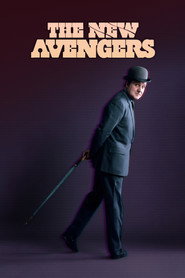
star 7.1The New Avengers is a British secret agent fantasy adventure television series broadcast during 1976 and 1977. It is a sequel to the 1960s series The Avengers and was developed by Albert Fennell and Brian Clemens. A joint United Kingdom-France-Canada production, the show picks up the adventures of John Steed and his team of Avengers fighting evil plots and world domination. Whereas in the original series Steed had almost always been partnered with a woman, in the new series he had two partners: Mike Gambit, a top agent, crack marksman and trained martial artist, and Purdey, a former trainee with The Royal Ballet who was an amalgam of many of the best talents from Steed's previous female partners.Pro-Wres no Hoshi Aztecaser
1976
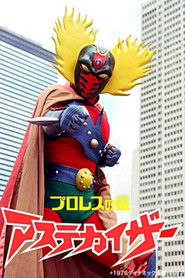
Pro-Wres no Hoshi Aztecaser also known as Pro-Wrestling Star Aztekaiser is a Japanese pro-wrestling-themed tokusatsu/anime superhero television series produced by Tsuburaya Productions, and created by Go Nagai and Ken Ishikawa. Nagai and Ishikawa created three manga series, simply named Aztecaser, published in different magazines by Shogakukan. None of them are related between them or the TV show. They were compiled in a single tankōbon in 1978, 1986 and 2001. This primarily live-action series is unique, in that, during each climactic battle with the weekly demonic menace, the titular wrestling superhero is able to transform his entire live-action surroundings into anime footage, enabling him to perform superhuman wrestling techniques that are otherwise impossible to perform in live-action.Die Buschspringer
1976