New Family TV Series - Page 466
All Services
Free Services
 Netflix
 Amazon Prime Video
 Apple iTunes
 Apple TV Plus
 Disney Plus
 Google Play Movies
 Paramount Plus
 Hulu
Hulu
 HBO Max
 YouTube
 fuboTV
 Peacock
 Peacock Premium
 Amazon Video
 The Roku Channel
 AMC+
AMC on Demand
AMC+
AMC on Demand
 Kocowa
 Hoopla
 The CW
 Vudu
Vudu
 Starz
Starz
 Showtime
 PBS
PBS
 Pantaflix
 FXNow
FXNow
 Tubi TV
 Kanopy
 Comedy Central
 Crunchyroll
 Microsoft Store
 Redbox
 Sun Nxt
 ABC
ABC
 DIRECTV
 Crackle
 Fandor
 Plex
Plex
Netflix
Amazon Prime Video
Apple iTunes
Apple TV Plus
Disney Plus
Google Play Movies
Paramount Plus
Hulu
HBO Max
YouTube
fuboTV
Peacock
Peacock Premium
Amazon Video
The Roku Channel
AMC+
AMC on Demand
Kocowa
Hoopla
The CW
Vudu
Starz
Showtime
PBS
Pantaflix
FXNow
Tubi TV
Kanopy
Comedy Central
Crunchyroll
Microsoft Store
Redbox
Sun Nxt
ABC
DIRECTV
Crackle
Fandor
Plex

Ein Haus für uns
1974
Barbapapa
1974
Barbapapa
1974
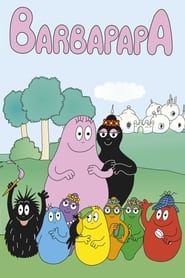
star 7The adventures of Barbapapa and Barbama and their seven children, where they search for their place in the world, while helping humans and animals.The rabbit with checkered ears
1974
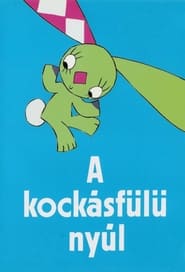
star 6.6A kockásfülű nyúl (English: "The rabbit with checkered ears") is a 26-episode Hungarian animated children's series produced from 26 August 1977 on in the studios of PannóniaFilm. Created by the acclaimed children's literature writer and graphic artist Veronika Marék and animator Zsolt Richly, its protagonist, the rabbit with checkered ears quickly became one of the most prolific mascots of Hungarian animation.Clown Ferdinand
1973
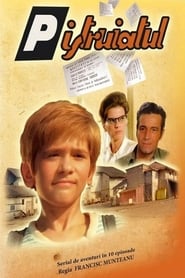
The Freckled Boy
1973
The Freckled Boy
1973
star 8.3During the times of the Second World War in Royal Romania, a street smart kid accidentally becomes part of an organization which will eventually decide the future of his country.Mumindalen
1973
Mumindalen
1973
star 10When Moomin wakes unexpectedly from his winter sleep, he discovers a strange, snow-covered world unlike anything he's known. As he explores, familiar faces and new friends slowly emerge from the silent winter landscape.Michael Bentine's Potty Time
1973
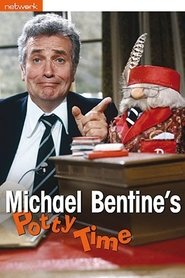
star 6.7Michael Bentine's Potty Time was a long-running British children's show, starring Michael Bentine, and directed and produced by Leon Thau for Thames Television on ITV. It ran from 1973 to 1980. The episodes consisted largely of distinctive, bearded puppets, comically re-enacting famous historical situations. The Potties' faces were always obscured by facial hair, with only their noses protruding. They were operated from beneath and had two distinct sizes - approximately two feet and one foot tall. All of the Potty characters were designed by Bentine, who also provided all of their voices. Their operators were from The Barry Smith Theatre of Puppets. In 2001, it was voted into 71st place in Channel 4's 100 Greatest Kids' TV shows poll. Several Region 2 DVDs of the series have been released by Network DVD.Molière pour rire et pour pleurer
1973
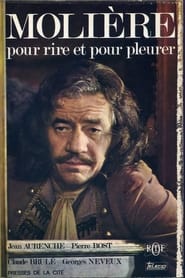
star 9.5Molière pour rire et pour pleurer recounts the life of Jean‑Baptiste Poquelin, from his childhood in an artisan family to his rise as Molière, a central figure of French theatre. The series shows his difficult decision to abandon the family trade and join Madeleine Béjart to found L’Illustre Théâtre, marked by debts and repeated setbacks. While touring the provinces, he shapes his style and discovers the power of comedy. Back in Paris, he makes a name for himself with Les Précieuses ridicules, but his sharp satires provoke fierce opposition, especially during the Tartuffe scandal. Supported by Louis XIV, he continues despite attacks, literary rivalries, and tensions within his troupe, particularly with Armande Béjart. The miniseries also follows his growing exhaustion, his determination to perform at any cost, and his final breath after Le Malade imaginaire, the ultimate symbol of an artist who lived — and died — for the stage.The Wizard of the Emerald City
1973
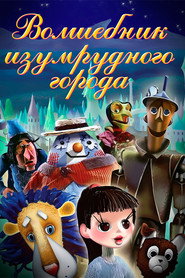
star 6The Wizard of the Emerald City (Russian: Волшебник Изумрудного города) is a ten-part stop-motion adaptation of the first book in Alexander Volkov's Magic Land series. Produced by Ekran, it is believed to have aired monthly from around December 1973 to September 1974. Because of the wicked Gingema, a young girl named Ellie and her little dog Totoshka are swept away to the Magic Country, where incredible adventures await.Pollyanna
1973
Pollyanna
1973
star 7After her father’s death, young Pollyanna moves east to live with her aunt Polly. Once there, the “Glad Game” her father taught her, begins to change the lives of the town’s residents. Based on the classics children’s book by Eleanor H. Porter.The White Stone
1973
The White Stone
1973
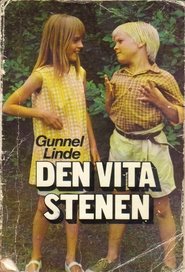
star 6.8Fia and her mother, a piano-teacher, live in the country villa with bad-tempered housekeeper Malin. One day a boy called Hampus comes to the village together with his uncle, a shoemaker.Time Lapse
1973
Mafalda
1973
Kure Kure Takora
1973
Kure Kure Takora
1973
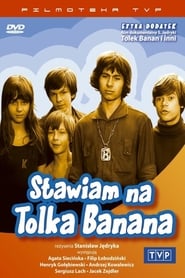
star 10Kure Kure Takora—the main character of the show wants everything he sees and says "Kure! Kure!" all the time.Stawiam na Tolka Banana
1973
star 7.4A series for young people, dealing with important educational problems, characteristic of the so-called difficult youth. The protagonists of the film - four boys and a girl aged 12-14 - are in constant conflict with the social order; they are only a step away from the hooligan lifestyle. The film shows the need for the existence of ideals, noble myths and models of behavior in the lives of young people. The characters' dreams are embodied in the romantic character of Tolek Banana, his mysterious personality stimulates their imaginations. The film presents the adventures of a youth "gang" changing their behavior under the influence of Tolek Banana. Thanks to him, the heroes learn friendship and honesty, according to the principle "one for all, all for one".Tijl Uilenspiegel
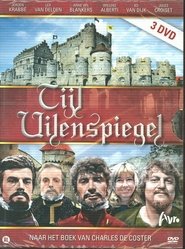
1973
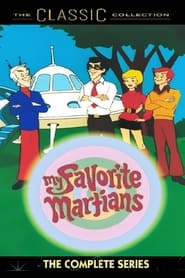
My Favorite Martians
1973
My Favorite Martians
1973
star 7.3A Martian uncle, his nephew and and their dog are stuck on Earth after their spaceship crash landed. Not wanting to be discovered, the Martians assume the identity of Katy's Uncle Martin and his nephew Andy. Katy and his uncle Tim O'Haras are the only ones who know their real identity. Reappeared in 1977 as a segment on The Groovie Goolies and Friends.