New Sci Fi Fantasy TV Series - Page 402
All Services
Free Services
 Netflix
 Amazon Prime Video
 Apple iTunes
 Apple TV Plus
 Disney Plus
 Google Play Movies
 Paramount Plus
 Hulu
Hulu
 HBO Max
 YouTube
 fuboTV
 Peacock
 Peacock Premium
 Amazon Video
 The Roku Channel
 AMC+
AMC on Demand
AMC+
AMC on Demand
 Kocowa
 Hoopla
 The CW
 Vudu
Vudu
 Starz
Starz
 Showtime
 PBS
PBS
 Pantaflix
 FXNow
FXNow
 Tubi TV
 Kanopy
 Comedy Central
 Crunchyroll
 Microsoft Store
 Redbox
 Sun Nxt
 ABC
ABC
 DIRECTV
 Crackle
 Fandor
 Plex
Plex
Netflix
Amazon Prime Video
Apple iTunes
Apple TV Plus
Disney Plus
Google Play Movies
Paramount Plus
Hulu
HBO Max
YouTube
fuboTV
Peacock
Peacock Premium
Amazon Video
The Roku Channel
AMC+
AMC on Demand
Kocowa
Hoopla
The CW
Vudu
Starz
Showtime
PBS
Pantaflix
FXNow
Tubi TV
Kanopy
Comedy Central
Crunchyroll
Microsoft Store
Redbox
Sun Nxt
ABC
DIRECTV
Crackle
Fandor
Plex

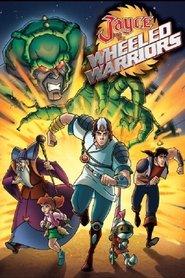
Jayce and the Wheeled Warriors
1985
star 6.9The Lightning League drives white and silver vehicles with assorted weaponry, and are led by a teenager named Jayce. The villains are organic green vegetable-based creatures called the Monster Minds, who tend to take the shape of black and green vehicles. They travel via large green organic vines which can grow in and across interstellar space, and sprout seeds that rapidly grow into further Monster Minds. They are led by Saw Boss.Dirty Pair
1985
Dirty Pair
1985
star 7.6The semi-coherent adventures of two teenage intergalactic private eyes, Kei and Yuri. Members of Trouble Consultant team 234, their code name is 'Lovely Angels'. However, they're better known – universe-wide, in fact – as the 'Dirty Pair', a moniker they're not fond of. Their arrival at the scene is always a source of hope and dread, since they always solve the case, but wherever they go, something gets destroyed, up to and including entire planets. Luckily for them – but not so much for the universe – there's typically some extenuating circumstances that support their oft-uttered phrase, "It's not our fault".Konpora Kid
1985
Konpora Kid
1985
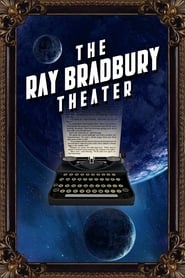
Jr. is an eight year old teacher. His students include babies and adults. This is a comedy portraying a happy daily life of a future world, full of dreamy images such as flying jet vehicles and flying houses.The Ray Bradbury Theater
1985
star 6.9A Canadian-produced fantastic anthology series scripted by famed science-fiction author Ray Bradbury. Many of the teleplays were based upon Bradbury's novels and short stories.Alf Liela w Liela - Aroos El Bahr
1985
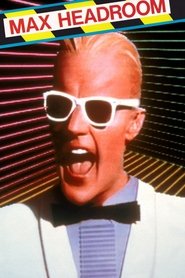
star 6A magical Egyptian fantasy from the Alf Leila w Leila series, Aroos El Bahr follows a forbidden love between a human prince and a mermaid princess. Blending folklore, music, and adventure, the story explores sacrifice, transformation, and destiny in a richly imaginative world inspired by timeless Arabian tales.The Max Headroom Show
1985
star 7.5The Max Headroom Show started life in the UK in 1985. The show featured actor Matt Frewer playing the role as computer-generated talk-show host Max Headroom.T-Bag
1985
T-Bag
1985
star 5.5T-Bag is a witch-like character who appears in a television series that ran from 1985 to 1992 on Children's ITV. Written by Grant Cathro and Lee Pressman, each season adopted a different title and features a single story told over several episodes.Onegai! Samia-don
1985
Onegai! Samia-don
1985
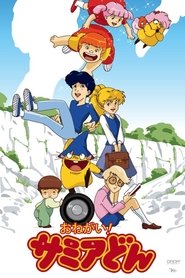
star 6.3Please! Psammea-don is a Japanese anime that was broadcast from 2 April 1985 to 4 February 1986 with a total of 78 episodes produced. This anime is based on the 1902 novel Five Children and It by English author Edith Nesbit. The anime differs from the novel in revolving around four children rather than five. Three of the children are siblings while the fourth is their friend and neighbor. The four children encounter the Psammead who, in the anime, is depicted as being yellow with a blue hat, and more of a grumpy and lazy being than mischievous. In Latin America, the series was known as Samed, el duende mágico and in France and Quebec as Sablotin. In the Arab world, it was known as Moghamarat Samid.Alice in Wonderland
1985
Alice in Wonderland
1985
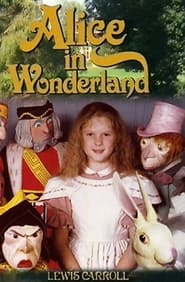
Anglia Television's 5 episode adaption of Lewis Caroll's Alice in Wonderland was inspired and based upon an early production put on by the famous Da Silva Puppets group at the Norwich Puppet Theatre.Guest from the Future
1985
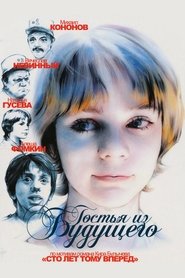
star 8.3Alice Seleznyova, a girl from the future, finds herself 1984. Following her are the space pirates Krys and Joker Y, with most nasty pirate's intentions. Coming to her help is an ordinary boy, Kolya, and his friends from 6th grade. Based on Kir Bulychyov's 1077 novel "One Hundred Years Ahead."Megabeast Investigator Juspion
1985
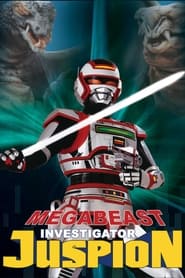
star 7.9Juspion's parents were killed by space pirates when he was a baby. After escaping to the planet Eijin, he is raised by a space hermit. He eventually embarks on a quest to fight the Mega beasts and defeat Satan Gorth. Hetravels from planet to planet until he finally arrives on Earth. Wearing a special suit, he has super human powers and a transforming spaceship.Hai! Step Jun
1985
Hai! Step Jun
1985
star 6.8Hai Step Jun is a Japanese anime series aired on TV Asahi from March 10, 1985 to January 12, 1986.Robotech
1985
Robotech
1985
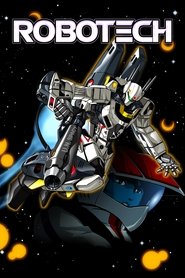
star 8.6Robotech is an 85-episode adaptation of three different anime television series made between 1982-1984 in Japan; the adaptation was aired in 1985. Within the combined and edited story, Robotechnology refers to the scientific advances discovered in an alien starship that crashed on a South Pacific island. With this technology, Earth developed giant robotic machines or mecha to fight three successive extraterrestrial invasions.Elvira's ThrillerVideo
1985
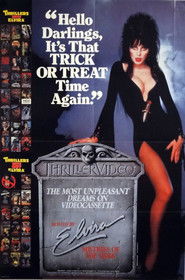
star 5A hosted series of horror, thriller and science fiction movies direct to video; with Cassandra Peterson as Elvira, the series host.Dengeki Sentai Changeman
1985
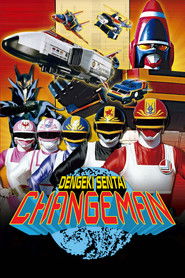
star 8.3After already conquering hundreds of planets, the Great Star League Gozma sets its sights onto Earth. To defend the lands in such a great crisis, the military begins a special branch known as the Earth Defense Force, comprised of elite members from all areas of the military. Under the supervision of Commander Ibuki, the numerous gathered soldiers of the Earth Defense Force begin a harsh training.Otherworld
1985
Otherworld
1985
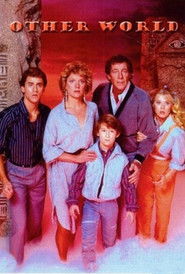
star 5.7Otherworld is an American science fiction series that aired for only eight episodes from January 26 to March 16, 1985 on CBS. It was created by Roderick Taylor as a sort of Lost in Space on Earth. Taylor gave himself a cameo role in each episode.ThunderCats
1985
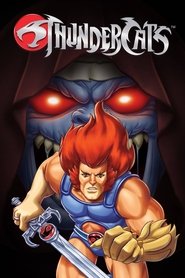
ThunderCats
1985
star 8.2The inhabitants of the planet Thundera evacuate just before it is destroyed. They were pursued by a band of mutants. All but one of their escape ships was destroyed. Only a small group of Thunderians (Thundercats) remained. With only half engine power, the group, which was led by Jaga, had to set a course for the nearest planet. Jaga commanded their ship while the other seven were in their stasis tubes. Jaga died on their journey to Third Earth and their ship crashed there. Soon they made friends with various groups in the area and they designed a fortress. Mumm-Ra the centuries-old embodiment of evil, along with the mutants that destroyed the rest of the Thunderians are a constant threat. But Lion-O, the new leader of the Thundercats, with his weapon the "Sword of Omens" will help the Thundercats to have a standing chance.The Eight Fairies
1985
The Eight Fairies
1985
star 6.5Taishang Laojun Deyu Emperor ordered to find eight candidates who had the potential to become immortals, namely Li Xuan's iron crusade Li who borrowed the corpse to return his soul, Han Zhongli, the old man Zhang Guolao who sold fruits, Lü Dongbin, the reincarnation of Huayang Zhenren, He Xiangu, a flower girl He Xiangu, Lan Caihe who sang with a clapper, Han Xiangzi, a talented son holding a horizontal flute, and Cao Guoun, his uncle. The eight people were originally ordinary people, each with different backgrounds and encounters, but they were enlightened and cultivated by Lao Jun. The eight people went everywhere to help others and do good deeds to accumulate virtue, during which they encountered the murder of the Dragon Prince, the Dragon Cousin, the Heavenly Dao Ancestor and others three and four times, can they overcome all difficulties and achieve positive results?TV Obake Telemonja
1985
TV Obake Telemonja
1985
TV Obake Telemonja is a 1985 tokusatsu series created by Shotaro Ishinomori and produced by Toei. Some sources have listed it as a part of the Toei Fushigi Comedy Series.