New War Politics TV Series - Page 122
All Services
Free Services
 Netflix
 Amazon Prime Video
 Apple iTunes
 Apple TV Plus
 Disney Plus
 Google Play Movies
 Paramount Plus
 Hulu
Hulu
 HBO Max
 YouTube
 fuboTV
 Peacock
 Peacock Premium
 Amazon Video
 The Roku Channel
 AMC+
AMC on Demand
AMC+
AMC on Demand
 Kocowa
 Hoopla
 The CW
 Vudu
Vudu
 Starz
Starz
 Showtime
 PBS
PBS
 Pantaflix
 FXNow
FXNow
 Tubi TV
 Kanopy
 Comedy Central
 Crunchyroll
 Microsoft Store
 Redbox
 Sun Nxt
 ABC
ABC
 DIRECTV
 Crackle
 Fandor
 Plex
Plex
Netflix
Amazon Prime Video
Apple iTunes
Apple TV Plus
Disney Plus
Google Play Movies
Paramount Plus
Hulu
HBO Max
YouTube
fuboTV
Peacock
Peacock Premium
Amazon Video
The Roku Channel
AMC+
AMC on Demand
Kocowa
Hoopla
The CW
Vudu
Starz
Showtime
PBS
Pantaflix
FXNow
Tubi TV
Kanopy
Comedy Central
Crunchyroll
Microsoft Store
Redbox
Sun Nxt
ABC
DIRECTV
Crackle
Fandor
Plex

Singgasana Brama Kumbara
1995
star 10Singgasana Brama Kumbara is an Indonesian historical-drama TV series, produced by PT. Menara Gading Citra Perkasa (now Genta Buana Paramita). It was aired on ANTV in April 2,1995.OP Center
1995
OP Center
1995
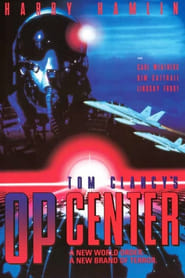
star 5Paul Hood is the newly appointed director of the OP Center, a special agency gathering a wide variety of experts monitoring international crisis. On his first day on the job, nuclear missiles are stolen from the former Soviet Union by terrorists. The team must find out who did it, why, and most importantly, where they are heading so they can retrieve themJang Hee Bin
1995
Jang Hee Bin
1995
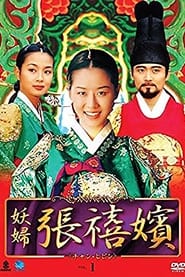
star 1.8A drama depicting the life of Jang Hee Bin, who raised up as a royal concubine in the midst of political struggle during the reign of King Sukjong (Joseon).Eighth Shogun Yoshimune
1995
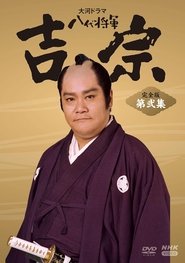
The drama is depicting the life and times in 17th and 18th century Japan during the rule of the eighth shogun, Tokugawa Yoshimune.No Price Too High
1995
No Price Too High
1995
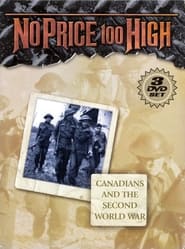
star 10The Canadian contribution to World War Two was extraordinary in scale and variety. More than one million people, out of nation of just eleven million, volunteered to serve. To transform a small, virtually unequipped military into a powerful army, navy and air force was a remarkable achievement. No Price Too High traces Canada's involvement from the prewar years through 1945, explaining the events of the war in the context of the political and military realities of the time. There is none of the second guessing that has characterized so much recent analysis of the war. No Price Too High draws on original sources - personal letters and diary entries, and powerful photographs - to evoke the mood of those momentous years. The thoughts, hopes, dreams, fears, and heartbreaks of the generation of Canadians who faced the war are captured. Produced by Norflicks, No Price Too High chronicles Canada's role in the major events of the war, including The Battle of Britain, Dieppe and D-Day.贺兰雪
1995
贺兰雪
1995
七战七捷
1995
七战七捷
1995
The Great General
1994
Family Album
1994
Family Album
1994
star 4.4Family Album, also known as Danielle Steel's Family Album, is a 1994 television film directed by Jack Bender. The film, which was released in two parts, is based upon the 1985 novel of the same name written by Danielle Steel. The drama centers on the life chronology of a Hollywood actress who becomes a successful film director in an era where directing was dominated by men.The Irresponsible Captain Tylor OVA
1994
star 7.3Six long months have passed. The Raalgon Empire has developed a horrible new type of weapon, and Tylor has been charged with the duty of intercepting it as it is being transported. But when all that could go wrong does go wrong, the crew members of the Soyokaze find themselves at the mercy of their enemies. As the hours tick down toward their execution, the crew wonders: has their irresponsible captain misled them? Or is this all a part of some greater strategy?Heroic Legend of The Yang'S Family
1994
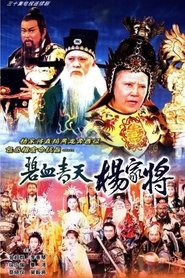
star 8Yang Yanzhao was betrayed by Pang Long and died in battle. Yanzhao's son Yang Zongbao confronted Pang Long Gongtang, and the two insisted on each other, and Yin Bao Zheng of Kaifeng Prefecture designed to have Pang Long personally write down the crime, and Pang Long was sentenced to dragon head ginseng. The bereaved Taishi Pang Xiong swore to kill Bao Zheng and the Yang family general, and the Yang family would join Bao Zheng to fight against Pang Taishi...傻儿军长
1994
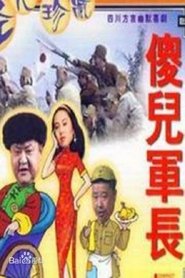
傻儿军长
1994
Secret Battle of the Majesty
1994
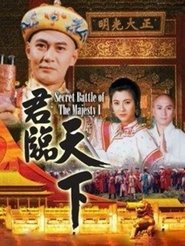
star 9This is a Qing Dynasty costume drama based on the background of the nine sons fighting for the throne in the last years of Kangxi. The nine sons of Kangxi wanted to have power. In order to seize the throne, they used all means to kill each other. The bloody palace struggle. Interspersed with martial arts battles, foreign rebellions, frontier battles, battlefield killings, etc., are magnificent. TV dramas that can combine literary and martial arts, delicate court battles and atmospheric battles on the battlefield, I am afraid that it will be difficult to go out of the right. The costumes of the whole play are all designed by special personnel, and they traveled farther to China for shooting in Yangchun. The scene of the war is majestic, which shows the full force of the Qing Dynasty. It is a hugely powerful drama, and the story goes round and round, and the audience must not miss it.Seven Cities Story: Arctic Front
1994
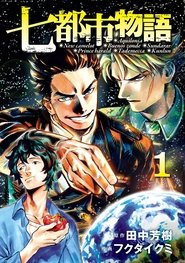
star 4.5In 2099, Earth has shifted off its axis and begins to rotate at an angle of 90% to the 20th-century equator. Three years of natural disasters follows, and when things settle down, Earth's ten billion population has died and only two million moon colonists remain. Some return to begin the repopulation of the world in seven new cities and the remaining colonists of the moon fear that their former neighbors might pose a threat and construct a ring of defensive satellites to trap them on the newly repopulated homeworld.Mahkota Majapahit
1994
D-Day: The Total Story
1994
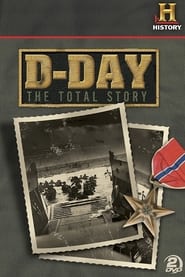
star 9This is the ultimate chronicle of the largest amphibious invasion in history. The momentous decisions and tragic losses, pitched battles and desperate strategies come alive with extensive footage from both Allied and Axis government vaults and revealing interviews with soldiers, commanders and civilians. Trace the development of D-Day from the initial plans and strategies to the final breakthrough that sent Allied troops roaring to Paris. Follow the strategies of Eisenhower, Montgomery, Marshall and Bradley and the counter-attacks and defenses of their German opponents. See how the heroism and valor of individual men was vital to salvaging success from plans that went awry in the first few minutes. And get an incredible, front-line view of the pitched battles that sent so many men to their grave.Oldest Living Confederate Widow Tells All
1994
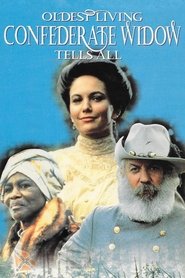
star 6.8Lucy married at the turn of the last century, when she was fifteen and her husband was fifty. If Colonel William Marsden was a veteran of the "War for Southern Independence", Lucy became a "veteran of the veteran" with a unique perspective on Southern history and Southern manhood. Her story encompasses everything from the tragic death of a Confederate boy soldier to the feisty narrator's daily battles in the Home--complete with visits from a mohawk-coiffed candy-striper.Mobile Fighter G Gundam
1994
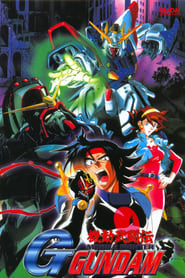
star 7.5In the Year F.C. (Future Century) 60, much of mankind inhabits space colonies which orbit the Earth. Dominance over the colonies is decided once every four years by a large tournament in which each nation sends a single representative to fight the others with a giant robot called a Gundam. Domon Kashuu is selected to represent Neo-Japan in one of these tournaments, but he fights less to ensure his nation's victory than to find his brother, who has been blamed for the deaths of Domon's parents and the disappearance of a very dangerous weapon, the Devil Gundam (Dark Gundam).World War II: When Lions Roared
1994
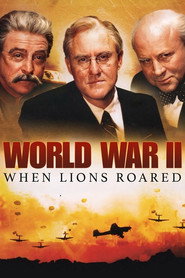
star 6.8A 1994 war television miniseries which portrays Roosevelt, Churchill, and Stalin as they maneuver their countries through several of the major events of World War II - such events include the Blitz, Operation Barbarossa, the bombing of Pearl Harbor, the North African Campaign, the Allied invasion of Italy, and concluding with the Tehran Conference.Rapport fra "Nr. 24"
1994
Rapport fra "Nr. 24"
1994