New Animation TV Series on Amazon Prime Video - Page 22
All Services
Free Services
 Netflix
 Amazon Prime Video
 Apple iTunes
 Apple TV Plus
 Disney Plus
 Google Play Movies
 Paramount Plus
 Hulu
Hulu
 HBO Max
 YouTube
 fuboTV
 Peacock
 Peacock Premium
 Amazon Video
 The Roku Channel
 AMC+
AMC on Demand
AMC+
AMC on Demand
 Kocowa
 Hoopla
 The CW
 Vudu
Vudu
 Starz
Starz
 Showtime
 PBS
PBS
 Pantaflix
 FXNow
FXNow
 Tubi TV
 Kanopy
 Comedy Central
 Crunchyroll
 Microsoft Store
 Redbox
 Sun Nxt
 ABC
ABC
 DIRECTV
 Crackle
 Fandor
 Plex
Plex
Netflix
Amazon Prime Video
Apple iTunes
Apple TV Plus
Disney Plus
Google Play Movies
Paramount Plus
Hulu
HBO Max
YouTube
fuboTV
Peacock
Peacock Premium
Amazon Video
The Roku Channel
AMC+
AMC on Demand
Kocowa
Hoopla
The CW
Vudu
Starz
Showtime
PBS
Pantaflix
FXNow
Tubi TV
Kanopy
Comedy Central
Crunchyroll
Microsoft Store
Redbox
Sun Nxt
ABC
DIRECTV
Crackle
Fandor
Plex

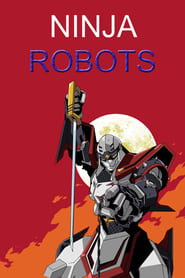
Ninja Robots
1985
Ninja Robots
1985
star 7One day, Joe Maya, who lives on Mars, witnesses a battle between aliens. Those from Planet Zaboom are attacking the princess of Planet Radorio, she has escaped from the emperor of Zaboom who is scheming to conquer the universe and has crash landed on mars. Joe stumbles aboard the princesses ship, this starts a chain reaction of events that will alter their lives. Joe and his friends wield three powerful mecha beasts against the emperor of Zaboom and his forces, but the odds are stacked heavily against them. When all hope seems to be lost a mysterious ninja robot named Tobikage appears as if from nowhere to provide assitance, able to combine with the 3 mechanical beasts provides Tobikage with unmatched power, with his aide Joe fights the forces of Zaboom...The Care Bears
1985
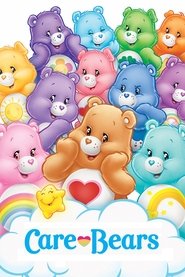
The Care Bears
1985
star 6The Care Bears live in a faraway place up in the clouds called Care-a-Lot. They travel around the world on Missions in Caring, whilst evil villains such as Professor Coldheart and Lord No Heart, try to thwart their plans.She-Ra: Princess of Power
1985
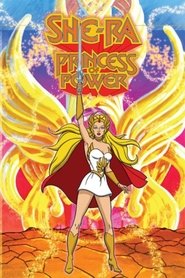
star 7.6She-Ra, He-Man's twin sister, is leading a group of freedom fighters known as the Great Rebellion in the hope of freeing their homeworld of Etheria from the tyrannical rule of Hordak and the Evil Horde.Thomas & Friends
1984
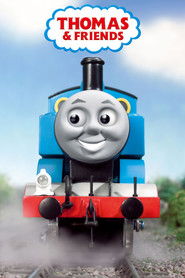
Thomas & Friends
1984
star 6.8Thomas & Friends is a British children's television series, which had its first broadcast on the ITV network on 4 September 1984. It is based on The Railway Series of books by the Reverend Wilbert Awdry and his son, Christopher Awdry. These books deal with the adventures of a group of anthropomorphised locomotives and road vehicles who live on the fictional Island of Sodor. The books were based on stories Wilbert told to entertain his son, Christopher during his recovery from measles. From Series one to four, many of the stories are based on events from Awdry's personal experience.G.I. Joe: A Real American Hero
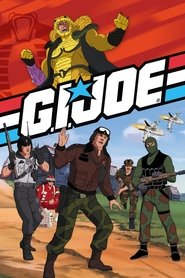
1983
star 7.6An elite team of soldiers thwart the evil Cobra organization's desire for world domination at every turn, cleverly stopping them from controlling the weather, creating unstoppable weapons, and genetically engineering super-warriors.He-Man and the Masters of the Universe
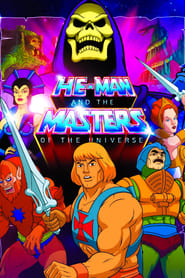
1983
star 7.4When Adam, Prince of the planet Eternia, raises his magic sword he transforms into He-Man (the most powerful man in the universe). With his allies and friends, he battles the evil Skeletor and his minions to protect the secrets of Castle Grayskull.Danger Mouse
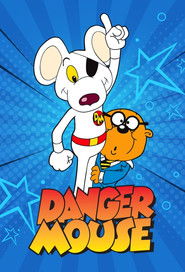
1981
Danger Mouse
1981
star 7.1Danger Mouse, the world's greatest secret agent, and his side-kick Penfold work to foil the evil schemes of Baron Greenback.The Swiss Family Robinson: Flone of the Mysterious Island
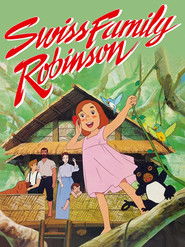
1981
star 7.7Flone and her family were on their way to Australia from Switzerland when their ship wrecked and they landed on an inhabited island. Relying on a strong conviction that they will return one day, the Family Robinson made a house on top of a tree and live on whatever resources available to them. Through the cooperation of each and every member, the family managed to survive on the island and eventually did return back to Australia.The Adventures of Tom Sawyer
1980
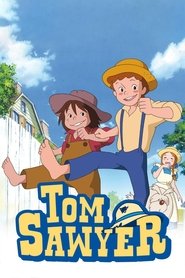
star 7.9Tom Sawyer is a young boy growing up along the Mississippi River in the mid 1800s. Along with his best friend Huckleberry Finn, he spends his days ditching school, fishing, climbing trees and having adventures.Flash Gordon
1979
Flash Gordon
1979
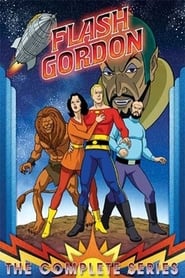
star 7The New Adventures of Flash Gordon, also known as The Adventures of Flash Gordon, is an animated television series. The series is actually called Flash Gordon but the expanded title is used in official records to distinguish it from previous versions. Filmation produced the series in 1979, partly as a reaction to the mammoth success of Star Wars Episode IV: A New Hope in 1977. The series was a homage to the original Flash Gordon comic strip and featured most of the original characters, including Flash's girlfriend Dale Arden, and the scientist Hans Zarkov. The series is still regarded as one of the most faithful adaptations, and one of Filmation's finest overall efforts. The basic story follows Flash and his companions as they travel to Mongo, where they are forced into battle by its ruler, Ming the Merciless, his daughter Princess Aura, and his army of Metal Men. To help their cause the heroes lead the formation of an alliance beginning with King Thun, leader of the Lion People; Prince Barin, ruler of Arboria; anLupin the 3rd
1971
Lupin the 3rd
1971
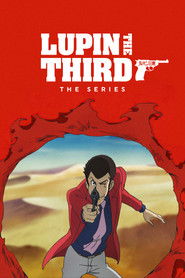
star 8Follow the exciting adventures of Arsene Lupin III, the grandson of the world's greatest thief, Arsene Lupin. Together with Daisuke Jigen, Goemon Ishikawa and his love interest Fujiko Mine, he carries out the greatest robberies of all time, all the while evading the control of Inspector Koichi Zenigata.Tomorrow's Joe
1970
Tomorrow's Joe
1970
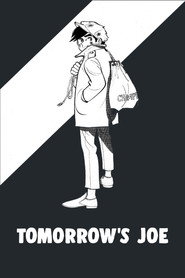
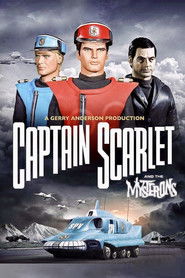
star 7.7A young drifter named Joe Yabuki wanders through the slums of Tokyo, but when the local ruffians try to give him a hard time he teaches them a rough lesson with his fists. The spectacle sparks a gleam in the eye of an old drunk who happens to be watching—Danpei Tange, a failed boxer and former coach who sees something special in the boy. He pleads with Joe to train with him off, but the cocky young fighter brushes him. Later, though, when Joe is arrested and put in a juvenile detention facility, he realizes that he’s going to need to hone his raw fighting skills if he wants to survive. Thus is born a partnership that might just take Joe all the way to the top…Captain Scarlet and the Mysterons
1967
star 7.5Captain Scarlet heads up an international intelligence agency as they battle against the Mysterons, an alien species from Mars that vows vengeance after a misunderstanding with humans.Speed Racer
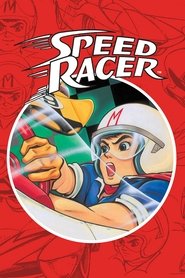
1967
Speed Racer
1967
star 7.5Speed Racer is a teenage driver who races around the world in his super-technological car, the Mach 5, created by his father, a former racer. The car has several special features that help Speed tackle difficult terrain and get rid of dishonest opponents—which happens frequently. He experiences these adventures alongside his girlfriend Trixie, his younger brother Spridle, and his pet monkey, Chim-Chim. Together, they face thrilling challenges and show that courage and fair play make all the difference.Cool McCool
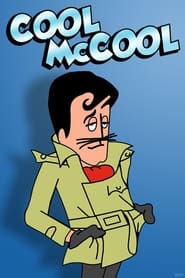
1966
Cool McCool
1966
star 6.2Cool McCool was an animated series that ran on NBC from September 10, 1966 to August 30, 1969 with three segments per show, running to 60 segments in all. It was created by Bob Kane – most famous as the creator of Batman – and produced by Al Brodax for King Features.Thunderbirds
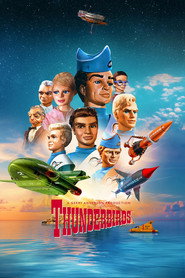
1965
Thunderbirds
1965
star 7.6Thunderbirds is a 1960s British science-fiction television series which was produced using a mixed method of marionette puppetry and scale-model special effects termed "Supermarionation". The series is set in the 21st century and follows the exploits of International Rescue, a secret organization formed to save people in mortal danger with the help of technologically advanced land, sea, air and space vehicles and equipment, launched from a hidden base on Tracy Island in the South Pacific Ocean.The New 3 Stooges
1965
The New 3 Stooges
1965
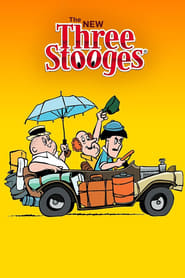
star 7.7Larry, Moe and Curly Joe bring their mastery of mirth, merriment and mayhem to plenty of places from the Old West to Outer Space and everywhere in between. The hijinks never stop as The Boys bumble and fumble their way from one zany adventure to the next in this animated slapstick series.Gigantor
1963
Gigantor
1963
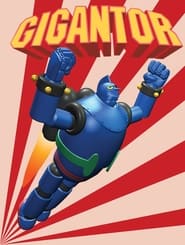
star 7.3Gigantor is an American adaptation of the anime version of Tetsujin 28-go, a manga by Mitsuteru Yokoyama released in 1956. Jimmy Sparks controls a gigantic, powerful robot and uses it to fight crime. It debuted on U.S. television in 1964. As with Speed Racer, the characters' original names were altered and the original series' violence was toned down for American viewers.Snuffy Smith and Barney Google
1963
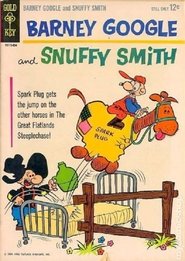
star 5There's feudin', fussin' and a whole lot of good ol' fashioned fun goin' on as those back woods rascals, Barney Google and Snuffy Smith, rustle up a rib-ticklin' tub of mountain mirth. Barney and Snuffy are joined by the craziest collection of cantankerous characters ever to come out of them thar' hills, including Loweezy, Jughaid and Jerky Jockey for hours of down home country comedy.Astro Boy
1963
Astro Boy
1963
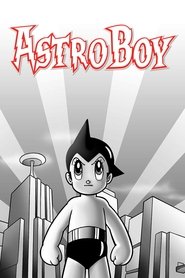
star 7.4In the year 2000, Dr. Boyton creates a super-robot in his deceased son's image. He calls the robot Astro Boy. Astro Boy can swim oceans, leap over mountains, even fly into space on his own power. However, Astro Boy can't replace his son. Dr. Boyton becomes dissatisfied with the boy robot and disowns him. Astro Boy is befriended by Dr. Packadermus J. Elefun of the Institute of Science, who guides him through his adventures. Endowed with super strength, rocket-powered flight, a selfless heart and a kind demeanor, Astro Boy fights a never-ending crusade against the forces of evil!