New Comedy TV Series on Apple iTunes - Page 107
All Services
Free Services
 Netflix
 Amazon Prime Video
 Apple iTunes
 Apple TV Plus
 Disney Plus
 Google Play Movies
 Paramount Plus
 Hulu
Hulu
 HBO Max
 YouTube
 fuboTV
 Peacock
 Peacock Premium
 Amazon Video
 The Roku Channel
 AMC+
AMC on Demand
AMC+
AMC on Demand
 Kocowa
 Hoopla
 The CW
 Vudu
Vudu
 Starz
Starz
 Showtime
 PBS
PBS
 Pantaflix
 FXNow
FXNow
 Tubi TV
 Kanopy
 Comedy Central
 Crunchyroll
 Microsoft Store
 Redbox
 Sun Nxt
 ABC
ABC
 DIRECTV
 Crackle
 Fandor
 Plex
Plex
Netflix
Amazon Prime Video
Apple iTunes
Apple TV Plus
Disney Plus
Google Play Movies
Paramount Plus
Hulu
HBO Max
YouTube
fuboTV
Peacock
Peacock Premium
Amazon Video
The Roku Channel
AMC+
AMC on Demand
Kocowa
Hoopla
The CW
Vudu
Starz
Showtime
PBS
Pantaflix
FXNow
Tubi TV
Kanopy
Comedy Central
Crunchyroll
Microsoft Store
Redbox
Sun Nxt
ABC
DIRECTV
Crackle
Fandor
Plex

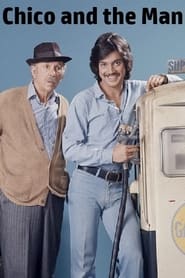
Chico and the Man
1974
Chico and the Man
1974
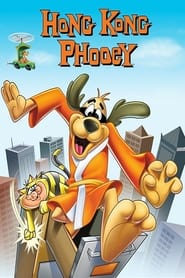
star 6.1Chico and the Man is an American sitcom which ran on NBC for four seasons, from September 13, 1974, to July 21, 1978. It stars Jack Albertson as Ed Brown, the cantankerous owner of a run down garage in an East Los Angeles barrio, and Freddie Prinze as Chico Rodriguez, an upbeat, optimistic Chicano young man who comes in looking for a job. It was the first U.S. television series set in a Mexican-American neighborhood.Hong Kong Phooey
1974
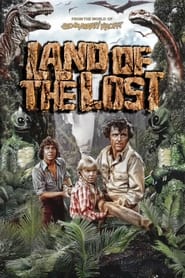
Land of the Lost
1974
Land of the Lost
1974
star 7.2Rick Marshall and his children Will and Holly are on a weekend expedition rafting down a river when an enormous earthquake diverts them to an eclectic alien world inhabited by dinosaurs, chimpanzee-like cavemen called Pakuni, and aggressive, humanoid lizard creatures called Sleestak.Good Times
1974
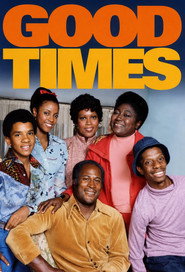
Good Times
1974
star 8Good Times is an American sitcom that originally aired from February 8, 1974, until August 1, 1979, on the CBS television network. It was created by Eric Monte and Mike Evans, and developed by Norman Lear, the series' primary executive producer. Good Times is a spin-off of Maude, which is itself a spin-off of All in the Family along with The Jeffersons. The series is set in Chicago. The first two seasons were taped at CBS Television City in Hollywood. In the fall of 1975, the show moved to Metromedia Square, where Norman Lear's own production company was housed.Yogi's Gang
1973
Yogi's Gang
1973
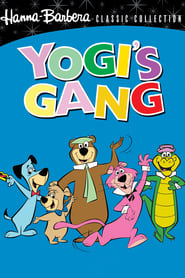
star 7.1Yogi's Gang is a 30-minute animated series and the second incarnation of Hanna-Barbera's Yogi Bear which aired 16 half-hour episodes on ABC from September 8, 1973, to December 29, 1973. The show began as Yogi's Ark Lark, a special TV movie on The ABC Saturday Superstar Movie in 1972. Fifteen original episodes were produced for broadcast on ABC, with the hour-long Yogi's Ark Lark thrown in as a split-in-half two-parter. After a successful run on Saturday mornings, Yogi Gang returned in 1977 as a segment on the syndicated weekday series, Fred Flintstone and Friends. In the late 1980s, repeats were shown on USA Cartoon Express and later resurfaced on Nickelodeon, Cartoon Network and Boomerang.Sigmund and the Sea Monsters
1973
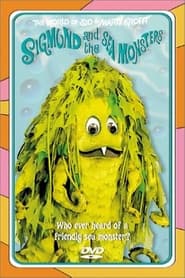
star 6Sigmund and the Sea Monsters was an American children's television series that ran from 1973 to 1975, produced by Sid and Marty Krofft and aired on Saturday mornings. There were 29 episodes spanning two seasons.The Essential Lectures of Alan Watts
1972
star 10The Essential Lectures of Alan Watts video series was recorded in 1971 above Muir Woods, California, and in 1972 aboard the ferryboat the SS Vallejo in Sausalito. Produced by his son Mark and directed by long-time archivist Henry Jacobs, the series explores core philosophical themes that spawned over Watts' career.M*A*S*H
1972
M*A*S*H
1972
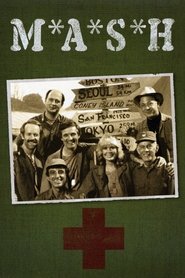
star 7.9The 4077th Mobile Army Surgical Hospital is stuck in the middle of the Korean war. With little help from the circumstances they find themselves in, they are forced to make their own fun. Fond of practical jokes and revenge, the doctors, nurses, administrators, and soldiers often find ways of making wartime life bearable.The Bob Newhart Show
1972
The Bob Newhart Show
1972
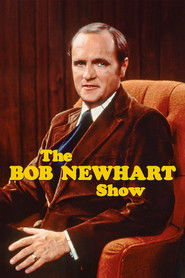
star 7.5The Bob Newhart Show is an American situation comedy produced by MTM Enterprises, which aired 142 original episodes on CBS from September 16, 1972, to April 1, 1978. Comedian Bob Newhart portrays a psychologist having to deal with his patients and fellow office workers. The show was filmed before a live audience.Wait Till Your Father Gets Home
1972
star 6.2Wait Till Your Father Gets Home chronicles the lives of the Boyles, your average 1970's American family. Harry Boyle, the father, owns a restaurant supply company. His wife Irma portrays the typical housewife, with an occasional independent flare. Harry and Irma have three children: Chet, Alice, and Jamie. Chet, who is 22, is a college dropout, who spends most of his time sleeping. Alice is a rather robust 16-year-old, who teams up with her mother, to display the independence of women, in the 70's. Jamie is the Capitalist of the family, even though he is only 9. The show is set in the suburbs of Los Angeles, on Elm Street, to be precise. During the 1973 season, the show was host to many celebrity voices, including: Don Knotts, Phyllis Diller, Bea Arthur and many more (many of these guests were carried over from The New Scooby-Doo Movies, which were recored at this time).Maude
1972
Maude
1972
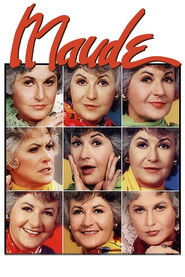
star 6.9Well-educated and upper middle class, Maude Findlay is the archetypal feminist of her generation. She lives in suburban Tuckahoe, New York, with her fourth husband, Walter, their divorced daughter, Carol, and grandson Phillip.The New Scooby-Doo Movies
1972
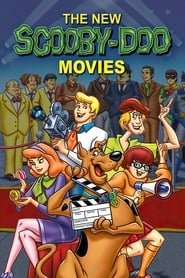
star 7.7Aside from doubling the length of each episode, The New Scooby-Doo Movies differed from its predecessor in the addition of a rotating special guest star slot; each episode featured real-life celebrities or well known fictional characters joining the Mystery, Inc. gang in solving the mystery of the week. Some episodes, in particular the episodes guest-starring the characters from The Addams Family, Batman, and Jeannie, deviated from the established Scooby-Doo format of presenting criminals masquerading as supernatural beings by introducing real ghosts, witches, monsters, and other such characters into the plots.The Electric Company
1971
The Electric Company
1971
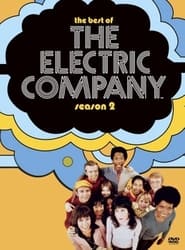
star 7.3The Electric Company is an educational American children's television series that was produced by the Children's Television Workshop for PBS in the United States. PBS broadcast 780 episodes over the course of its six seasons from October 25, 1971 to April 15, 1977. After it ceased production that year, the program continued in reruns from 1977 to 1985, the result of a decision made in 1975 to produce two final seasons for perpetual use. CTW produced the show at Teletape Studios Second Stage in Manhattan, the first home of Sesame Street. The Electric Company employed sketch comedy and other devices to provide an entertaining program to help elementary school children develop their grammar and reading skills. It was intended for children who had graduated from CTW's flagship program, Sesame Street. Appropriately, the humor was more mature than what was seen there.Help!... It's the Hair Bear Bunch!
1971
star 6The adventures of three fun-loving hippie bears, who always find a way to escape the Wonderland Zoo.The Partridge Family
1970
The Partridge Family
1970
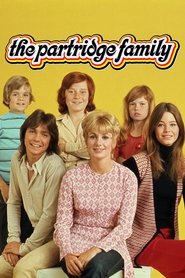
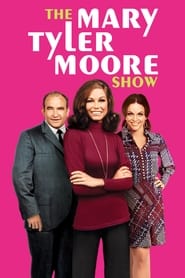
star 6.8The Partridge Family is an American television sitcom series about a widowed mother and her five children who embark on a music career.The Mary Tyler Moore Show
1970
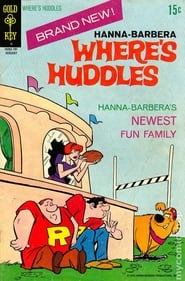
star 7.630-year-old single Mary Richards moves to Minneapolis to start a new life after a romantic break-up. There she reacquaints with Phyllis who rents her a room, and meets her upstairs neighbor and new best friend Rhoda. Mary unexpectedly lands a job as associate producer at the TV station WJM, where she works alongside her bristly boss, Lou; the comical newswriter, Murray; and the newscast's often-incompetent anchor, Ted.Where's Huddles?
1970
Where's Huddles?
1970
star 7.3Where's Huddles? is a Hanna-Barbera animated television program which premiered on CBS on July 1, 1970 and ran for ten episodes as a summer replacement show until September 2. It was similar in style to the studio's considerably more successful The Flintstones, and it used several of the same essential plots and voice actors. Also, like The Flintstones, and unlike many other animated series, Where's Huddles? aired in the evening during prime time, had a laugh track, and had somewhat adult themes. All ten episodes were produced and directed by William Hanna and Joseph Barbera. The show's premise involved a professional football quarterback named Ed Huddles and his neighbor, the team's center Bubba McCoy. They played for a team called The Rhinos. Other characters included Ed's wife Marge Huddles, their rather jovial if acerbic neighbor Claude Pertwee who tended to refer to Ed and Bubba as "savages" {Pertwee's only friend is a spoiled cat named "Beverley"}; their teammate Freight Train, and their daughter Pom-Pom. BuSesame Street
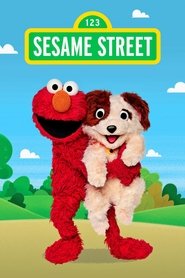
1969
Sesame Street
1969
star 7.1On a special inner city street, the inhabitants—human and muppet—teach preschoolers basic educational and social concepts using comedy, cartoons, games, and songs.Monty Python's Flying Circus
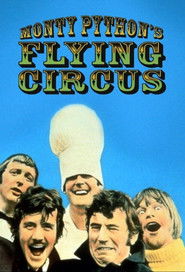
1969
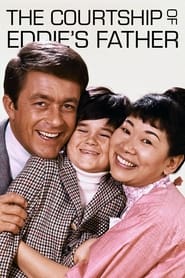
star 8.3A British sketch comedy series with the shows being composed of surreality, risqué or innuendo-laden humour, sight gags and observational sketches without punchlines.The Courtship of Eddie's Father
1969
star 6.2The Courtship of Eddie's Father is an American television sitcom based on the 1963 movie of the same name, which was based on the book written by Mark Toby. It tells the story of a widower, Tom Corbett, who is a magazine publisher, and his son, Eddie, who believes his father should marry, and manipulates situations surrounding the women his father is interested in. ABC had acquired the rights to the story; the series debuted on September 17, 1969, and was last broadcast on March 1, 1972. Bixby received an Emmy nomination for the show.