New History TV Series on Free Services - Page 318
All Services
Free Services
 Netflix
 Amazon Prime Video
 Apple iTunes
 Apple TV Plus
 Disney Plus
 Google Play Movies
 Paramount Plus
 Hulu
Hulu
 HBO Max
 YouTube
 fuboTV
 Peacock
 Peacock Premium
 Amazon Video
 The Roku Channel
 AMC+
AMC on Demand
AMC+
AMC on Demand
 Kocowa
 Hoopla
 The CW
 Vudu
Vudu
 Starz
Starz
 Showtime
 PBS
PBS
 Pantaflix
 FXNow
FXNow
 Tubi TV
 Kanopy
 Comedy Central
 Crunchyroll
 Microsoft Store
 Redbox
 Sun Nxt
 ABC
ABC
 DIRECTV
 Crackle
 Fandor
 Plex
Plex
Netflix
Amazon Prime Video
Apple iTunes
Apple TV Plus
Disney Plus
Google Play Movies
Paramount Plus
Hulu
HBO Max
YouTube
fuboTV
Peacock
Peacock Premium
Amazon Video
The Roku Channel
AMC+
AMC on Demand
Kocowa
Hoopla
The CW
Vudu
Starz
Showtime
PBS
Pantaflix
FXNow
Tubi TV
Kanopy
Comedy Central
Crunchyroll
Microsoft Store
Redbox
Sun Nxt
ABC
DIRECTV
Crackle
Fandor
Plex

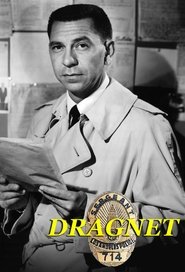
Dragnet
1951
Dragnet
1951
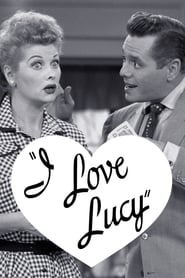
star 6.5Follows the cases of a dedicated Los Angeles police detective, Sergeant Joe Friday, and his partners. The show takes its name from the police term "dragnet", meaning a system of coordinated measures for apprehending criminals or suspects.I Love Lucy
1951
I Love Lucy
1951
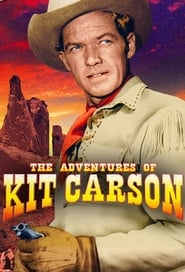
star 7.9Cuban Bandleader Ricky Ricardo would be happy if his wife Lucy would just be a housewife. Instead she tries constantly to perform at the Tropicana where he works, and make life comically frantic in the apartment building they share with landlords Fred and Ethel Mertz, who also happen to be their best friends.The Adventures of Kit Carson
1951
star 6The Adventures of Kit Carson is an American Western series that aired in syndication from August 1951 to November 1955, originally sponsored by Coca-Cola. It stars Bill Williams in the title role as frontier scout Christopher "Kit" Carson. Don Diamond co-starred as "El Toro", Carson's Mexican companion.Tales of Tomorrow
1951
Tales of Tomorrow
1951
star 6.4Tales of Tomorrow is an American anthology science fiction series that was performed and broadcast live on ABC from 1951 to 1953. The series covered such stories as Frankenstein, starring Lon Chaney, Jr., 20,000 Leagues Under the Sea starring Thomas Mitchell as Captain Nemo, and many others featuring such performers as Boris Karloff, Brian Keith, Lee J. Cobb, Rod Steiger, Bruce Cabot, Franchot Tone, Gene Lockhart, Walter Abel, Leslie Nielsen, and Paul Newman. The series had many similarities to the later Twilight Zone which also covered one of the same stories, "What You Need". In total it ran for eighty-five 30-minute episodes.Racket Squad
1951
Racket Squad
1951
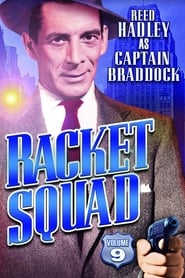
star 6.5Racket Squad is an American TV crime drama series starring Reed Hadley as Captain John Braddock, a fictional detective working for the San Francisco, California Police Department. The show aired in syndication for a season before being picked up by CBS for three seasons. The series was filmed at Hal Roach Studios in Culver City, California, and was sponsored by cigarette manufacturer Philip Morris, hence there was a pack of the sponsor's brand on Braddock's desk at the beginning and end of the episode, as well as occasional scenes of him or other characters "lighting up".The Living Christ
1951
The Living Christ
1951
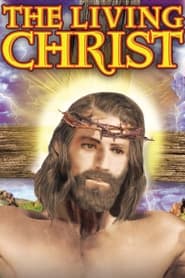
star 5.7The first ever made for TV miniseries documents the story of Jesus Christ from birth to resurrection.The Frank Sinatra Show
1950
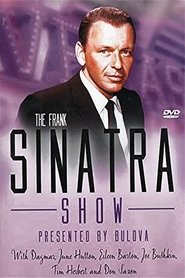
star 10The Frank Sinatra Show was an American musical variety series hosted by Frank Sinatra from 1950 to 1952. The series aired on CBS. As with many variety shows of the time, the show was broadcast live and was recorded via kinescope. Some episodes were 30 minutes long while others were 60 minutes.Dick Tracy
1950
Dick Tracy
1950
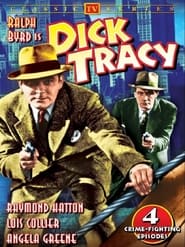
star 8Dick Tracy is an American TV series based on the detective comic strip Dick Tracy. The show aired on ABC from September 11, 1950 to April 7, 1951.The Cisco Kid
1950
The Cisco Kid
1950
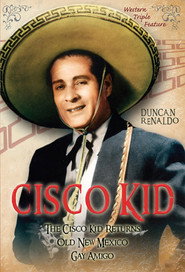
star 6.2The Cisco Kid is a half-hour American Western television series starring Duncan Renaldo in the title role, The Cisco Kid, and Leo Carrillo as the jovial sidekick, Pancho. Cisco and Pancho were technically desperados, wanted for unspecified crimes, but instead viewed by the poor as Robin Hood figures who assisted the downtrodden when law enforcement officers proved corrupt or unwilling to help. It was also the first television series to be filmed in color, although few viewers saw it in color until the 1960s.The Gene Autry Show
1950
The Gene Autry Show
1950
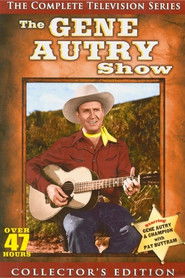
star 4.7The Gene Autry Show is an American western/cowboy television series which aired for 91 episodes on CBS from July 23, 1950 until August 7, 1956, originally sponsored by Wrigley's Doublemint chewing gum.The Lone Ranger
1949
The Lone Ranger
1949
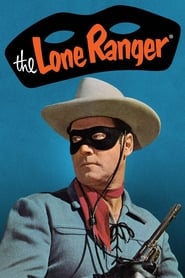
star 6.8The Lone Ranger is an American western television series that ran from 1949 to 1957, starring Clayton Moore with Jay Silverheels as Tonto. The live-action series initially featured Gerald Mohr as the episode narrator. Fred Foy served as both narrator and announcer of the radio series from 1948 to its finish and became announcer of the television version when story narration was dropped there. This was by far the highest-rated television program on the ABC network in the early 1950s and its first true "hit".Crusade in Europe
1949
Texaco Star Theater
1948
Texaco Star Theater
1948
star 7.5Texaco Star Theater is an American comedy-variety show, broadcast on radio from 1938 to 1949 and telecast from 1948 to 1956. It was one of the first successful examples of American television broadcasting, remembered as the show that gave Milton Berle the nickname "Mr. Television". The classic 1940–44 version of the program, hosted by radio's Fred Allen, was followed by a radio series on ABC in the spring of 1948. When Texaco first took it to television on NBC on June 8, 1948, the show had a huge cultural impact.Adventures of Captain Marvel
1941
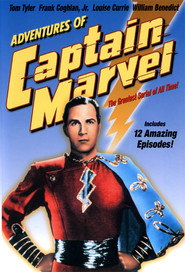
star 5A mortal, Billy Batson, is given the power to become Captain Marvel. The Captain fights the arch villain, the Scorpion, for 12 exciting chapters, to keep him from getting the lens. The plot concerns a group of scientists and an ancient artifact with lenses that can turn any matter to gold, thus the owner could rule the world. Captain Marvel is played by former cowboy star, Tom Tyler in fine fashion. David Sharpe does the leaps and landings in realistic style. Flying scenes still look great today, with excellent special effects by the Lydecker brothers. The Scorpion is voiced by another actor, and should keep the viewer guessing until the final reel. Music by Cy Feurer, William Lava and others add more excitement to a fine serial. Whitney and English directed.The Green Hornet
1940
The Green Hornet
1940
star 6Britt Reid, publisher of The Sentinel newspaper, secretly fights crime as the Green Hornet, aided by his valet and inventor, Kato. Over 13 serial chapters, they investigate a series of underworld rackets, bringing them into repeated conflict with the henchmen of “The Chief,” the hidden mastermind behind a 12-member criminal syndicate.The Three Stooges
1934
The Three Stooges
1934
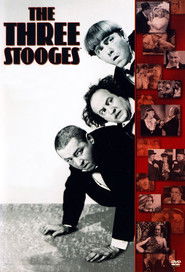
star 8Legendary comedy act featuring three bumbling fools who find themselves in outrageous predicaments and take out their frustrations on one another violently.Popeye the Sailor
1933
Popeye the Sailor
1933
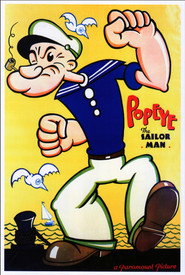
The theatrical run of Popeye the Sailor from 1933 to 1957 represents one of the most enduring and influential eras in American animation history. Spanning 231 shorts, this golden age of Popeye evolved across two distinct production studios: the boundary-pushing, gritty Fleischer Studios (1933–1942) and the more formulaic, brightly colored Famous Studios (1942–1957). Together, they transformed E.C. Segar’s comic strip character into a global cinematic icon, establishing formulas and animation techniques that altered the medium forever.The Vampires
1915
The Vampires
1915
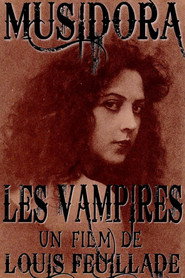
Les Vampires is a silent French crime thriller serial about a journalist trying to expose a bizarre secret society of criminals terrorizing Paris.