New Talk TV Series on Free Services - Page 288
All Services
Free Services
 Netflix
 Amazon Prime Video
 Apple iTunes
 Apple TV Plus
 Disney Plus
 Google Play Movies
 Paramount Plus
 Hulu
Hulu
 HBO Max
 YouTube
 fuboTV
 Peacock
 Peacock Premium
 Amazon Video
 The Roku Channel
 AMC+
AMC on Demand
AMC+
AMC on Demand
 Kocowa
 Hoopla
 The CW
 Vudu
Vudu
 Starz
Starz
 Showtime
 PBS
PBS
 Pantaflix
 FXNow
FXNow
 Tubi TV
 Kanopy
 Comedy Central
 Crunchyroll
 Microsoft Store
 Redbox
 Sun Nxt
 ABC
ABC
 DIRECTV
 Crackle
 Fandor
 Plex
Plex
Netflix
Amazon Prime Video
Apple iTunes
Apple TV Plus
Disney Plus
Google Play Movies
Paramount Plus
Hulu
HBO Max
YouTube
fuboTV
Peacock
Peacock Premium
Amazon Video
The Roku Channel
AMC+
AMC on Demand
Kocowa
Hoopla
The CW
Vudu
Starz
Showtime
PBS
Pantaflix
FXNow
Tubi TV
Kanopy
Comedy Central
Crunchyroll
Microsoft Store
Redbox
Sun Nxt
ABC
DIRECTV
Crackle
Fandor
Plex

Sesame Street
1969
Sesame Street
1969
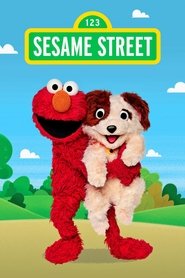
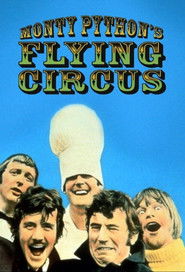
star 7.1On a special inner city street, the inhabitants—human and muppet—teach preschoolers basic educational and social concepts using comedy, cartoons, games, and songs.Monty Python's Flying Circus
1969
star 8.3A British sketch comedy series with the shows being composed of surreality, risqué or innuendo-laden humour, sight gags and observational sketches without punchlines.H.R. Pufnstuf
1969
H.R. Pufnstuf
1969
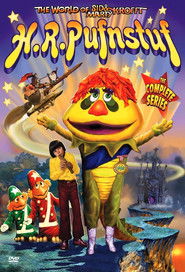
star 7H.R. Pufnstuf is a children's television series produced by Sid and Marty Krofft in the United States. It was the first Krofft live-action, life-size puppet program. The seventeen episodes were originally broadcast from September 6, 1969 to December 27, 1969. The broadcasts were successful enough that NBC kept it on the Saturday morning schedule until August 1972. The show was shot in Paramount Studios and its opening was shot in Big Bear Lake, California. Reruns of the show aired on ABC Saturday morning from September 2, 1972 to September 8, 1973 and on Sunday mornings in some markets from September 16, 1973 to September 8, 1974. It was syndicated by itself from 1974 to 1978 and in a package with six other Kroft series under the banner Kroft Superstars from 1978 to 1985. In 2004 and 2007, H.R. Pufnstuf was ranked #22 and #27 on TV Guide's Top Cult Shows Ever.Jekyll
1969
Jekyll
1969
star 6.5When a series of brutal attacks are committed by a lunatic named Edward Hyde, the investigation leads to molecular biologist Henry Jekyll. But have the doctor's unorthodox experiments unlocked even greater horrors?The Carol Burnett Show - The Lost Episodes
1968
"The Lost Episodes" is a collection of episodes that weren't ready for release. Time Life has brought them back for all to enjoy again. This series includes the debuts of long-running sketches like "As the Stomach Turns," "Carol and Sis," and "The Old Folks." And who can forget Tim Conway's first appearance on the show as the Oldest Man. Guests include Lucy, Bing, Phyllis, and Flip.The Doris Day Show
1968
The Doris Day Show
1968
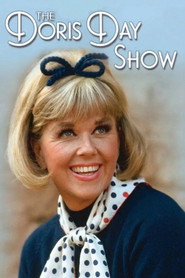
star 6.2The Doris Day Show is an American sitcom that was originally broadcast on the CBS network from September 1968 until March 1973, remaining on the air for five seasons and 128 episodes. In addition to showcasing Doris Day, the show is remembered for its many abrupt format changes over the course of its five-year run. It is also remembered for Day's statement, in her autobiography Doris Day: Her Own Story, that her husband Martin Melcher had signed her to do the TV series without her knowledge, a fact she only discovered when Melcher died of heart disease on April 20, 1968. The TV show premiered on Tuesday, September 24, 1968.Here's Lucy
1968
Here's Lucy
1968
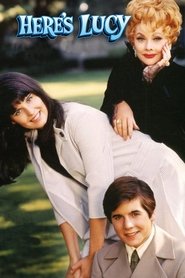
star 6.7Lucille Ball's third network sitcom, following I Love Lucy (1951–57) and The Lucy Show (1962–68).Gardeners' World
1968
Gardeners' World
1968
star 8.2Gardeners' World is a long-running BBC Television programme about gardening, first broadcast in 1968 and still running as of 2013. Its first episode was presented by Ken Burras and came from Oxford Botanical Gardens. The magazine BBC Gardeners' World is a tie-in to the programme. Most of its episodes have been 30 minutes in length, although there are many specials that last longer. The 2008 and 2009 series used a 60-minute format.Duelo de pasiones
1968
Ultraseven
1967
Ultraseven
1967
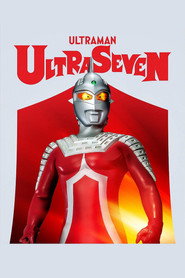
star 7.9In the not-too-distant future, the Earth finds itself constantly under attack from extraterrestrial threats. The Terrestrial Defense Force establishes the Ultra Garrison, a team of six elite members who utilize high-tech vehicles and weaponry. Joining their fight is the mysterious Dan Moroboshi, secretly an alien from the Land of Light in Nebula M-78, who transforms into his true form in times of crisis, Ultraseven.The Prisoner
1967
The Prisoner
1967
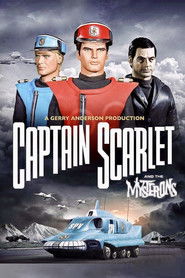
star 7.7After resigning, a secret agent is abducted and taken to what looks like an idyllic village, but is really a bizarre Kafkaesque prison. His warders demand information. He gives them nothing, but only tries to escape.Captain Scarlet and the Mysterons
1967
star 7.5Captain Scarlet heads up an international intelligence agency as they battle against the Mysterons, an alien species from Mars that vows vengeance after a misunderstanding with humans.The Mothers-in-Law
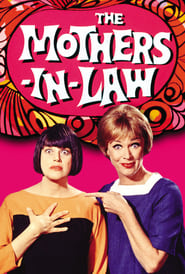
1967
The Mothers-in-Law
1967
star 6The Mothers-in-Law is an American sitcom starring Eve Arden and Kaye Ballard as two matriarchs who were friends and next-door neighbors whose children's elopement rendered them in-laws. The show aired on NBC from September 1967 to April 1969. Produced by Desi Arnaz, the series was created by Bob Carroll, Jr., and Madelyn Davis.Cimarron Strip
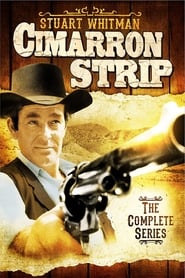
1967
Cimarron Strip
1967
star 5.7Cimarron Strip is an American Western television series that aired on CBS from September 1967 to March 1968. Starring Stuart Whitman as Marshal Jim Crown, the series was produced by the creators of Gunsmoke. Reruns of the original show were aired in the summer of 1971. Cimarron Strip was one of only three 90-minute weekly Western series that aired during the 1960s, and the only 90-minute series of any kind to be centered primarily around one lead character. Cimarron Strip was set in the Oklahoma Panhandle, which comprises, east to west, Beaver, Texas, and Cimarron counties in Oklahoma. The show is set in 1888, just as the continuous frontier of the West, which once ran from the Canadian to the Mexican border, was closing. In less than five years there would no longer be that "continuous frontier," only pockets of undeveloped land. This was the late "Wild West" that Marshall Jim Crown was called to defend.Custer
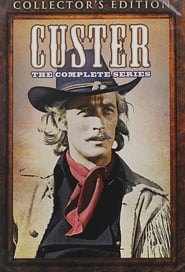
1967
Custer
1967
star 6.4Custer, also known as The Legend of Custer, is a 17-episode military-western television series which ran on ABC from September 6 to December 27, 1967, with Wayne Maunder in the starring role of then Lieutenant Colonel George Armstrong Custer. During the American Civil War, Custer had risen to the rank of major general, the youngest in the Union Army. He was demoted after the war during force reductions to the rank of Captain, but was reinstated in 1866 as a Lieutenant Colonel in command of the Seventh Cavalry, stationed at Fort Riley, Kansas. Many of the soldiers in the regiment were derelicts, former Confederates, or even criminals. The series was cancelled before the script timeline would have reached the Little Big Horn River of southeastern Montana, where all perished on June 25, 1876, in a Sioux Indian ambush, Robert F. Simon played Custer's commanding officer, U.S. General Alfred H. Terry, who disapproved of Custer's long hair and much of his methodology of fighting Indians. Slim Pickens starred as a scout nWashington Week with The Atlantic
1967
star 9.7Journalists participate in a round-table discussion of news events in this award-winning public affairs series. It first aired in 1967, making it the longest-running prime-time news and public affairs program on television.The Jackie Gleason Show
1966
star 8.5The prodigiously talented Gleason became a TV icon after he joined CBS from DuMont, where his work on `Calvalcade of Stars' had established many of his trademark characters, including Reginald Van Gleason III, the Poor Soul and Ralph Kramden, featured here, along with Art Carney, in `Honeymooners' sketches. The Emmy-winning mix also featured guest stars, musical comedy, the glitzy June Taylor Dancers and Frank Fontaine's Crazy Guggenheim character.Family Affair
1966
Family Affair
1966
star 6.7Family Affair is an American sitcom that aired on CBS from September 12, 1966 to September 9, 1971. The series explored the trials of well-to-do civil engineer and bachelor Bill Davis as he attempted to raise his brother's orphaned children in his luxury New York City apartment. Davis' traditional English gentleman's gentleman, Mr. Giles French, also had adjustments to make as he became saddled with the responsibility of caring for 15-year-old Cissy and the 6-year-old twins, Jody and Buffy. The show ran for 138 episodes. Family Affair was created and produced by Don Fedderson, also known for My Three Sons and The Millionaire.That Girl
1966
That Girl
1966
star 6.2That Girl is an American sitcom that ran on ABC from 1966 to 1971. It stars Marlo Thomas as the title character Ann Marie, an aspiring actress, who moves from her hometown of Brewster, New York to try to make it big in New York City. Ann has to take a number of offbeat "temp" jobs to support herself in between her various auditions and bit parts. Ted Bessell played her boyfriend Donald Hollinger, a writer for Newsview Magazine; Lew Parker and Rosemary DeCamp played Lew Marie and Helen Marie, her concerned parents. Bernie Kopell, Ruth Buzzi and Reva Rose played Ann and Donald's friends. That Girl was developed by writers Bill Persky and Sam Denoff, who had served as head writers on The Dick Van Dyke Show earlier in the 1960s.Ultraman
1966
Ultraman
1966
star 8.4Hayata is a member of the Science Patrol, an organization tasked with investigating bizarre anomalies. He is mortally wounded when accidently encountering an alien being from Land of Light, who grants Hayata new life as the two are merged into one. Now, whenever a threat arises that is too great for the Science Patrol to handle, Hayata activates the beta capsule and becomes the hero known as Ultraman.