New Kids TV Series on Pantaflix - Page 361
All Services
Free Services
 Netflix
 Amazon Prime Video
 Apple iTunes
 Apple TV Plus
 Disney Plus
 Google Play Movies
 Paramount Plus
 Hulu
Hulu
 HBO Max
 YouTube
 fuboTV
 Peacock
 Peacock Premium
 Amazon Video
 The Roku Channel
 AMC+
AMC on Demand
AMC+
AMC on Demand
 Kocowa
 Hoopla
 The CW
 Vudu
Vudu
 Starz
Starz
 Showtime
 PBS
PBS
 Pantaflix
 FXNow
FXNow
 Tubi TV
 Kanopy
 Comedy Central
 Crunchyroll
 Microsoft Store
 Redbox
 Sun Nxt
 ABC
ABC
 DIRECTV
 Crackle
 Fandor
 Plex
Plex
Netflix
Amazon Prime Video
Apple iTunes
Apple TV Plus
Disney Plus
Google Play Movies
Paramount Plus
Hulu
HBO Max
YouTube
fuboTV
Peacock
Peacock Premium
Amazon Video
The Roku Channel
AMC+
AMC on Demand
Kocowa
Hoopla
The CW
Vudu
Starz
Showtime
PBS
Pantaflix
FXNow
Tubi TV
Kanopy
Comedy Central
Crunchyroll
Microsoft Store
Redbox
Sun Nxt
ABC
DIRECTV
Crackle
Fandor
Plex

Curiosity Shop
1971
Curiosity Shop
1971
star 9Curiosity Shop is an American children's educational television program produced by ABC-TV in 1971, capitalizing on the success of Sesame Street. Sponsored by the Kellogg's cereal company, Curiosity Shop was broadcast Saturday mornings from September 11, 1971, to January 6, 1973. The program featured three inquisitive children who each week visited a shop populated with various puppets and gadgets, discovering interesting things about science, nature and history. Each hour-long show covered a specific theme: clothing, music, dance, weather, the five senses, space, time, rules, flight, dolls, etc.Meu Pedacinho de Chão
1971
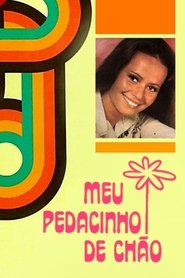
star 9Colonel Epaminondas is a retrograde and authoritarian man, who commands and dismantles the region. He declares war on Pedro Galvão, his main rival, when he donates part of his land – purchased from the colonel – for the construction of a church and a school. The arrival of professor Juliana, right at the beginning of the plot, changes the lives of the residents of the small village. Juliana takes over the school and ends up arousing the interest of Fernando, Epaminondas' son. Oblivious to the fights that drive the story are Pituca (Patrí and Serelepe (Aires Pinto). The friendship between the two children, however, does not please the colonel, who is always fighting with his daughter. 'Meu Pedacinho de Chão' was co-produced and shown simultaneously by Globo and TV Cultura in São Paulo.Pingo de Gente
1971
Mr. Benn
1971
Mr. Benn
1971
star 7.3Popular British children's animation series. Mr Benn is the ordinary, bowler-hatted office worker who lives in the ordinary suburban street of Festive Road. However, when he tries on a costume in a mysterious shop, he steps out of the changing room into a different time and place, appropriate to his apparel. His adventures include him being a spaceman, a pirate and a cowboy.Cvoček kosmonautem
1971
The Great American Dream Machine
1971
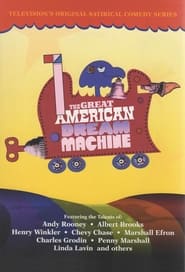
star 10The Great American Dream Machine was a weekly satirical variety television series, produced in New York City by WNET and broadcast on PBS from 1971 to 1973. The program was hosted by humorist and commentator Marshall Efron. The show centered around skits and satirical political commentary. The hour and a half long show usually contained at least seven different current event topics. In the second season, the show was trimmed down to an hour. Other notable cast members included Chevy Chase. Contributors included Albert Brooks and Andy Rooney. Some of the skits would later be revamped for the movie The Groove Tube. There were also occasional short films presented on the show, most of them "experimental" or documentaries about artistic endeavours. Some of these were subtitled.Andersen Monogatari
1971
Andersen Monogatari
1971
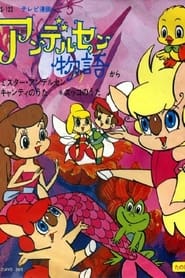
star 6.5Hans Christian Andersen Stories is a Japanese anime series by Mushi Productions and aired on Fuji TV from January 3 to December 21, 1971.Hajk
1971
Snehuľkovia
1971
Snehuľkovia
1971
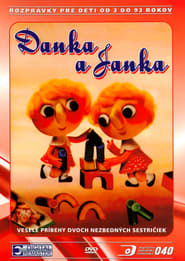
Danka a Janka
1971
Danka a Janka
1971
Hyppo and Thomas
1971
Hyppo and Thomas
1971
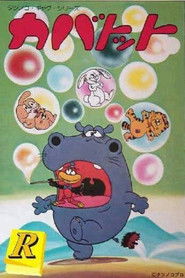
Hyppo and Thomas is an anime created by Tatsunoko Production. Thomas is a cunning bird who sponges on Kaba, the good-natured hippopotamus. Although Thomas is a dependent, living in Hyppo's big mouth, he always acts lordly and tries to outsmart his simpleminded host. However, their basic friendship and cooperation endures despite their frequent quarrels.Polka Dot Door
1971
Polka Dot Door
1971
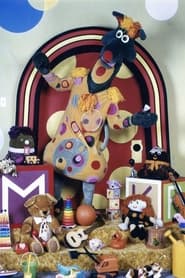
star 7.5Polka Dot Door was a long-running Canadian children's television series produced by the Ontario Education Communications Authority from 1971–1993. PDD was created and developed by a team of employees from TVOntario hired and led by original series producer-director, Peggy Liptrott. Significant contributors to the creation and development of the series in 1971 included Executive Producer Dr. Vera Good who laid the conceptual foundation of the show, Educational Supervisor, Marnie Patrick Roberts, Educational Consultant L. Ted Coneybeare, Script Writers/Composers, Pat Patterson and Dodi Robb, Animator Dick Derhodge and Dr. Ada Scherman, a professor at the prestigious Institute of Child Study in Toronto who was consulted in the early stages of PDD's development and is responsible for giving the show its name.Tilim
1970
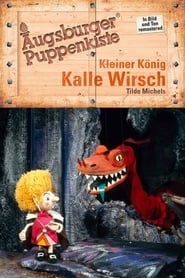
Augsburger Puppenkiste - Kleiner König Kalle Wirsch
1970
star 9.3Deep underground live the Earthfolk. There are five Earthfolk tribes: the Wirsche, the Wolde, the Gilche, the Murke, and the Trumpe. They have all been ruled for 1,000 years by the kind but slightly eccentric Kalle, a big-hearted, peace-loving Wirsch who serves as their king. One day, however, a proclamation spreads through the realm: all Earthfolk must gather at the Earthfolk Fortress. There, Zoppo Trump intends to challenge King Kalle Wirsch to a duel and seize power. Knowing he can hardly win such a duel, Zoppo and his cronies, Querro and Quarro, the Rat and the Spider, set numerous nasty traps meant to kill the king. If Kalle fails to appear for the duel, the law states that the challenger automatically inherits the throne, making Zoppo king.Magical Mako
1970
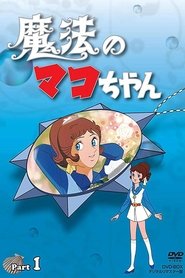
Magical Mako
1970
star 6.5Mahō no Mako-chan is a Japanese anime series by Toei Animation. The story is loosely based on the Hans Christian Andersen tale The Little Mermaid. The series has been dubbed into various languages including French, Spanish, Polish and Italian. It is also often known as Mako the Mermaid, Mako-chan’s Magic, Syrenka Mako and Magical Mako-chan. Mahō no Mako-chan aired in 1970 via Nippon Educational TV, which is now TV Asahi.O vepříku a kůzleti
1970
O vepříku a kůzleti
1970
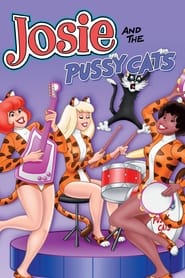
Josie and the Pussycats
1970
star 7.2Josie and the Pussycats is an American animated television series, based upon the Archie Comics comic book series of the same name created by Dan DeCarlo. Produced for Saturday morning television by Hanna-Barbera Productions, sixteen episodes of Josie and the Pussycats aired on CBS during the 1970-71 television season, and were rerun during the 1971-72 season. In 1972, the show was re-conceptualized as Josie and the Pussycats in Outer Space, sixteen episodes of which aired on CBS during the 1972-73 season and were rerun the following season. Reruns of the original series alternated between CBS, ABC, and NBC from 1974 through 1976. This brought its national Saturday morning TV run on three networks to six years. Josie and the Pussycats featured an all-girl pop music band that toured the world with their entourage, getting mixed up in strange adventures, spy capers, and mysteries. On the small-screen, the group consisted of level-headed lead singer and guitarist Josie, intelligent tambourinist Valerie, and air-heade