New War Politics TV Series on Pantaflix - Page 122
All Services
Free Services
 Netflix
 Amazon Prime Video
 Apple iTunes
 Apple TV Plus
 Disney Plus
 Google Play Movies
 Paramount Plus
 Hulu
Hulu
 HBO Max
 YouTube
 fuboTV
 Peacock
 Peacock Premium
 Amazon Video
 The Roku Channel
 AMC+
AMC on Demand
AMC+
AMC on Demand
 Kocowa
 Hoopla
 The CW
 Vudu
Vudu
 Starz
Starz
 Showtime
 PBS
PBS
 Pantaflix
 FXNow
FXNow
 Tubi TV
 Kanopy
 Comedy Central
 Crunchyroll
 Microsoft Store
 Redbox
 Sun Nxt
 ABC
ABC
 DIRECTV
 Crackle
 Fandor
 Plex
Plex
Netflix
Amazon Prime Video
Apple iTunes
Apple TV Plus
Disney Plus
Google Play Movies
Paramount Plus
Hulu
HBO Max
YouTube
fuboTV
Peacock
Peacock Premium
Amazon Video
The Roku Channel
AMC+
AMC on Demand
Kocowa
Hoopla
The CW
Vudu
Starz
Showtime
PBS
Pantaflix
FXNow
Tubi TV
Kanopy
Comedy Central
Crunchyroll
Microsoft Store
Redbox
Sun Nxt
ABC
DIRECTV
Crackle
Fandor
Plex

Family of Spies
1990
Family of Spies
1990
star 6.6In the late 1960s, a US Navy petty officer, with access to major state secrets and large debts, begins selling information to the Soviets.La notte della Repubblica
1989
A TV programme presented by Sergio Zavoli, broadcast by the Italian public TV channel Rai 2, about Italy during the Years of Lead, with movies, interviews with some protagonists of the period and final discussion.Löwengrube
1989
Löwengrube
1989
star 8"Löwengrube – Die Grandauers und ihre Zeit" is a German television series first aired between 1989 and 1992, created by Willy Purucker and directed by Rainer Wolffhardt. It is set in Munich and follows the lives of Ludwig Grandauer and his son Karl, both policemen, covering the years from 1897 to 1954. The TV show is based on Purucker's radio play series Die Grandauers und ihre Zeit (‘The Grandauers and their time’). The series’ main title "Löwengrube", meaning ‘Lions’ Den’, refers to the address of the Munich Police Headquarters inaugurated in 1913.The French Revolution
1989
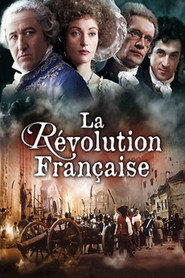
star 10A history of the French Revolution from the decision of the king to convene the Etats-Generaux in 1789 in order to deal with France's debt problem. The first part of the movie tells the story from 1789 until August 10, 1792 (when the King Louis XVI lost all his authority and was put in prison). The second part carries the story through the end of the terror in 1794, including the deaths by guillotine of Louis XVI, Marie-Antoinette, Danton, and Desmoulins.Balkan Express 2
1989
Balkan Express 2
1989
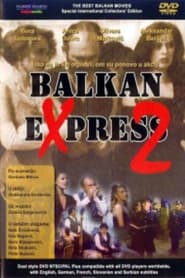
star 8TV series made as an extended version of an eponymous feature film. A quintet of small-time crooks that works under disguise of a musical band become the supporters of Partisan resistance movement in WW2. Being forced to escape to another part of the occupied territory, they hide in "Marlene Saloon" forgetting that the bordellos of the kind are an ideal place for espionage during the war. They get more problems than peace and rest and the tragicomedy starts.Top of the Hill
1989
Top of the Hill
1989
star 7Top of the Hill is a short-lived political drama series aired by CBS as part of its 1989 fall lineup.Arende
1989
Arende
1989
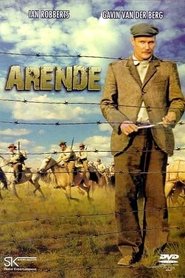
Epic drama follows a group of Boers during significant events in South African history. The first series is primarily set on St. Helena and follows the lives of Boer prisoners-of-war at Deadwood Camp. Among them is Sloet Steenkamp, a Cape Rebel whose death sentence was commuted to life imprisonment on the island. The second series shifts to post-war mainland South Africa, where the Boers, though returned, still struggle for freedom. New characters are introduced, including Meisie, who is mute due to trauma, and her mother Cornelia, who seeks revenge. In the third series, Sloet and his friends, yearning to escape British rule, embark on the Dorsland Trek, a perilous journey across the Kalahari Desert in search of freedom beyond South Africa's borders.Blob
1989
Blob
1989
Twenty minutes of “television substitute.” TV dismantled, reassembled, and laid bare through editing to reveal what the video and its everyday protagonists are really telling us.Mobile Suit Gundam 0080: War in the Pocket
1989
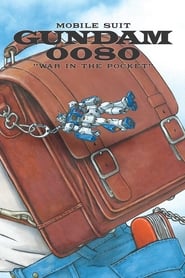
star 8In the final days of the One Year War, a Zeon special forces group infiltrates a colony to gather information on a new Gundam unit. Alfred Izuhara, a 10-year-old student, befriends Zeon rookie pilot Bernie Wiseman during a brief mobile suit combat. Meanwhile, Al meets up with Christina MacKenzie, his former neighbor and babysitter. Little does he know that not only is Christina a member of the Earth Federation, she's the test pilot of the new Gundam NT-4 prototype.All Costs Paid
1989
All Costs Paid
1989
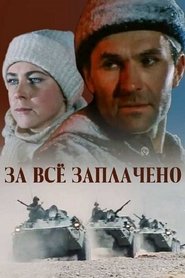
star 7.5All Costs Paid is a Soviet TV miniseries produced by Studio Ekran. The director Aleksei Saltykov well known for his film The Chairman with Mikhail Ulyanov, an acclaimed Russian actor playing a main character. All Costs Paid is one of the first Soviet feature films that shows the war in Afghanistan. Film has unusually truthful point of view on that period of Soviet Era and on the Soviet war in Afghanistan.Fabrik der Offiziere
1989
Fabrik der Offiziere
1989
star 3.3This is the story of Lieutenant Karl Krafft in the year 1944, when the war was already lost. He was stationed at the Officers Factory. A training school where the cream of the German youth was prepared to fight as soldiers for the fatherland. At the time of his arrival, a murder was committed at this military academy, which was covered up. A crime with political backgrounds, which must be solved by Lieutenant Krafft during the course of the officer training.Legend of the Galactic Heroes
1988
star 8.7War rages between the Galactic Empire and the Free Planets Alliance. With two new brilliant young leaders at the helm, anything can happen in this military space opera.Press Center
1988
Geheime Reichssache
1988
Geheime Reichssache
1988
Berlin 1937/38: Adolf Hitler strives for war. The leadership of the Wehrmacht stands in his way. But he gets rid of his opponents by plotting against the Reich War Minister Werner von Blomberg - he had married a prostitute - and the Chief of Staff of the Army Werner von Fritsch - he was homosexual.Lenin... The Train
1988
Lenin... The Train
1988
star 6In March 1917, amidst World War I, a sealed train carries Russian revolutionaries, led by Lenin, from Germany to St. Petersburg. Along the journey, political tensions and personal dramas unfold, culminating in a historic arrival.Twilight of a Nation
1988
Twilight of a Nation
1988
Twilight of a Nation is a Hong Kong television series based on the events of the Taiping Rebellion and the rise and fall of the Taiping Heavenly Kingdom during the late Qing Dynasty. The 45 episodes long series was produced by Siu Sang and was first aired on TVB Jade in Hong Kong in November 1988. It was broadcast again on TVB in 1996. The theme songs and insert songs in the series were performed by Roman Tam.Emma: Queen of the South Seas
1988
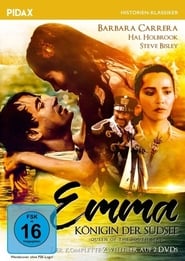
star 3.8Based on the life of Emma Eliza Coe, known as the "Queen of the South Seas", whose strength and cunning staved off the colonial struggle involving the United States, Great Britain, and Germany while she built her own empire. Emma’s father, the first consul in Samoa, taught his daughter at an early age the bitter truth about the fickleness of men.War and Remembrance
1988
War and Remembrance
1988
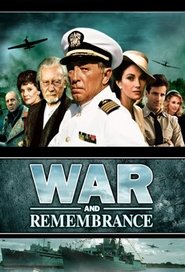
star 7.9Following the attack on Pearl Harbor, the extended Henry and Jastrow families navigate the personal, social and political impacts of World War II, including the Holocaust, the Battle of the Bulge, and the Pacific theater.