New War Politics TV Series on Pantaflix - Page 8
All Services
Free Services
 Netflix
 Amazon Prime Video
 Apple iTunes
 Apple TV Plus
 Disney Plus
 Google Play Movies
 Paramount Plus
 Hulu
Hulu
 HBO Max
 YouTube
 fuboTV
 Peacock
 Peacock Premium
 Amazon Video
 The Roku Channel
 AMC+
AMC on Demand
AMC+
AMC on Demand
 Kocowa
 Hoopla
 The CW
 Vudu
Vudu
 Starz
Starz
 Showtime
 PBS
PBS
 Pantaflix
 FXNow
FXNow
 Tubi TV
 Kanopy
 Comedy Central
 Crunchyroll
 Microsoft Store
 Redbox
 Sun Nxt
 ABC
ABC
 DIRECTV
 Crackle
 Fandor
 Plex
Plex
Netflix
Amazon Prime Video
Apple iTunes
Apple TV Plus
Disney Plus
Google Play Movies
Paramount Plus
Hulu
HBO Max
YouTube
fuboTV
Peacock
Peacock Premium
Amazon Video
The Roku Channel
AMC+
AMC on Demand
Kocowa
Hoopla
The CW
Vudu
Starz
Showtime
PBS
Pantaflix
FXNow
Tubi TV
Kanopy
Comedy Central
Crunchyroll
Microsoft Store
Redbox
Sun Nxt
ABC
DIRECTV
Crackle
Fandor
Plex

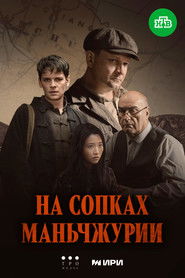
On the Hills of Manchuria
2025
Marshal Vasilevsky holds a meeting at the headquarters of the Red Army, demanding the liquidation of the Japanese chemical plant in Manchuria and to prevent the explosion of dangerous weapons depots. An echelon of soldiers arrives at the Far Eastern station, including a reconnaissance platoon, which will have to find the plant. The platoon includes Sergeant San Lee, nicknamed Sanya, and his colleague Kuzmin, a former student at the Institute of Oriental Languages. To get information about the location of the plant, the scouts need to get to Harbin and establish contact with the Soviet agent Rybak.On the Trail of the Beast
2025
star 7.5The Great Patriotic War. Soviet intelligence officers led by Sergei Skorin and Andrei Losev are trying to track down a well-trained sabotage group that is staging large-scale sabotage in the rear of the Red Army on the eve of the Battle of Kursk. Andrey and Sergey are brothers, but there has been a conflict between them for many years. Andrey does not trust Sergei, because he suspects that his brother has been turned upside down.WWII – The End
2025
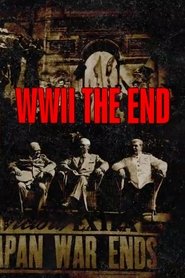
WWII – The End
2025
Looks at the epic final months of World War II and charts the Wehrmacht's last-ditch battles on the Western and Eastern fronts.The Sound and the Fury
2025
star 6From the Japanese invasion of Manchuria to the siege of Stalingrad, and from the attack on Pearl Harbor to the battle of El Alamein, the events of the Second World War are presented on a 'planet level' to place it on a truly global scaleTupa 13
2025
Tupa 13
2025
VE Day 80
2025
VE Day 80
2025
star 7Eighty years on from the announcement that brought joy and relief to the nation, join in with moments of remembrance from across the UK to pay tribute to the heroes of the past.Taganrog
2025
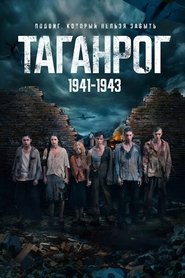
Taganrog
2025
star 8The year is 1941. Viktor Shvets, a state security officer, organizes underground resistance against the Nazi occupation under the name of Gustav Schwartz. As a result of his activities, hundreds of people become part of the resistance, commit sabotage, distribute leaflets and prepare an uprising. Vasily Afonov becomes the leader of the underground.Soldier's Mother
2025
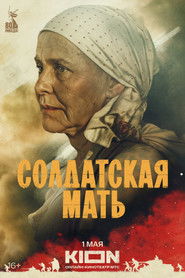
Soldier's Mother
2025
Moscow journalist comes to the Pervomaysky farmstead to interview Efrosinya Semenova, a heroic mother who lost nine sons in the war, on assignment from the editorial office. During long conversations, he discovers the courage and heroism of each son, as well as the indestructible strength of spirit of Efrosinya.Victory
2025
Victory
2025
The history of the largest battles of the Great Patriotic War through portraits of specific people.Turning Point: The Vietnam War
2025
star 7.2This thought-provoking documentary series examines the harrowing consequences of the Vietnam War, from the Gulf of Tonkin incident to the fall of Saigon.Carême
2025
Carême
2025
star 7.3Witness the rise of the world's first celebrity chef, Antonin Carême, and his descent into espionage in Napoleon-era France—where manipulation is king. With his gifts for gastronomy and seduction, he becomes the perfect weapon in a fight for power.The Stronghold
2025
The Stronghold
2025
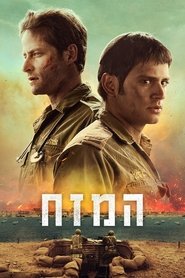
When a desolate Israeli outpost comes under siege after a surprise Egyptian attack, the surviving soldiers must choose between a hopeless battle, or follow the Doctor's plan that may save them, but comes with a great price.The Trial of Paul Touvier
2025
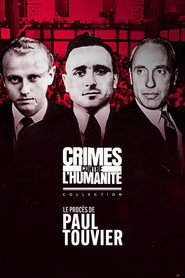
star 7Paul Touvier, a former member of the Vichy Militia, was sentenced to death in 1947 for war crimes but evaded justice thanks to the support of the Church and the statute of limitations, which expired in 1967. In 1973, he received a presidential pardon from Pompidou, but an investigation led to the reopening of proceedings for crimes against humanity, for which there is no statute of limitations. Hunted down, he was arrested in 1989 at the Saint-Joseph Priory in Nice. His trial began in March 1994, shedding light on the role of the Milice, the armed wing of the collaboration, and of Vichy. Touvier was charged with complicity in crimes against humanity for the execution of seven Jews in retaliation for the assassination of a propagandist. His personal notebooks reveal his anti-Semitism. On April 20, 1994, he was sentenced to life imprisonment and died in 1997. This trial sparked a debate on the responsibility of the French state during the Occupation.В парке Чаир
2025
В парке Чаир
2025
So We're On Our Way There
2025
Five friends, natives of different regions of the USSR, serve in the same infantry regiment. They have three years of war behind them, and the liberation of Russian, Belarusian, Polish and German cities is ahead. They are led forward by the song "The Road to Berlin", written by Major Dolmatovsky.The Narrow Road to the Deep North
2025
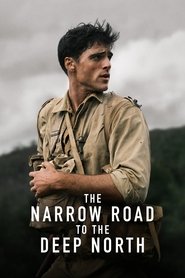
star 7.5Dorrigo Evans, an Australian surgeon on the Burma Railway during WWII, is haunted by his time as a POW, as well as a forbidden affair he had with his uncle's wife prior to the war.Gestapochefen
2025
Смерш 3
2025
Смерш 3
2025
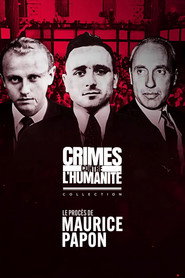
The Trial of Maurice Papon
2025
star 7Maurice Papon, a high-ranking official under the Vichy regime, oversaw the deportation of hundreds of Jews from the Gironde prefecture in 1942. After the war, he enjoyed a prestigious career as a prefect, member of parliament, and minister without ever facing any repercussions. In 1981, the newspaper “Le Canard enchaîné” revealed his role during the Occupation, backed by documents, leading to a complaint for crimes against humanity. After 16 years of legal proceedings, his trial began in 1997. Accused of complicity in the deportation of 1,600 Jews, he claimed he was merely obeying government orders and acting under coercion from the Nazi occupiers, while the prosecution emphasized his conscious responsibility. Sentenced to 10 years’ imprisonment in 1998 following a trial lasting more than six months, he was released in 2002 for health reasons. This trial, a belated symbol of the accountability of public officials, continues to fuel reflection on individual responsibility.