New Family TV Series on Tub Tv - Page 429
All Services
Free Services
 Netflix
 Amazon Prime Video
 Apple iTunes
 Apple TV Plus
 Disney Plus
 Google Play Movies
 Paramount Plus
 Hulu
Hulu
 HBO Max
 YouTube
 fuboTV
 Peacock
 Peacock Premium
 Amazon Video
 The Roku Channel
 AMC+
AMC on Demand
AMC+
AMC on Demand
 Kocowa
 Hoopla
 The CW
 Vudu
Vudu
 Starz
Starz
 Showtime
 PBS
PBS
 Pantaflix
 FXNow
FXNow
 Tubi TV
 Kanopy
 Comedy Central
 Crunchyroll
 Microsoft Store
 Redbox
 Sun Nxt
 ABC
ABC
 DIRECTV
 Crackle
 Fandor
 Plex
Plex
Netflix
Amazon Prime Video
Apple iTunes
Apple TV Plus
Disney Plus
Google Play Movies
Paramount Plus
Hulu
HBO Max
YouTube
fuboTV
Peacock
Peacock Premium
Amazon Video
The Roku Channel
AMC+
AMC on Demand
Kocowa
Hoopla
The CW
Vudu
Starz
Showtime
PBS
Pantaflix
FXNow
Tubi TV
Kanopy
Comedy Central
Crunchyroll
Microsoft Store
Redbox
Sun Nxt
ABC
DIRECTV
Crackle
Fandor
Plex

Paris By Night
1986
Paris By Night
1986
star 7Paris By Night is a popular Vietnamese language musical variety show, produced by Thúy Nga and hosted by Nguyễn Ngọc Ngạn and Nguyễn Cao Kỳ Duyên, featuring musical performances by modern pop stars, traditional folk songs, one-act plays, and sketch comedy.Double Dare
1986
Double Dare
1986
star 7.1Two teams compete to win cash and prizes by answering trivia questions and completing messy 'physical challenges' on Double Dare.执位夫妻
1986
执位夫妻
1986
The Really Wild Show
1986
The Really Wild Show
1986
star 8The Really Wild Show was a long-running British television show about wildlife, broadcast by the BBC as part of their CBBC service to children. It also runs on Animal Planet in the US. The show was broadcast continuously since 21 January 1986. In April 2006 the BBC announced that the show would be axed that summer, and as such the last ever episode was shown in April 2006, giving the show a run of 20 years.The Return of the Antelope
1986
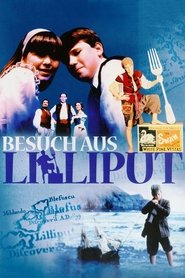
star 9The Return of the Antelope was a UK TV series aired on ITV between 1986 and 1988. It was a children's fantasy series about two English children, circa 1899, who befriend a group of shipwrecked Lilliputians.Catchphrase
1986
Catchphrase
1986
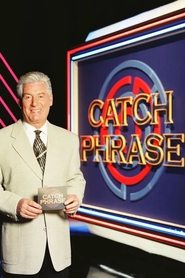
star 6.8Catchphrase is a British game show based on the short-lived U.S. game show of the same name. It originally aired on ITV in the United Kingdom between 12 January 1986 and 19 December 2002. It was presented by Northern Irish comedian Roy Walker from 1986–1999; followed by Nick Weir from 2000–2002, and Mark Curry in 2002. In the original series, two contestants, one male and one female would have to identify the familiar phrase represented by a piece of animation accompanied by background music. The show's mascot, a golden robot called "Mr. Chips", appears in many of the animations. In the revived version of the show, the same format remains, but there are three contestants. In August 2012, it was announced that Stephen Mulhern would host a revived version of the show beginning on 7 April 2013. On 21 August 2013, it was confirmed that Catchphrase has been re-commissioned for a second series, following the success of the first.The Tailor-Made Shirt
1986
Shukichi, the owner of a shirt shop in Tsukuda, Tokyo, is a stubborn craftsman devoted to his work. Through clumsy in his expressions of affection, the mini-series depicts the sincerity, pride and pathos of a man who has supported his family to the best of his ability by devoting himself to his work. One day, his wife and son explode their daily frustrations with Shukichi and leave home...Jimbo and the Jet Set
1986
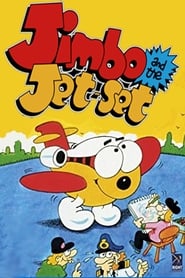
star 5.4Jimbo and the Jet Set is a British animated cartoon series broadcast in the 1980s, featuring the adventures of the eponymous Jimbo, a talking aeroplane. Created by Maddocks Cartoon Productions, it originally ran for 25 episodes between 1985 and 1986. The premise of the cartoon is that Jimbo was originally intended to be a Jumbo Jet, but his designer could not tell the difference between inches and centimetres, resulting in his diminutive size. If Jimbo's designer switched the imperial measurements of the Boeing 747 for metric, the result would have been an aircraft with a fuselage length of 91 ft; this would make Jimbo roughly the length of an early-series Boeing 737. The television series features various talking airport-type ground vehicles: Tommy Tow-Truck, Claude Catering, Amanda Baggage, Phil the Fuel Truck, Sammy Steps and Harry Helicopter. Other plane characters appear from time to time, such as Old Timer, a Vickers Wellington bomber who gets into the story while flying to or from an airshow. The story isThe Story of Pollyanna
1986
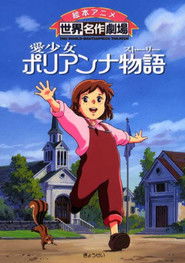
star 6.6Motherless since birth, Pollyanna was an ordinary happy-go-lucky girl, leaving peacefully with her father, the vicar. Then one day her life changes completely when her father dies and she has to live with her aunt whom she has never met before. In the beginning, she seems to be detested by her but as time passes, they develop a very strong bond.Teufels Großmutter
1986
Wonder Beat Scramble
1986
Wonder Beat Scramble
1986
star 10The 13-year-old Benny's father has mysteriously disappeared on an expedition to Sirius. Almost at the same time, attacks start from the alien intars to the Earth dwellers. They implant themselves in the bodies of the inhabitants of the earth. Due to the mysterious disappearance of Benny's father, he is accused of making common cause with the intars. Benny, who has remained behind, suffers greatly from these accusations and hopes one day to be able to unravel the mystery of his father's disappearance and that of the intars. He joins the "White Pegasus," a special unit to combat the Intars and fight together with them against the aliens in the human body. For this, they scale a spaceship down to microscopic size and infiltrate it into the infested body.Mack and Zack
1986
Mack and Zack
1986
Originally conceived as children’s pastime, but thanks to its phenomenal philosophical basis, this children’s program has become one of the most popular shows for the young. Mak and Zak kept hitting each other with huge hammers in the head. There was also a rocker who doesn’t listen to anyone.Super Grandpa
1986
Super Grandpa
1986
Super Grandpa is a kind of neighborhood hero who's always there for the kids, whether to help them out repair their bicycles, or teach them morals like stealing pocket money to buy sweets is no good. The main character was played by Ljubisa Bacic, a good-natured aging neighbor with a red-colored cap as his trademark.Opice z našej police
1986
Opice z našej police
1986
Hala
1986
Hala
1986
Younes is a good young man who is loved by everyone, especially the children. He takes care of a little girl named (Hala) due to the absence of her family, and the grandfather shares his care with him. They spend time playing useful and telling her interesting stories about jungle animals.钟鼓楼
1986
钟鼓楼
1986
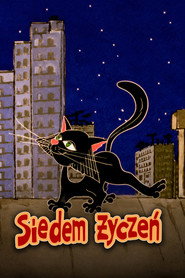
Seven Wishes
1986
Seven Wishes
1986
star 6.8A young boy rescues a black cat, Rademenes, who can talk and who in turn gives the boy seven wishes. But it turns out that with each wish there come a lot of problems.Engels & Consorten
1986
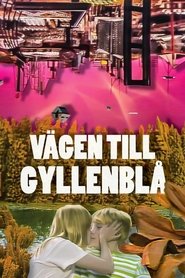
A Road to Gyllenbla!
1985
A Road to Gyllenbla!
1985
star 3.6Ratio Rasch, the president of planet Gyllenblå, has banned laughter and emotions in order to create a society based on reason. Police are constantly patrolling the planet and anyone caught laughing is imprisoned and given anti-laughter serum. Only a few members of an underground guerrilla oppose the president. On Earth, the eccentric Dr. Krull listens to signals from outer space and realizes that something needs to be done so he sends the two children Cecilie and Fredrik to Gyllenblå. Epicykel, a guerrilla member, senses their presence and hopes to get to them first but fails. The children are put in school, where Fredrik has great difficulty controlling his laughter but Cecilie adapts well. The guerrilla knows that laughter is contagious and Fredrik gives them new hope of returning laughter to the people of Gyllenblå.