New War Politics TV Series on Tubi TV - Page 7
All Services
Free Services
 Netflix
 Amazon Prime Video
 Apple iTunes
 Apple TV Plus
 Disney Plus
 Google Play Movies
 Paramount Plus
 Hulu
Hulu
 HBO Max
 YouTube
 fuboTV
 Peacock
 Peacock Premium
 Amazon Video
 The Roku Channel
 AMC+
AMC on Demand
AMC+
AMC on Demand
 Kocowa
 Hoopla
 The CW
 Vudu
Vudu
 Starz
Starz
 Showtime
 PBS
PBS
 Pantaflix
 FXNow
FXNow
 Tubi TV
 Kanopy
 Comedy Central
 Crunchyroll
 Microsoft Store
 Redbox
 Sun Nxt
 ABC
ABC
 DIRECTV
 Crackle
 Fandor
 Plex
Plex
Netflix
Amazon Prime Video
Apple iTunes
Apple TV Plus
Disney Plus
Google Play Movies
Paramount Plus
Hulu
HBO Max
YouTube
fuboTV
Peacock
Peacock Premium
Amazon Video
The Roku Channel
AMC+
AMC on Demand
Kocowa
Hoopla
The CW
Vudu
Starz
Showtime
PBS
Pantaflix
FXNow
Tubi TV
Kanopy
Comedy Central
Crunchyroll
Microsoft Store
Redbox
Sun Nxt
ABC
DIRECTV
Crackle
Fandor
Plex

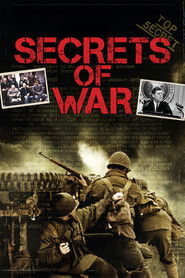
Sworn to Secrecy: Secrets of War
1998
star 6Secrets are divulged and stories of espionage, conspiracy, murder, sabotage and greed are uncovered.Warbirds of World War II
1996
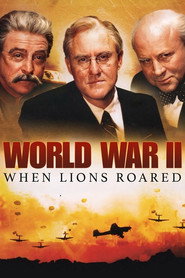
From the Battle of Britain to the Dresden bombings, some of the most intense combat of World War II occurred in the airspaces over Europe. This multi-volume box set offers a comprehensive account of the aircraft that helped bring the Allies to victory, including the B-17 Flying Fortress, the B-24 Liberator, the P-51 Mustang, and many more.World War II: When Lions Roared
1994
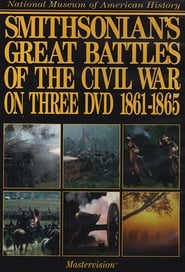
star 6.8A 1994 war television miniseries which portrays Roosevelt, Churchill, and Stalin as they maneuver their countries through several of the major events of World War II - such events include the Blitz, Operation Barbarossa, the bombing of Pearl Harbor, the North African Campaign, the Allied invasion of Italy, and concluding with the Tehran Conference.Smithsonian's Great Battles of the Civil War
1994
This critically acclaimed television and video series from the National Museum of American History is a sweeping and compelling look at the war's military, political and social history. Each episode features dramatic reenactments of important campaigns; first-hand accounts of eyewitnesses and participants read by distinguished actors; period photographs, paintings and artifacts; intriguing expert challenges to traditional historical thinking; original contemporary illustrations; computer enhanced maps; and music of the time.Sharpe
1993
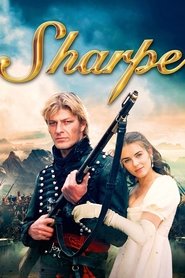
Sharpe
1993
star 8Sharpe is a British series of television dramas starring Sean Bean as Richard Sharpe, a fictional British soldier in the Napoleonic Wars. Sharpe is the hero of a number of novels by Bernard Cornwell; most, though not all, of the episodes are based on the books. Produced by Celtic Films and Picture Palace Films for the ITV network, the series was shot mainly in Turkey and the Crimea, although some filming was also done in England, Spain and Portugal. The series originally ran from 1993 to 1997. In 2004, as part of ITV's new set of drama, ITV announced that it intended to produce new episodes of Sharpe, in co-production with BBC America, loosely based on his time in India, with Sean Bean continuing his role as Sharpe. Sharpe's Challenge is a two-part adventure; part one premiered on ITV on 23 April 2006, with part two being shown the following night. With more gore than earlier episodes, the show was broadcast by BBC America in September 2006.The Valour and the Horror
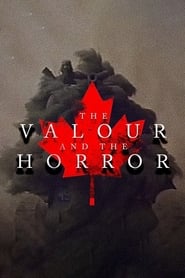
1992
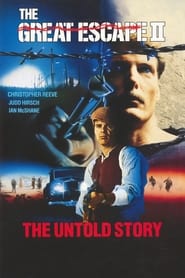
Mini-series investigating three significant Canadian battles in World War II.The Great Escape II: The Untold Story
1988
star 5.8A former POW leads a special task force to hunt down the culprits responsible for carrying out the orders to murder 50 of the 76 escapees from Stalag Luft III.Wish Me Luck
1988
Wish Me Luck
1988
star 7.1A secret organisation called The Outfit recruits and trains civilians, sending them undercover to aid in the war effort, or placing them in administrative tasks to aid the group. Each person arrives at The Outfit by a different route: Mathilde ('Matty') escaped to London from France and wants desperately to contribute to the war effort; Liz, whose husband is serving overseas and whose brother has just died in the war, stumbles into the group almost by accident. Former actor Colin Beale also trains for undercover work. Vivien's husband was executed when his work with The Outfit was uncovered. But they all come together against the common enemy.Nancy Wake
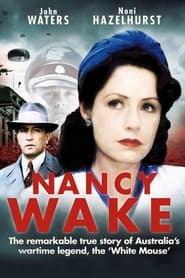
1987
Nancy Wake
1987
star 10Nancy Wake tells the true story of Australia's greatest war heroine - the woman the Gestapo dubbed the 'White Mouse'. This miniseries event begins in 1939 when Nancy meets Henri Fiocca, while she is working on assignment as a journalist in Marseilles. With Europe on the brink of war, they fall desperately in love and are married as Hitler begins his relentless march oh Holland and Belgium.Tour of Duty
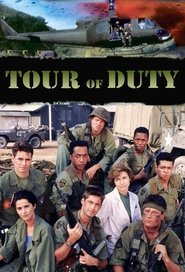
1987
Tour of Duty
1987
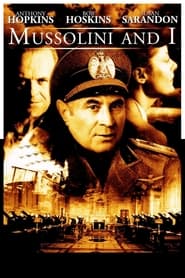
star 8.1The trials of a U.S. Army platoon serving in the field during the Vietnam War.Mussolini and I
1985
Mussolini and I
1985
star 6World War II is about to end. Benito Mussolini, il Duce, supreme dictator of Fascist Italy, sees his totalitarian dream crumbling and his power slipping away as the terrible day of his ignominious death at the hands of those he so ruthlessly oppressed for more than two decades draws inexorably near.La Plaça del Diamant
1983
La Plaça del Diamant
1983
star 5.3The life of a young woman in Barcelona during the Spanish Civil War and its aftermath. This a Television version, in a 4-episode miniseries format, of the film of the same name, based on the novel by Mercè Rodoreda.Kennedy
1983
Kennedy
1983
star 6.3Kennedy is a five-hour miniseries written by Reg Gadney and directed by Jim Goddard. The miniseries was produced by Central Independent Television and originally aired in the United States starting on 20 November 1983 around the time of the 20th anniversary of the Kennedy assassination. The TV miniseries was a biography of the 1961-1963 presidency of John F. Kennedy. The mini-series stars Martin Sheen as President John F. Kennedy, John Shea as Robert F. Kennedy, Blair Brown as Jacqueline Kennedy, E.G. Marshall as Joseph P. Kennedy, Vincent Gardenia as J. Edgar Hoover and Kelsey Grammer as Stephen Smith amongst many others. The series was broadcast on NBC, and was also sold to 50 Countries, with 27 of them broadcasting the series simultaneous. The series was nominated for 3 Golden Globes and 4 BAFTA, and won Baftas for Best Drama Series and Best Make Up.Beau Geste
1982
Beau Geste
1982
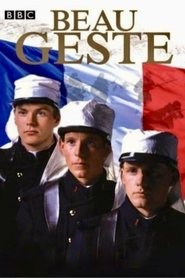
star 7Brothers Beau, John and Digby Geste join the Foreign Legion, where they fall under the rule of tyrannical Sergeant Markoff. Beau and John are assigned to Fort Zinderneuf, where Markoff tries to break their spirit, aware of a dark family secret concerning a fabulous jewel one of them carries. As tensions rise, Arabs attack the fort and rivalries must be thrown aside in a desperate battle for life.We'll Meet Again
1982
We'll Meet Again
1982
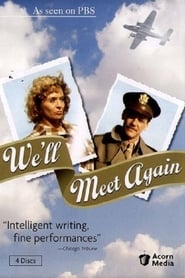
star 7It's 1943 and the American Air Force has come to Market Weatherby, a small East Anglian town. The war-weary British and the brash American GIs sometimes clash, but friendships are also forged.Pearl
1978
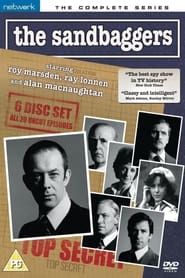
The Sandbaggers
1978
The Sandbaggers
1978
star 8.3The Sandbaggers is a British television drama series about men and women on the front lines of the Cold War. Set contemporaneously with its original broadcast on ITV in 1978 and 1980, The Sandbaggers examines the effect of the espionage game on the personal and professional lives of British and American intelligence specialists.The Unknown War
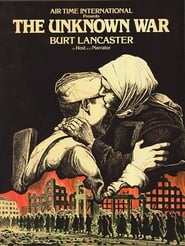
1978
The Unknown War
1978
star 6.3A documentary television series of the Nazi-Soviet War, edited from over 3.5 million feet of film taken by Soviet camera crews from the first day of the war, 22 June 1941, to the Soviet entry into Berlin in May 1945.A Family at War
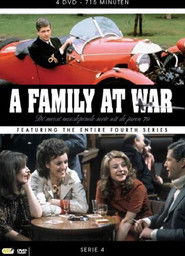
1970
A Family at War
1970
star 6.8A Family at War is a British drama series created by John Finch and produced by Granada Television for ITV. It broadcast from 14 April 1970 to 16 February 1972. 52 episodes were made, all but eight in colour. Episodes numbers 25 to 32 were recorded in black and white because of the ITV Colour Strike (November 1970 — February 1971). The Ashton family struggles to deal with the harsh realities of the Second World War as their sons are sent away to fight. Those who remain at home in Liverpool live in constant fear of a knock on the door with a telegram from the War Office or the Luftwaffe bombs overhead as they sleep at night.Victory at Sea
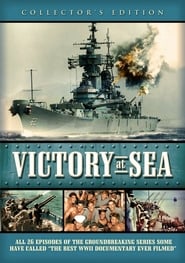
1952
Victory at Sea
1952
star 6.8Victory at Sea is a documentary television series about naval warfare during World War II that was originally broadcast by NBC in the USA in 1952–1953. It was condensed into a film in 1954. Excerpts from the music soundtrack, by Richard Rodgers and Robert Russell Bennett, were re-recorded and sold as record albums. The original TV broadcasts comprised 26 half-hour segments—Sunday afternoons at 3pm in most markets—starting October 26, 1952 and ending May 3, 1953. The series, which won an Emmy award in 1954 as "best public affairs program", played an important part in establishing historic "compilation" documentaries as a viable television genre. Over 13,000 hours of footage gathered from US, British, German and Japanese navies during World War II were perused in the making of these compelling episodes.