Popular TV Series - Page 126
All Services
Free Services
 Netflix
 Amazon Prime Video
 Apple iTunes
 Apple TV Plus
 Disney Plus
 Google Play Movies
 Paramount Plus
 Hulu
Hulu
 HBO Max
 YouTube
 fuboTV
 Peacock
 Peacock Premium
 Amazon Video
 The Roku Channel
 AMC+
AMC+
 AMC on Demand
 Kocowa
 Hoopla
 The CW
 Vudu
Vudu
 Starz
Starz
 Showtime
 PBS
PBS
 Pantaflix
 FXNow
FXNow
 Tubi TV
 Kanopy
 Comedy Central
 Crunchyroll
 Microsoft Store
 Redbox
 Sun Nxt
 ABC
ABC
 DIRECTV
 Crackle
 Fandor
 Plex
Plex
Netflix
Amazon Prime Video
Apple iTunes
Apple TV Plus
Disney Plus
Google Play Movies
Paramount Plus
Hulu
HBO Max
YouTube
fuboTV
Peacock
Peacock Premium
Amazon Video
The Roku Channel
AMC+
AMC on Demand
Kocowa
Hoopla
The CW
Vudu
Starz
Showtime
PBS
Pantaflix
FXNow
Tubi TV
Kanopy
Comedy Central
Crunchyroll
Microsoft Store
Redbox
Sun Nxt
ABC
DIRECTV
Crackle
Fandor
Plex

The Rookie: Feds
2022
The Rookie: Feds
2022
star 7Special Agent Simone Clark, the oldest rookie in the FBI, is a force of nature, the living embodiment of a dream deferred – and she works together with her new colleagues at the Los Angeles office of the Bureau to bring down the country’s toughest criminals.The Peppercorns
1999
The Peppercorns
1999
star 6.9Die Pfefferkörner is a German television series produced by Der Kinderkanal. The peppercorns are five friends from Hamburg: Jana Holstein Coutre, Natasha "Tascha" Jaonzäns, Philip "Fiete" Overbeck, Cem Gülec and Vivien "Vivi" Overbeck, Fiete's eight year old sister. After school, the young detectives meet at a high level of a spice warehouse of the company Overbeck & Associates, which belongs to Fiete and Vivi's parents in the first part, but is later given to Fiete and Vivi to look after. Here, in the historic warehouse district, the five friends have their headquarters. With smarts, combined delivery and support of the Internet, they find their cases here. The detectives convict polluters, animal dealers and drug smugglers. They also help each other with personal problems they encounter. Cem has lost his parents in a car accident and sometimes feels sad and lonely. Jana lives with her divorcee mother, a lawyer who is rarely at home. Natasha comes from Latvia. Her parents initially have very sBaki Hanma
2021
Baki Hanma
2021
star 8.1To gain the skills he needs to surpass his powerful father, Baki enters Arizona State Prison to take on the notorious inmate known as Mr. Unchained.Castle Rock
2018
Castle Rock
2018
star 7.2Based on the stories of Stephen King, the series intertwines characters and themes from the fictional town of Castle Rock.Erkenci Kuş
2018
Erkenci Kuş
2018
star 8.1Sanem, a dreamy girl with hopes of becoming a famous writer, ends up working at an ad agency to avoid an arranged marriage. There, she meets her boss, Çan, and falls into a whirlwind of love and complications. Can she protect her heart while chasing her dreams?Action Man: A.T.O.M.
2005
Action Man: A.T.O.M.
2005
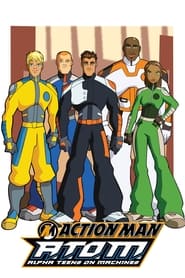
star 6.3A.T.O.M. is a French animated television series, which chronicles the adventures of five teenagers, set in the fictional Landmark City. The Alpha Teens, which consist of Axel Manning, Catalina Leone, Crey Kingston, Zack Hawkes, and Ollie Sharker, test prototype vehicles and weapons for Lee Industries, and use these prototypes to combat criminals, particularly the sadistic Alexander Paine. In the United Kingdom, Australia and Latin America, the series is called Action Man A.T.O.M. and has its own comic book from Panini Comics.Hello Counselor
2010
Hello Counselor
2010
star 9A talk show with an emphasis on regular people, regardless of age or gender, that aims to help take down communication barriers by sharing stories about life.Das Küstenrevier
2024
Amigas & Rivais
2007
Amigas & Rivais
2007
star 7Amigas & Rivais is a Brazilian telenovela produced by SBT in association with Televisa and originally broadcast from August 6, 2007, to January 18, 2008. It is a remake of the Mexican telenovela Amigas y rivales (2001), created by Emilio Larrosa. Adapted by Letícia Dornelles, with text supervision by Thereza di Giácomo, the telenovela stars Cacau Melo, Lisandra Cortez, Karla Tenório, Thaís Pacholek, and Talita Castro. The story follows four young women from different social backgrounds: Nicole, Laura, Olívia, and Helena. Although they have different personalities and life experiences, they form a strong friendship while facing the challenges of youth, love, family conflicts, and personal struggles. Their lives become complicated by secrets, betrayals, jealousy, and the schemes of Rosana, Helena's manipulative stepmother, who is willing to do anything to achieve her goals.Caprica
2010
Caprica
2010
star 6.9Set 58 years before Battlestar Galactica, Caprica follows two rival families - the Graystones and the Adamas - as they grow, compete, and thrive in the vibrant world of the peaceful 12 Colonies, living in a society close to our own. Entangled in the burgeoning technology of artificial intelligence and robotics that will eventually lead to the creation of the Cylons, the two houses go toe-to-toe, blending action with corporate conspiracy and sexual politics.La que se avecina
2007
La que se avecina
2007
star 8.1La que se avecina is a Spanish television comedy created by Alberto Caballero, Laura Caballero and Daniel Deorador. The TV-series focusing around the inhabitants of Mirador de Montepinar, a fictional building located on the outskirts of a big city. Both its storylines and cast are heavily based on Aquí no hay quien viva, which ended when Telecinco bought Miramón Mendi, the series production company. The episodes debuted on the Telecinco network, and were later rerun by the same network as well as cable/satellite channels FactoríaDeFicción and Paramount Comedy. The series debuted in 22 April 2007 and became popular thanks to its funny characters, witty script, use of catchphrases and capacity to integrate and poke fun at contemporary issues; the program presents a caustic satire of many of the 'types' found in Spanish society. The name of the show involves wordplay, as "vecina" is the Spanish word for neighbour.Friday the 13th: The Series
1987
star 7.3Micki and Ryan with the help of their friend Jack try to recover cursed antiques so they can store them in safety inside the antique store's vault.Trollhunters: Tales of Arcadia
2016
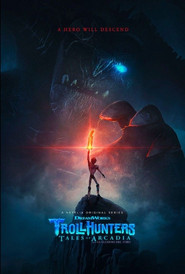
star 8.4After uncovering a mysterious amulet, an average teen assumes an unlikely destiny and sets out to save two worlds.Found
2023
Found
2023
star 6.2In any given year, more than 600,000 people are reported missing in the U.S. Of these reported cases, more than half of the missing people are people of color, too easily neglected by the system. Gabi Mosely, a former missing person herself, now specializes in PR and leads a crisis management team that seeks out these missing people. But unbeknownst to anyone, Mosely is hiding a dark secret of her own.The Persuaders!
1971
The Persuaders!
1971
star 7.6An English aristocrat and an American millionaire come together to tackle crime.Tanglin
2015
Tanglin
2015
star 1Daily drama centring on a number of multiracial and multi-generational families in modern Singapore.Romania's Got Talent
2011
Romania's Got Talent
2011
star 7.5Românii au talent is a TV show which first aired on 18 February 2011. The project is a franchise of Got Talent, developed by Simco Limited. The hosts of the show are Smiley and Pavel Bartoş. The judges are the Romanian singer Andra, a Pro TV star and presenter Andi Moisescu, TV presenter Mihai Petre and Florin Calinescu,Romanian actor, theatre director and television host. The grand prize is 120.000€.Shimono Ono no Dokodemo Quest
2018
Voice actors Daisuke Ono and Hiro Shimono are joining forces to conquer any challenge that comes their way in a new variety TV show.Have I Got a Bit More News for You
0000
star 7.2Based on the week’s news and fronted by guest hosts, this extended version of the satirical news quiz features more of the stuff that wouldn't fit into the regular programme.The Quintessential Quintuplets
2019
star 8.4Fuutarou Uesugi is a poor, antisocial ace student who one day meets the rich transfer student Itsuki Nakano. They argue but when Uesugi realizes he is to be her tutor, he tries to get on better terms. While trying to do so he meets four other girls.