Popular War Politics TV Series - Page 130
All Services
Free Services
 Netflix
 Amazon Prime Video
 Apple iTunes
 Apple TV Plus
 Disney Plus
 Google Play Movies
 Paramount Plus
 Hulu
Hulu
 HBO Max
 YouTube
 fuboTV
 Peacock
 Peacock Premium
 Amazon Video
 The Roku Channel
 AMC+
AMC on Demand
AMC+
AMC on Demand
 Kocowa
 Hoopla
 The CW
 Vudu
Vudu
 Starz
Starz
 Showtime
 PBS
PBS
 Pantaflix
 FXNow
FXNow
 Tubi TV
 Kanopy
 Comedy Central
 Crunchyroll
 Microsoft Store
 Redbox
 Sun Nxt
 ABC
ABC
 DIRECTV
 Crackle
 Fandor
 Plex
Plex
Netflix
Amazon Prime Video
Apple iTunes
Apple TV Plus
Disney Plus
Google Play Movies
Paramount Plus
Hulu
HBO Max
YouTube
fuboTV
Peacock
Peacock Premium
Amazon Video
The Roku Channel
AMC+
AMC on Demand
Kocowa
Hoopla
The CW
Vudu
Starz
Showtime
PBS
Pantaflix
FXNow
Tubi TV
Kanopy
Comedy Central
Crunchyroll
Microsoft Store
Redbox
Sun Nxt
ABC
DIRECTV
Crackle
Fandor
Plex

The Sunday Edition
2006
The Sunday Edition
2006
The Sunday Edition was a television programme broadcast on the ITV Network in the United Kingdom focusing on political interview and discussion, produced by London Weekend Television. The show was hosted by Andrew Rawnsley and Andrea Catherwood. The live studio show continued the tradition of live political programming on ITV at the weekend and featured the traditional 'long format' interview as well as incisive debate by key players in politics, the arts and business. The programme has have three distinct segments: ⁕Breaking news and political stories will kick off the programme and be brought up to the minute by interviews with key figures and commentators. ⁕The in-depth political interview will lie at the heart of the show. ⁕Discussion of major issues and interviews with big names from across the range of arts, business and culture will offer insight and provoke debate.Hell on Earth
2022
傻儿军长
1994
傻儿军长
1994
Gazebo #Social News
2016
Gazebo #Social News
2016
Our wishes
2017
Our wishes
2017
Killing Hitler
2025
Killing Hitler
2025
star 6Killing Hitler immerses you in the heart-pounding, moment-by-moment attempts to assassinate the Führer--including the daring plots orchestrated by Nazi officials within Hitler's inner circle. Through new scientific evidence, rare archives, expert analysis, and historically accurate dramatizations, witness these bold assassination attempts as if you were there.Als der Krieg nach Deutschland kam
2006
When American troops started their final invasion of Nazi Germany in February 1945, cameramen were at their side and complied over a thousand reels covering 12 weeks in Germany until the ultimate collapse of the Third Reich including stories on the road from the Bulge over the Remagen Bridge to the Eagle’s Nest. Michael Kloft has selected the most striking scenes for his two-part documentary.Miss Me Yet
2023
Miss Me Yet
2023
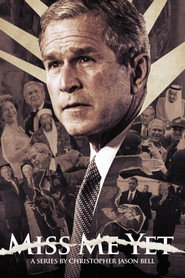
star 10Miss Me Yet takes a look back at the George W. Bush years and the destruction he left in his wake. The series was born out of the shared sweets with former first ladies, vacuous portraits of damaged war veterans, verbal tomfoolery on daytime talkshow sets, and the untold suffering of people who happen to have been born in the wrong place and the wrong time. There’s the way he both uses power, and does not use his power. There’s the way he feeds culture, and the way culture feeds him. Importantly: what did that do to all of us?Beneš 1918 1938 1948
2018
Beneš 1918 1938 1948
2018
Смертельная схватка
2010
Смертельная схватка
2010
La notte della Repubblica
1989
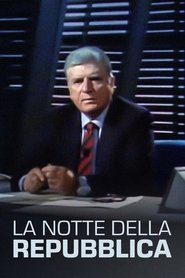
A TV programme presented by Sergio Zavoli, broadcast by the Italian public TV channel Rai 2, about Italy during the Years of Lead, with movies, interviews with some protagonists of the period and final discussion.Ten okamžik
2018
Ten okamžik
2018
Embarqué
2014
高山下的花环
1983
高山下的花环
1983
Afghanistan
2019
Afghanistan
2019
The project attempts to understand the causes of the Afghan War (1979-1989) and to provide the most truthful coverage of all its stages. On a cold day on December 12, 1979, a small circle of members of the Politburo of the CPSU Central Committee discussed the situation in Afghanistan. After much hesitation, four people (Leonid Brezhnev, Yuri Andropov, Andrei Gromyko, Dmitry Ustinov) made the fateful decision to send troops into Afghanistan. Thus began the Afghan campaign – the first and only military operation waged by the Soviet Union outside the Warsaw Pact countries, which became the longest and most “forgotten” war in Soviet history.Navires de Légende
2021
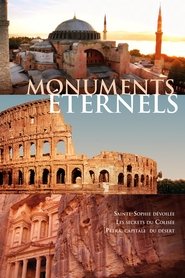
Monuments éternels
2014
Monuments éternels
2014
star 8A documentary series showcasing impressive buildings that have stood the test of time.War Room
2024
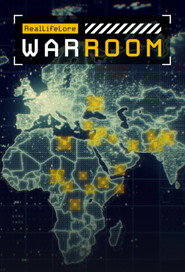
War Room
2024
Monthly updates of the major news and developments from ongoing wars and conflicts from around the world.