Popular TV Series on Pantaflix - Page 474
All Services
Free Services
 Netflix
 Amazon Prime Video
 Apple iTunes
 Apple TV Plus
 Disney Plus
 Google Play Movies
 Paramount Plus
 Hulu
Hulu
 HBO Max
 YouTube
 fuboTV
 Peacock
 Peacock Premium
 Amazon Video
 The Roku Channel
 AMC+
AMC on Demand
AMC+
AMC on Demand
 Kocowa
 Hoopla
 The CW
 Vudu
Vudu
 Starz
Starz
 Showtime
 PBS
PBS
 Pantaflix
 FXNow
FXNow
 Tubi TV
 Kanopy
 Comedy Central
 Crunchyroll
 Microsoft Store
 Redbox
 Sun Nxt
 ABC
ABC
 DIRECTV
 Crackle
 Fandor
 Plex
Plex
Netflix
Amazon Prime Video
Apple iTunes
Apple TV Plus
Disney Plus
Google Play Movies
Paramount Plus
Hulu
HBO Max
YouTube
fuboTV
Peacock
Peacock Premium
Amazon Video
The Roku Channel
AMC+
AMC on Demand
Kocowa
Hoopla
The CW
Vudu
Starz
Showtime
PBS
Pantaflix
FXNow
Tubi TV
Kanopy
Comedy Central
Crunchyroll
Microsoft Store
Redbox
Sun Nxt
ABC
DIRECTV
Crackle
Fandor
Plex

El Tigre: The Adventures of Manny Rivera
2007
star 7.9The daily adventures of a 12 year old Mexican superhero dealing with bizarre enemies, as well as his own superhero father and villain grandfather.Big Nate
2022
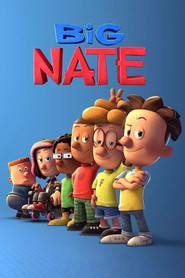
Big Nate
2022
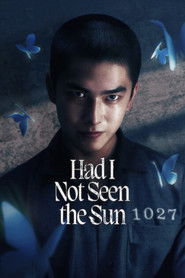
star 8.1Sixth-grader Nate Wright has a never-ending need to prove his awesomeness to the world. Whether he’s dealing with disasters at home or detention at school, Nate is no stranger to a challenge. Luckily, he’s able to express himself through the world of cartoons that he creates. Charming, mischievous and a magnet for misadventure – trouble is always fun when Nate is around.Had I Not Seen the Sun
2025
star 8.2Filmmaker Zhou Pin-yu interviews a serial killer in prison — an encounter that triggers a string of mysterious events tied to a buried past.Classical Stretch - The Esmonde Technique
0000
The Classical Stretch® series is American Public Television’s longest-running and highly ranked fitness television show—created, produced and hosted by Miranda Esmonde-White—a New York Times bestselling author and educator of healthy aging. Over the last 20 years, Classical Stretch has been helping people of all ages and fitness levels rebalance their body, increase mobility and flexibility, while keeping all 650 muscles and 360 joints healthy and pain-free. Based on the intelligent fitness technique Essentrics®—each 30-minute episode of Classical Stretch features a full-body workout centered around the science of eccentric movement and combines dynamic strengthening and stretching exercises suitable for everyone.In the Dark
2019
In the Dark
2019
star 7.7Murphy is a flawed and irreverent woman who just happens to be blind and is the only “witness” to the murder of her drug-dealing friend, Tyson. When the police dismiss her story, she sets out with her dog, Pretzel, to find the killer while also managing her colorful dating life and the job she hates at Guiding Hope, the guide-dog school owned by her overprotective parents.Time Goes By
2010
Time Goes By
2010
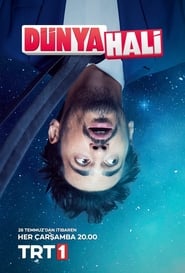
star 7.2Set in the 1960s, the story of the Akarsu family includes Ali, Cemile and their four children: Berrin, a law student, Aylin and Mete, high school students, and 5 year old Osman. Ali begins an affair with Caroline, a Dutch woman, which leads to the disintegration of the family.Dünya Hali
2021
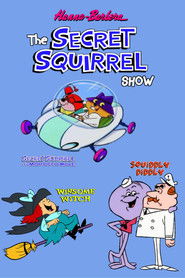
The Secret Squirrel Show
1965
star 7.5The half-hour The Secret Squirrel Show included three individual cartoon segments: "Secret Squirrel", "Squiddly Diddly" and "Winsome Witch".Prism Breaker
2025
Prism Breaker
2025
star 8A powerful team, including the Independent Commission Against Corruption, the Police Force, and the Department of Justice, unite to investigate and fight against corrupt and criminal forces.Hip Hip Hurray
2001
Hip Hip Hurray
2001
The story revolves around the lives of 12th grade students of the DeNobili High School and their adventures, their fears and hopes, their relationships and interactions. The story also focuses on challenges faced by youngsters such as dating, drugs, career, etc.Mominoki wa Nokotta
1970
Mominoki wa Nokotta
1970
Depicting Date clan’s internal strife that occurred during a peaceful Edo period governed by the 4th Tokugawa shogun.Saramandaia
2013
Big Brother: Late & Live
2023
star 4.2Big Brother hosts AJ Odudu and Will Best present from a studio just a stone's throw from the Big Brother house, featuring celebrity guests and a live studio audience.The Minimighty Kids
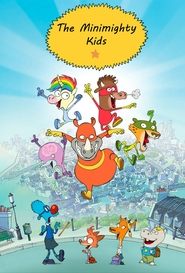
2008
The Minimighty Kids
2008
star 5Some have big feet or a sniffly nose, others are clumsy or too sweaty but these kids soon discover their mini problems can become superpowers.My Big Big Friend
2010
Trudis Liit
2010
Trudis Liit
2010
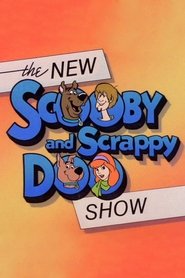
Trudis Liit is a Philippine drama produced by GMA Network, and part of that station's Sine Novela series. Trudis Liit marks the 21st and final installment of the Sine Novela series based on the works by Mars Ravelo. Like all Sine Novela installments, Trudis Liit is based on a movie; this one made in 1963, starring Lolita Rodriguez, Luis Gonzales, Bella Flores and Vilma Santos. It was also remade in 1996 starring Marijoy Adorable, Agatha Tapan, Julio Diaz, Amy Austria, Jean Garcia and Jackie Aquino. The series premiered June 21, 2010 and ended October 22, 2010. Free Replay premiered September 21, 2011 apetitzer aired in December 7, 2011 and re-ended December 14 & 15, 2011. It began airing internationally via GMA Pinoy TV on July 2, 2010. On September 21, 2010, GMA Network ordered additional 45 episodes of the show. On December 8, 2010 Basahang Ginto Ended Finale.The New Scooby and Scrappy-Doo Show
1983
star 8The New Scooby and Scrappy Doo Show is the sixth incarnation of the Hanna-Barbera Saturday morning cartoon Scooby-Doo. It premiered on September 10, 1983, and ran for one season on ABC as a half-hour program made up of two eleven-minute short cartoons. The show is a return to the mystery solving format and reintroduces Daphne after a four-year absence. The plots of each episode feature her, Shaggy, Scooby-Doo, and Scrappy-Doo solving supernatural mysteries under the cover of being reporters for a teen magazine.Go!azen
2008
Witch Hunter Robin
2002
Witch Hunter Robin
2002
star 7.2Solomon fights the harmful use of witchcraft using a database of witches, which includes those who have obtained the power of witchcraft through genetics and others who carry the gene in order to arrest or eliminate them should their powers "awaken". The series focuses on one STN-J member, Robin Sena.How the Universe Works
2010
star 8.3A users' guide to the cosmos, from the Big Bang to galaxies, stars, planets and moons: where did it all come from and how does it all fit together? A primer for anyone who has ever looked up at the night sky and wondered.