Popular Animation TV Series on Pantaflix - Page 390
All Services
Free Services
 Netflix
 Amazon Prime Video
 Apple iTunes
 Apple TV Plus
 Disney Plus
 Google Play Movies
 Paramount Plus
 Hulu
Hulu
 HBO Max
 YouTube
 fuboTV
 Peacock
 Peacock Premium
 Amazon Video
 The Roku Channel
 AMC+
AMC on Demand
AMC+
AMC on Demand
 Kocowa
 Hoopla
 The CW
 Vudu
Vudu
 Starz
Starz
 Showtime
 PBS
PBS
 Pantaflix
 FXNow
FXNow
 Tubi TV
 Kanopy
 Comedy Central
 Crunchyroll
 Microsoft Store
 Redbox
 Sun Nxt
 ABC
ABC
 DIRECTV
 Crackle
 Fandor
 Plex
Plex
Netflix
Amazon Prime Video
Apple iTunes
Apple TV Plus
Disney Plus
Google Play Movies
Paramount Plus
Hulu
HBO Max
YouTube
fuboTV
Peacock
Peacock Premium
Amazon Video
The Roku Channel
AMC+
AMC on Demand
Kocowa
Hoopla
The CW
Vudu
Starz
Showtime
PBS
Pantaflix
FXNow
Tubi TV
Kanopy
Comedy Central
Crunchyroll
Microsoft Store
Redbox
Sun Nxt
ABC
DIRECTV
Crackle
Fandor
Plex

Malandragem Ninja
2020
Malandragem Ninja
2020
Living with Dad
2022
Living with Dad
2022
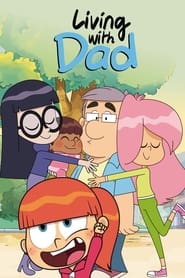
Welcome to Dad’s... Or rather, to Dad's Girls : Bébérénice, Roxane, Ondine and Panda! Four sisters – 2, 8, 12 and 18 years old – as different as each of their respective mothers! On the other hand, they share the same actor father who has ot himself the part of his life by taking care of his four beloved daughters.Minoriteam
2005
Minoriteam
2005
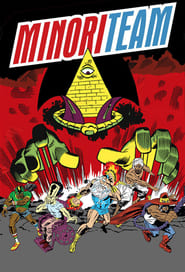
star 7Minoriteam is an animated television series on Cartoon Network's late night programming block, Adult Swim. The pilot episode premiered on November 6, 2005. The series officially started on March 20, 2006, and ended on July 24, 2006, with a total of 20 episodes, over the course of one season. Minoriteam stars a team of five superheroes, each one having his own racial or ethnic stereotype. They join forces to fight against discrimination, such as The White Shadow, Racist Frankenstein and The Corporate Ladder. The Minoriteam is made up of Non-Stop, an Arab convenience-store owner who cannot be shot. El Jefe, a Mexican that fights crime with a leaf blower. Dr. Wang, an Asian human calculator and the leader of the team. Fasto, the fastest man that ever was. Lastly, Jewcano, a man with the powers of the Jewish faith and a volcano.Dragon Flyz
1996
Dragon Flyz
1996
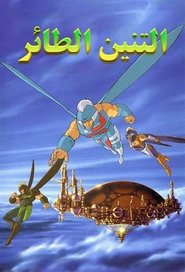
star 6.7Dragon Flyz is a television program created by Gaumont Pictures that ran for approximately two or three years. The program centered on a coalition known as the Dragonators, a set of humans who ride on Dragon-back in search-and-rescue operations. A line of toys named DragonFlyz, based on the series, was released by Galoob. Dragon Flyz - Children's ITV television programmes © GMTV Ltd. MCVICVITina & Tony
2015
Tina & Tony
2015
Another World
2019
Another World
2019
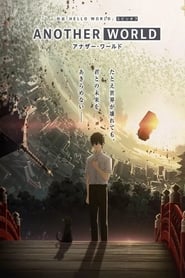
star 5.9Spin-off of the movie Hello World which is narrated from the point of view of the character of Naomi. The story is located 10 years in the future.Mantou's Diary
2013
Mantou's Diary
2013
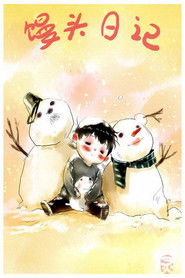
star 8Sweet and innocent orphan Man Tou, while optimistic and tough in his own way, often feels lonely deep inside. Without the care of parents, he longs for love more than anyone else. Being ridiculed and bullied by others as the parentless child, he longs for a genuine friendship that is yet to come. Though uncertain where his future lies, Man Tou has faith that keeps on working hard and never stops giving love will find him that place he can call home.LOU !
2009
Stitch & Ai
2017
Stitch & Ai
2017
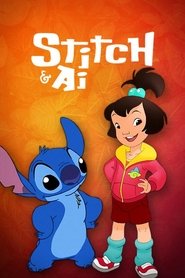
star 3.6After being chased by space criminals, Stitch lands in China’s Huangshan mountains where he befriends a girl named Ai.Night Hood
1996
Night Hood
1996
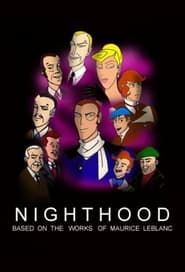
star 7.3Night Hood was a cartoon series inspired by the Arsène Lupin novels and was produced by Cinar and France Animation S.A. for television audiences in both English and French-speaking nations. It was set in the 1930s. The series aired in Canada in 1996 under the English-language title Night Hood, and in francophone markets as Les Exploits d'Arsène Lupin.The Treacle People
1996
The Treacle People
1996
star 8.7The Treacle People was a children's television programme shown on CITV in the United Kingdom, from 3 May 1996 to 25 July 1997. It only had two series, each with 13 episodes. In a similar vein to other shows by the same writer, the humour worked on two levels for younger and older viewers. It was produced by The London Studios for London Weekend Television and Fire Mountain Productions in association with Link Entertainment. In 2023, the series was remastered, with full episodes posted on the show's official YouTube Channel.The World's Most Famous Tales
1995
star 8Based on Western tales from the usual suspects: 1001 Nights, C. Perrault, Beaumont, J. & W. Grimm, H. C. Andersen, C. Collodi, English fairytale, H. Pyle, L. Carrol, J. Swift, A. Dumas, E. T. A Hoffman, L. F. Baum, and J. Spyri. Only 21 stories were broadcast, with the last five being released on VHS.Broken Karaoke
2019
Broken Karaoke
2019
star 7Broken Karaoke is a series of shorts released by Disney. It features characters from animated Disney Channel and Disney XD shows singing various song parodies.Ancient Lords
2024
Ancient Lords
2024
star 8Time traveler Meng Qi only wants to be a merry and graceful swordman, but he suddenly becomes the world-renowned "Mad Monk" in accomplishing his repeated and unlimited mission in the "reincarnation space". However, all this turns out to be planned by a powerful ancient lord. The story tells how the invincible and funny monk makes his way around in the world of martial arts and becomes a legendary swordman.Where My Dogs At?
2006
Where My Dogs At?
2006
star 7.5Where My Dogs At? was an animated program created by Aaron Matthew Lee and Jeffrey Ross that aired on MTV2 as part of its Sic'emation lineup.Alf Tales
1988
Alf Tales
1988
star 7.4ALF Tales is an animated American series that ran on the NBC television network on Saturdays from August 1988 to December 1989. The show was a spinoff from the series ALF: The Animated Series. The show had characters from that series play various characters from fairy tales. The fairy tale was usually altered for comedic effect in a manner relational to Fractured Fairy Tales. Each story typically spoofs a film genre, such as the "Cinderella" episode done as an Elvis movie. Some episodes featured a "fourth wall" effect where ALF is backstage preparing for the episode, and Rob Cowan would appear drawn as a TV executive to try to brief ALF on how to improve this episode. For instance Cowan once told ALF who was readying for a medieval themed episode that "less than 2% of our audience lives in the Dark Ages".Yippee, Yappee and Yahooey
1964
star 5.5Yippee, Yappee and Yahooey is a Hanna-Barbera animated television series that premiered September 16, 1964. It was presented as a segment of The Peter Potamus Show, along with Breezly and Sneezly and Peter Potamus.The Trap Door
1986
The Trap Door
1986
star 7.6The Trap Door is a claymation-style animated television series, originally shown in the United Kingdom in 1984. The plot revolves around both the daily lives and the misadventures of a group of monsters living in a castle. Although the emphasis was on humour and the show was marketed as a children's programme but also for family entertainment, the show drew much from the genres of horror and dark fantasy. The show has since become a cult favourite and remains one of the most widely recognised kids' shows of the 1980s. Digital children's channel Pop started rerunning the show in 2010.Monty Python's Personal Best
2006
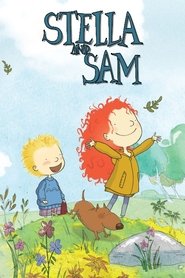
star 5.4A series of six outrageous one-hour specials showcasing the groundbreaking comedians.Stella and Sam
2011
Stella and Sam
2011
star 9Fueled only by their imaginations, spirited nine-year-old Stella and her shy little brother Sam take on the fanciful wonders of outdoor exploration. Based off the books by Marie-Louise Gay.