Popular Drama TV Series on Pantaflix - Page 103
All Services
Free Services
 Netflix
 Amazon Prime Video
 Apple iTunes
 Apple TV Plus
 Disney Plus
 Google Play Movies
 Paramount Plus
 Hulu
Hulu
 HBO Max
 YouTube
 fuboTV
 Peacock
 Peacock Premium
 Amazon Video
 The Roku Channel
 AMC+
AMC on Demand
AMC+
AMC on Demand
 Kocowa
 Hoopla
 The CW
 Vudu
Vudu
 Starz
Starz
 Showtime
 PBS
PBS
 Pantaflix
 FXNow
FXNow
 Tubi TV
 Kanopy
 Comedy Central
 Crunchyroll
 Microsoft Store
 Redbox
 Sun Nxt
 ABC
ABC
 DIRECTV
 Crackle
 Fandor
 Plex
Plex
Netflix
Amazon Prime Video
Apple iTunes
Apple TV Plus
Disney Plus
Google Play Movies
Paramount Plus
Hulu
HBO Max
YouTube
fuboTV
Peacock
Peacock Premium
Amazon Video
The Roku Channel
AMC+
AMC on Demand
Kocowa
Hoopla
The CW
Vudu
Starz
Showtime
PBS
Pantaflix
FXNow
Tubi TV
Kanopy
Comedy Central
Crunchyroll
Microsoft Store
Redbox
Sun Nxt
ABC
DIRECTV
Crackle
Fandor
Plex

6 of Us
2024
6 of Us
2024
star 6A story of six siblings—Azize, Cemo, Zeliha, Fidan, Samet, and Balım—who, after suddenly losing their parents, struggle to stay united and survive. The roots of their tragedy trace back to their parents, Bala and Rıfat, whose forbidden love began in a village in Mardin. Rıfat, a teacher, falls in love with Bala, but Yavuz, the wealthy and obsessive son of Mardin’s richest family, kidnaps her. Despite his abuse, Bala escapes with Rıfat, and they build a secluded life in the forest, raising six children in peace. However, Yavuz’s revenge shatters their world when he finds and attacks them. Fleeing to Istanbul, the siblings face the dangers of the city while seeking refuge with “Uncle Aslan,” their father’s trusted friend. The story highlights resilience, as the older siblings are forced to grow up quickly to protect their younger brothers and sisters in the face of overwhelming challenges.Hiram
2004
Hiram
2004
Hiram was a TV drama series in the Philippines, popularly known as teleserye shown on ABS-CBN and worldwide on The Filipino Channel.Above Justice
2016
Above Justice
2016
star 7.3In this realistic and touching series told in an innovative format, seemingly independent plots intertwine to show how justice can sometimes be a personal matter.Great Teacher Onizuka
1999
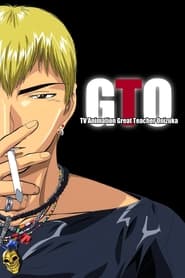
star 8.4A former gang member wants to be Japan's best teacher. When he's hired to supervise a class of hopeless cases, it's his chance to prove himself.Los Serrano
2003
Los Serrano
2003
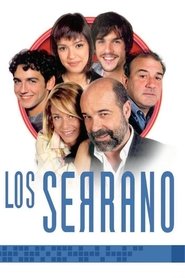
star 6.7Los Serrano is a Spanish television drama comedy which premiered on 22 April 2003 and aired on Telecinco. It tells the story of the Serrano family, who lives in Round Santa Justa No 133, located in the fictional neighborhood of Santa Justa, in the Ribera del Manzanares, in Madrid. The success of the series in Spain and in several other countries in Europe and elsewhere helped launch the career of several young actors and actresses, especially actor and musician Fran Perea, who acts in the series and sings its theme song, "1 más 1 son 7".Alif Laila
1993
Alif Laila
1993
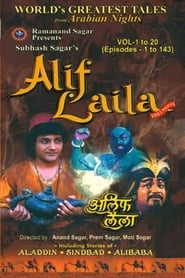
star 8Alif Laila is a TV series based on the stories from The Arabian Nights. Produced by Sagar Films, two seasons were made; the first aired on DD National and the second on SAB TV. The series covers well- and lesser-known stories from One Thousand and One Nights.Mix: Meisei Story
2019
Mix: Meisei Story
2019
star 6.6Because of the legend left by Tatsuya Uesugi, Meisei Academy High School was well-known for their strong baseball team. But 26 years after their glory, the team has not been able to keep their record and has since lost their fame. Two stepbrothers, Souichirou and Touma Tachibana, aim to revive of the once-strong Meisei Academy baseball team and enter the National High School Baseball Championship. Souichirou and Touma are second years in Meisei Academy Middle School. Both boys are talented baseball players. Souichirou has shown excellent skill as a catcher and batter. Though having an extraordinary skill as a pitcher, Touma no longer pitches due to a certain reason. Once the two enter high school, they pair as a battery and aim to enter the National High School Baseball Championship!Sayrışan İşıqlar
2020
Sayrışan İşıqlar
2020
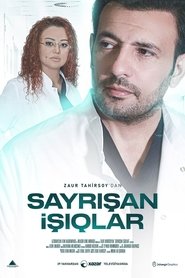
Doctor Yasman works in the same clinic as Doctor Yashar, with whom she had a love affair since university but was unable to get married. Doctor Yashar also got married, but his wife became paralyzed due to his mistake. Doctor Yasman has been separated from Doctor Fikret for many years. During the separation, Doctor Yasman got into a car accident and lost her child. She does not forgive Fikret for this. Years later, Doctor Fikret comes and it turns out that their daughters are alive.Jumong
2006
Jumong
2006
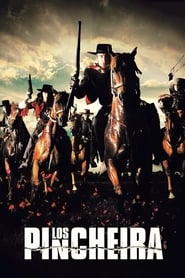
star 7.4Jumong examines the life of Jumong Taewang, founder of the kingdom of Goguryeo. Few details have been found in the historical record about Jumong, so much of the series is fictionalized.Los Pincheira
2004
Los Pincheira
2004
star 6Four bandit siblings try to take revenge on the landowners who killed their father.Prisoner
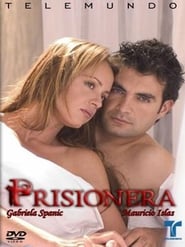
2004
Prisoner
2004
star 8Wrongfully accused of a crime she didn't commit, 13 year old Guadalupe Santos is sentenced to 30 years in jail, while in jail she gives birth to a baby girl who is taken from her by her older sister Milagros. 15 years later she escapes jail and meets with Daniel Moncada who turns out to be the brother of the man she was accused of killing.Lost You Forever
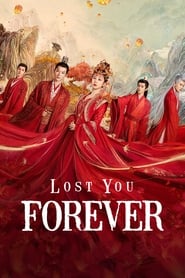
2023
Lost You Forever
2023
star 7.1In ancient times, humans, gods, and demons lived together, and the three kingdoms of Shennong, Xuanyuan, and Gaoxin stood together. Jiuyao (Xiaoyao) has gone through a hundred years of suffering, losing not only her identity but also her appearance. She settles down in Qingshui Town, becoming Wen Xiaoliu.The Clone
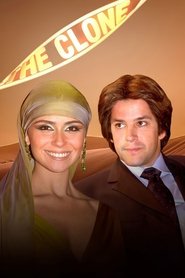
2001
The Clone
2001
star 8.1Human cloning. The Islamic world. Two young people, two different cultures, two different beliefs. An impossible love story that not even time could erase. During a trip to Morocco, Lucas has a forbidden romance with Jade. He returns to Brazil after the death of his twin brother Diogo. A close family friend, scientist Albieri uses this situation to produce the first human clone using cells taken from Lucas. Twenty years later, Jade, Lucas and his clone form an odd love triangle.Aap Ke Aa Jane Se
2018
Suspicion
1957
Suspicion
1957
star 6.2Suspicion is the title of an American television mystery drama series which aired on the NBC from 1957 through 1959. The executive producer of Suspicion was film director Alfred Hitchcock.My Love, My Torment
1990
Arafta
2025
Arafta
2025
star 9.1Ateş, a man haunted by childhood scars and consumed by rage, returns to destroy the family that shattered his life years ago. His weapon is not a sword, but a marriage: 187 days with Mercan, the daughter of his enemy. Mercan, already promised to Nezir, is thrust into a battle she never chose, while Ateş binds her to him believing she is the key to his revenge. Yet the woman he intends to destroy becomes the one who threatens to undo him. And in the shadows, Aslı – driven by jealousy, seizes every chance to tear them apart.Ⅵ Group of Fatal Case
2001
star 8.2Six very different but equally determined and dedicated police officers comprise a group specializing in serious criminal cases involving homicide, mafia activity, terrorism, drug trafficking, extortion, kidnapping, and robbery.The Ramparts of Ice
2026
The Ramparts of Ice
2026
star 8.5Weighed down by memories she can't shake, high schooler Koyuki Hikawa keeps everyone at arm's length — until three schoolmates draw her out of her shell.Lights Out
1949
Lights Out
1949
star 6Lights Out was an extremely popular American old-time radio program, an early example of a network series devoted mostly to horror and the supernatural, predating Suspense and Inner Sanctum. Versions of Lights Out aired on different networks, at various times, from January 1934 to the summer of 1947 and the series eventually made the transition to television. In 1946, NBC Television brought Lights Out to TV in a series of four specials, broadcast live and produced by Fred Coe, who also contributed three of the scripts. NBC asked Cooper to write the script for the premiere, "First Person Singular", which is told entirely from the point of view of an unseen murderer who kills his obnoxious wife and winds up being executed. Variety gave this first episode a rave review ("undoubtedly one of the best dramatic shows yet seen on a television screen"), but Lights Out did not become a regular NBC-TV series until 1949.