Popular Talk TV Series on Pantaflix - Page 225
All Services
Free Services
 Netflix
 Amazon Prime Video
 Apple iTunes
 Apple TV Plus
 Disney Plus
 Google Play Movies
 Paramount Plus
 Hulu
Hulu
 HBO Max
 YouTube
 fuboTV
 Peacock
 Peacock Premium
 Amazon Video
 The Roku Channel
 AMC+
AMC on Demand
AMC+
AMC on Demand
 Kocowa
 Hoopla
 The CW
 Vudu
Vudu
 Starz
Starz
 Showtime
 PBS
PBS
 Pantaflix
 FXNow
FXNow
 Tubi TV
 Kanopy
 Comedy Central
 Crunchyroll
 Microsoft Store
 Redbox
 Sun Nxt
 ABC
ABC
 DIRECTV
 Crackle
 Fandor
 Plex
Plex
Netflix
Amazon Prime Video
Apple iTunes
Apple TV Plus
Disney Plus
Google Play Movies
Paramount Plus
Hulu
HBO Max
YouTube
fuboTV
Peacock
Peacock Premium
Amazon Video
The Roku Channel
AMC+
AMC on Demand
Kocowa
Hoopla
The CW
Vudu
Starz
Showtime
PBS
Pantaflix
FXNow
Tubi TV
Kanopy
Comedy Central
Crunchyroll
Microsoft Store
Redbox
Sun Nxt
ABC
DIRECTV
Crackle
Fandor
Plex

Made in Abyss
2017
Made in Abyss
2017
star 8.3Located in the center of a remote island, the Abyss is the last unexplored region, a huge and treacherous fathomless hole inhabited by strange creatures where only the bravest adventurers descend in search of ancient relics. In the upper levels of the Abyss, Riko, a girl who dreams of becoming an explorer, stumbles upon a mysterious little boy.Super Subbu
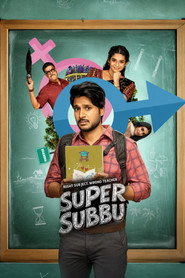
2026
Super Subbu
2026
star 7An unlucky teacher is assigned to teach sex ed in a hostile village. Can he balance this secret while chasing his dreams and saving his relationship?Timeless
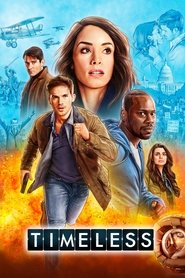
2016
Timeless
2016
star 7.2A mysterious criminal steals a secret state-of-the-art time machine, intent on destroying America as we know it by changing the past. Our only hope is an unexpected team: a scientist, a soldier and a history professor, who must use the machine's prototype to travel back in time to critical events. While they must make every effort not to affect the past themselves, they must also stay one step ahead of this dangerous fugitive. But can this handpicked team uncover the mystery behind it all and end his destruction before it's too late?Run for Your Life
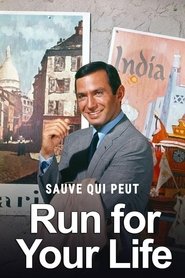
1965
Run for Your Life
1965
star 7.1Run for Your Life is an American television drama series starring Ben Gazzara as a man with only a short time to live. It ran on NBC from 1965 to 1968. The series was created by Roy Huggins, who had previously explored the "man on the move" concept with The Fugitive.Mirzapur
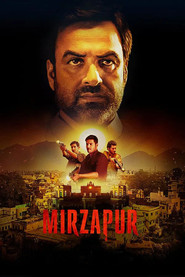
2018
Mirzapur
2018
star 8The iron-fisted Akhandanand Tripathi is a millionaire carpet exporter and the mafia don of Mirzapur. His son, Munna, is an unworthy, power-hungry heir who will stop at nothing to inherit his father's legacy. An incident at a wedding procession forces him to cross paths with Ramakant Pandit, an upstanding lawyer, and his sons, Guddu and Bablu. It snowballs into a game of ambition, power and greed that threatens the fabric of this lawless city.The Case Study of Vanitas
2021
star 8.3In 19th-century Paris, young vampire Noé finds the Book of Vanitas in human hands. Calling himself Vanitas, this doctor wields its power and tempts Noé with a plan to “cure” all vampires. Allying with him may be dangerous, but does he have a choice?Baretta
1975
Baretta
1975
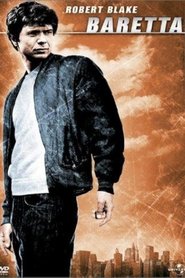
star 6.5Baretta is an American detective television series which ran on ABC from 1975 to 1978. The show was a milder version of a successful 1973–74 ABC series, Toma, starring Tony Musante as chameleon-like, real-life New Jersey police officer David Toma. While popular, Toma received intense criticism at the time for its realistic and frequent depiction of police and criminal violence. When Musante left the series after a single season, the concept was retooled as Baretta, with Robert Blake in the title role.His Dark Materials
2019
His Dark Materials
2019
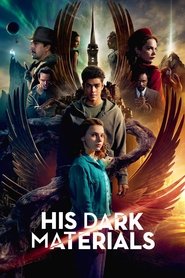
star 7.8Lyra is an orphan who lives in a parallel universe in which science, theology and magic are entwined. Her search for a kidnapped friend uncovers a sinister plot involving stolen children and turns into a quest to understand a mysterious phenomenon called Dust. She is later joined on her journey by Will, a boy who possesses a knife that can cut windows between worlds. As she learns the truth about her parents and her prophesied destiny, the two young people are caught up in a war against celestial powers that ranges across many worlds.點解旅遊好好玩
2001
PLUTO
2023
PLUTO
2023
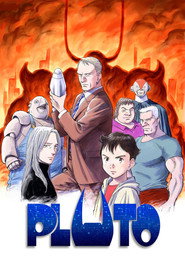
star 7.8When the world's seven most advanced robots and their human allies are murdered one by one, Inspector Gesicht soon discovers that he's also in danger.饮食男女
2016
饮食男女
2016
Good Cheap Eats
2013
Good Cheap Eats
2013
Marvel's Ultimate Spider-Man
2012
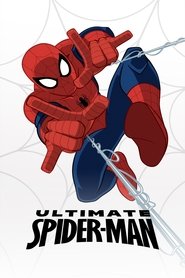
star 7.7While being trained by S.H.I.E.L.D., Spider-Man battles evil with a new team of teen colleagues.聪明的顺溜
2016
Euronews Hoy
2019
The Newlywed Game
1966
The Newlywed Game
1966
star 4.7The Newlywed Game is an American television dating game show that pits newly married couples against each other in a series of revealing question rounds to determine how well the spouses know or do not know each other. The program, originally created by Robert "Nick" Nicholson and E. Roger Muir and produced by Chuck Barris, has appeared in many different versions since its 1966 debut. The show became famous for some of the arguments that couples had over incorrect answers in the form of mistaken predictions, and it even led to some divorces. Many of The Newlywed Game's questions dealt with "making whoopee", the euphemism that producers used for sexual intercourse to circumvent network censorship. However, it became such a catchphrase of the show that its founding host, Bob Eubanks, continued to use the word throughout the show's many runs, even in the 1980s and 1990s episodes and beyond, when he could easily have said "make love" or "have sex" without censorship. GSN's version of The Newlywed Game airs reruns thrSpace Battleship Yamato
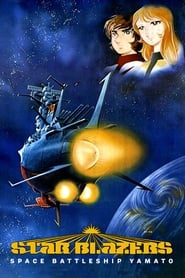
1974
star 7.8Space Battleship Yamato is a Japanese science fiction anime series featuring an eponymous spacecraft. It is also known to English-speaking audiences as Space Cruiser Yamato; an English-dubbed and heavily edited version of the series was broadcast on North American and Australian television as Star Blazers. The first two seasons of this version were broadcast in Greece in 1981-82 as Διαστημόπλοιο Αργώ. An Italian-language version was also broadcast under the name Star Blazers in Italy, and a Portuguese-language version was successfully shown in Brazil under the title Patrulha Estelar and Viaje a la Ultima Galaxia or Astronave Intrepido in Spain and Latin America. It is a seminal series in the history of anime, marking a turn towards more complex serious works and influencing works such as Mobile Suit Gundam and Neon Genesis Evangelion; Hideaki Anno has ranked Yamato his favorite anime and credited it with sparking his interest in aniThe Kennedys
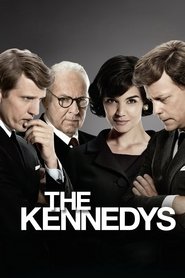
2011
The Kennedys
2011
star 6.5The triumphs and tragedies of the most popular political family in American history.House of Anubis
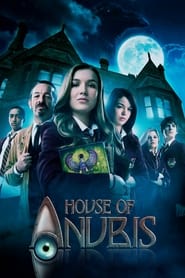
2011
House of Anubis
2011
star 8.2Strange things are happening at an English boarding school called House of Anubis. Popular student Joy goes missing, the school's cranky caretaker has a creepy stuffed crow and the school's attic may be haunted. When recent American transplant Nina gets thrust into the school during this time, she decides to investigate along with her new friend, Fabian, and housemates.Air Farce Live
1993
Air Farce Live
1993
Air Farce Live, also credited as Air Farce, previously Royal Canadian Air Farce, and Air Farce—Final Flight! for the final season, was a Canadian sketch comedy series starring the comedy troupe Royal Canadian Air Farce, that previously starred in an eponymous show on CBC Radio, from 1973 to 1997. The top-rated television show was broadcast on CBC Television, beginning in 1993 and ending in December 2008. The Air Farce Live name was adopted in October 2007. For the show's final season which began October 3, 2008, the series was renamed Air Farce—Final Flight!. The show was a weekly topical sketch comedy series focusing on political and cultural satire and was one of the most popular Canadian television shows. It was initially aired as a radio series beginning in 1973, and on radio, Air Farce continued for 24 seasons through 1997. In terms of the troupe's TV career, the first Air Farce TV special aired in 1980. A short-lived Air Farce TV series was broadcast in 1981, and further TV specials aired in 1982