Popular Talk TV Series on Pantaflix - Page 383
All Services
Free Services
 Netflix
 Amazon Prime Video
 Apple iTunes
 Apple TV Plus
 Disney Plus
 Google Play Movies
 Paramount Plus
 Hulu
Hulu
 HBO Max
 YouTube
 fuboTV
 Peacock
 Peacock Premium
 Amazon Video
 The Roku Channel
 AMC+
AMC on Demand
AMC+
AMC on Demand
 Kocowa
 Hoopla
 The CW
 Vudu
Vudu
 Starz
Starz
 Showtime
 PBS
PBS
 Pantaflix
 FXNow
FXNow
 Tubi TV
 Kanopy
 Comedy Central
 Crunchyroll
 Microsoft Store
 Redbox
 Sun Nxt
 ABC
ABC
 DIRECTV
 Crackle
 Fandor
 Plex
Plex
Netflix
Amazon Prime Video
Apple iTunes
Apple TV Plus
Disney Plus
Google Play Movies
Paramount Plus
Hulu
HBO Max
YouTube
fuboTV
Peacock
Peacock Premium
Amazon Video
The Roku Channel
AMC+
AMC on Demand
Kocowa
Hoopla
The CW
Vudu
Starz
Showtime
PBS
Pantaflix
FXNow
Tubi TV
Kanopy
Comedy Central
Crunchyroll
Microsoft Store
Redbox
Sun Nxt
ABC
DIRECTV
Crackle
Fandor
Plex

Una Familia Complicada
2026
star 10For the Navarro family, appearances are everything. But after the sudden death of Alberto, the family patriarch, their carefully constructed façade begins to crumble. Doña Telma takes control of the family fortune and reputation while struggling to contain the conflicts among her children, whose betrayals, ambitions, and reckless decisions bring them dangerously close to crime. Amid secrets, deception, marriages of convenience, and forbidden relationships, the Navarro family is drawn into a spiral of chaos. Yet Doña Telma’s greatest challenge will be the progression of Alzheimer’s disease, a silent threat that could erase not only her memories, but also the secrets holding her family together.Aap Ke Aa Jane Se
2018
Dr. Wlika
2023
Dr. Wlika
2023
GH Dúo
2019
Cackling Kitarou
1996
Cackling Kitarou
1996
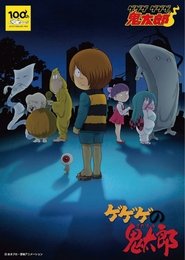
star 8Kitarou, a ghost, spends his afterlife helping humans in need of his skills by thwarting the plans of evil spirits who live to torment humanity. A manga series created in 1959 by manga artist Shigeru Mizuki, Cackling Kitarou is best known for its popularization of the folklore creatures known as yōkai, a class of spirit-monster to which all of the main characters belong. It has been adapted for the screen several times, as anime, live action and video games. A new anime series has been made every decade since 1968. The title of the original story is Hakaba no Kitarō, literally meaning "Kitarō Graveyard". This story was an early 20th-century Japanese folk tale performed on kamishibai. The name "Ge Ge Ge..." was applied to Mizuki's particular telling of the Kitarō story when a Toei Animation series based on the characters of his comic was created. In January, 2008, the original comic was finally adapted into an animated series, running in Fuji TV's noitaminA slot.Cop in Law
2008
Cop in Law
2008
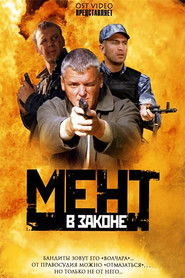
Major Stepan Krucha heads the criminal investigation department of the Bitovsky Department of Internal Affairs. He is the master of his "land". The bandits call him Wolfman, fearing for good reason: you can "get away" from justice, but not from an ardent defender of the law. Shoulder to shoulder with Krucha, his "cubs" - Fedot Komov and Roma Lozovoy - are standing guard over law and order. And let the bandits think that they are cooler than Cool, our heroes are not the ones who can be kept on a leash. They will take any enemy by the throat themselves...Calimero
1974
Calimero
1974
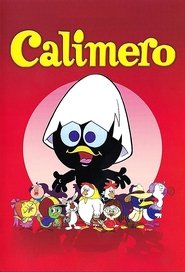
star 5.8Calimero is an Italian/Japanese cartoon about a charming, but hapless anthropomorphized cartoon chicken; the only black one in a family of yellow chickens. He wears half of his egg shell still on his head. Calimero originally appeared on the Italian television show Carosello on July 14, 1963, and soon became a popular icon in Italy. The characters were later licensed in Japan as an anime series, twice. The first was made by Toei Animation and ran from October 15, 1974 to September 30, 1975, and the second, with new settings and characters, was made in 1992. Altogether, 99 Japanese episodes were made. The series mostly consists of the many adventures of Calimero and his friends as they solve mysteries and make documentaries. However, their adventures usually get them into quite a bit of trouble. The first series was also broadcast on European networks such as TROS, ZDF and RTL II or TVE.Skemergrond
2024
Skemergrond
2024
star 5It centres round the Louw family who own a beautiful flower farm in Gemoedsdrif. Their peaceful existence is turned upside down when unexpected guests arrive who threaten to reveal shocking family secrets. Old wounds are opened and new bonds are forged to save and protect the Louws and their legacy.Watashi wa umi
1978
Watashi wa umi
1978
The 22nd NHK Asadora. Starring Tomoko Aihara. About a woman raising war orphans.ドラえもん
0000
ドラえもん
0000
The Rebel Empress
2024
The Rebel Empress
2024
star 7.5Empress Wang Yunci who was murdered in the fire and reborn inside Jiang Jinli's body as the Princess Consort Duan because of an ancient jade. Her birthday just became her death day, and her brother-in-law also became her husband.maybrit illner
1999
Future-Worm!
2016
Future-Worm!
2016
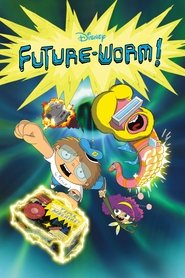
star 6.2The show follows Danny Douglas and his friend Future-Worm as they go on adventures and travel through time.Where the Heart Is
1969
Where the Heart Is
1969
star 4.7Where the Heart Is was an American soap opera telecast on the CBS television network from September 8, 1969 to March 23, 1973. Created by Lou Scofield and Margaret DePriest, the program ran for 25 minutes, the remaining five minutes of its timeslot ceded to a CBS news break. Scofield and DePriest were the original head writers. A year after the soap’s premiere, they were succeeded by Pat Falken Smith. In 1972, Smith was replaced by Claire Labine and Paul Avila Mayer. The series was produced by Tom Donovan and directed by Richard Dunlap.Tetsujin 28-go FX
1992
Heavy Metal L-Gaim
1984
Heavy Metal L-Gaim
1984
star 6.2Heavy Metal L-Gaim is an anime television series, begun in 1984, which was directed by Yoshiyuki Tomino. Its characters and mecha were designed by Mamoru Nagano, who would later go on to create The Five Star Stories. Heavy Metal L-Gaim takes place in the Pentagona System, a solar system made up of five planets. Oldna Poseidal, the legendary emperor from the planet Gastogal leads his 24 Temple Knights from planet to planet until all have fallen under his control. His final victory is on the planet Mizum in 3975 when he defeats Kamon Walha V, ruler of the Yaman Clan. Kamon hides his heir, Kamon Myroad on the planet Mizum with the legendary white mecha, L-Gaim. Fifteen years later, now grown up and known as Daba Myroad, he leads a rebellion to free the planets of Pentagona from Poseidal's grasp.The Lost Tomb 2: Explore with the Note
2019
star 7.4Decades after a deadly encounter with the undead, Wu Xie, grandson of the sole survivor of a Changsha grave-robbing expedition, uncovers secrets in his grandfather’s notes. Joined by his uncle Wu Sansheng and fellow tomb robbers, he embarks on a dangerous quest for ancient treasures—only to face mysterious tombs, hidden puzzles, and deadly secrets that challenge everything they thought they knew.Trailblazer Honors
2014
Trailblazer Honors
2014
star 7.5One-hour annual event that celebrates leaders at the forefront of LGBTQ equality.我们15个
2015
我们15个
2015
Kimi wa =LOVE o Aiseru ka
2020
star 8A variety show by the idol unit "=LOVE" produced by Rino Sashihara that pursues the "cuteness" of idols.