Popular War Politics TV Series on Pantaflix - Page 112
All Services
Free Services
 Netflix
 Amazon Prime Video
 Apple iTunes
 Apple TV Plus
 Disney Plus
 Google Play Movies
 Paramount Plus
 Hulu
Hulu
 HBO Max
 YouTube
 fuboTV
 Peacock
 Peacock Premium
 Amazon Video
 The Roku Channel
 AMC+
AMC on Demand
AMC+
AMC on Demand
 Kocowa
 Hoopla
 The CW
 Vudu
Vudu
 Starz
Starz
 Showtime
 PBS
PBS
 Pantaflix
 FXNow
FXNow
 Tubi TV
 Kanopy
 Comedy Central
 Crunchyroll
 Microsoft Store
 Redbox
 Sun Nxt
 ABC
ABC
 DIRECTV
 Crackle
 Fandor
 Plex
Plex
Netflix
Amazon Prime Video
Apple iTunes
Apple TV Plus
Disney Plus
Google Play Movies
Paramount Plus
Hulu
HBO Max
YouTube
fuboTV
Peacock
Peacock Premium
Amazon Video
The Roku Channel
AMC+
AMC on Demand
Kocowa
Hoopla
The CW
Vudu
Starz
Showtime
PBS
Pantaflix
FXNow
Tubi TV
Kanopy
Comedy Central
Crunchyroll
Microsoft Store
Redbox
Sun Nxt
ABC
DIRECTV
Crackle
Fandor
Plex

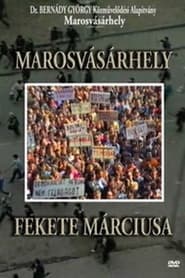
Black March of Târgu Mureș
2010
The series covers the events of the ethnic clashes in Târgu Mures after the fall of the communist regime. The author has arranged the written and film material collected by the Dr. Bernády György Foundation in chronological order. The archival photos showing the important events of the five days, the moments that created the revolutionary atmosphere, are complemented by the recollections of Hungarians and Romanians, and official statements.WWII: Battle for Europe
2009
After years of shifty threats and menacing troop movements, World War II hit Europe with all its devious force; bringing with it a level of depravity and destruction previously unseen to the men and women it touched. It didn't take long before it went down in history as the worst international conflict ever seen, and as in every war before it, it left nothing but questions in its wake.301 POWs
2021
301 POWs
2021
This series tells the story of the POWs who returned from captivity in Egypt and Syria, cut off from their families, directly to an interrogation facility in Israel, where they underwent harsh interrogations in which they were accused of giving away information to the enemy and even suspected of having defected. Over 200 fighters were captured by the Egyptians and severely tortured. Another 70 fighters were captured by the Syrians in battles over the Hermon outpost and the Golan Heights outposts. They returned home at the end of the war, but when they returned to their families, they were called to an interrogation facility in Zichron Yaacov. Today, they are trying to overcome double traumas: the horrors of war, captivity and torture on the one hand, and the interrogations that have taken place here in Israel on the other, and are trying to overcome what they define as "the state's betrayal of them."The Man Who Defended Gavrilo Princip
2015
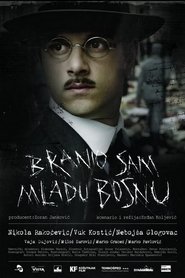
star 8When Gavrilo Princip killed Franz Ferdinand , Austrian future king , the World War I began. What will Gavrilo Princip do? He has to choose , hard jail untill death, or hanging. There are so much things happening in Bosnia.Lester and Charlie
0000
Lester and Charlie
0000
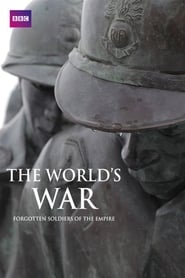
Lester & Charlie is a social satire/political satire web series created, produced, edited and directed by Jeff Bond and Richard Wooley. In each episode, the title characters attempt to resolve a person’s dilemma or address a socio-political issue by executing a misguided but well-intentioned scheme. Segments have appeared on CNN, Time and on Alan Colmes' blog Liberaland. Each episode is purportedly produced on a US$20 budget and shot with a broken camcorder. In 2011, in collaboration with the Coffee Party USA, Lester and Charlie produced a series of videos marking the one-year anniversary of the controversial Citizens United decision by the United States Supreme Court. In May 2011, they appeared in character in the Bravo reality series Pregnant in Heels. Their weekly satirical interactive political polls have been featured on Crooks and Liars and on the website for WPIX in New York City and became regularly featured on The Huffington Post in 2012.The World's War: Forgotten Soldiers of Empire
2014
star 9British historian David Olusoga, along with other historians, narrates the story of millions of Indian, African and Asian troops who fought and died alongside French and British troops to help win the war against Germany, Austro-Hungary and the Ottoman Empire.I Am Hope
2023
I Am Hope
2023
star 7.5The first war drama series the Ukrainian TV channel 2+2 which was filmed during a full-scale war in Ukraine. The lead characters are the emergency paramedics, who were rescuing people of their city under continuous shelling and bombing天罚-二战全纪实
2015
天罚-二战全纪实
2015
Dr. Schlüter
1965
Battle of the Atlantic
2002
star 7.4Explores the desperate struggle for survival on a hostile ocean during the longest and bloodiest battle of the Second World War.WWI: The First Modern War
2014
star 6.8When ancient war tactics became overwhelmed by powerful new weapons like tanks, air attacks, weapons of mass destruction and submarines, a pivotal game-changing moment in history occurred. History is delving into the background of each weapon explaining the how and why they were developed, the strategy, and their ultimate effectiveness.The 700 Club
1966
The 700 Club
1966
star 4.3The 700 Club is the flagship television program of the Christian Broadcasting Network, airing in syndication throughout the United States and available worldwide on CBN.com. Airing each weekday, the news magazine program features live guests, daily news, contemporary music, testimonies, and Christian ministry. In production since 1966, it is one of the longest-running television programs in broadcast history. It is currently hosted by Pat Robertson, Gordon P. Robertson and Terry Meeuwsen. Since 2010, health reasons have prevented Pat Robertson from hosting on a regular basis. As of 2013, he only hosts when able; Gordon P. Robertson is a regular host. Previous co-hosts include Ben Kinchlow, Sheila Walsh, Danuta Rylko Soderman, Kristi Watts, and Lisa Ryan. Tim Robertson served as host for a year from 1987-88 along with Kinchlow and actress Susan Howard while Pat Robertson ran unsuccessfully for President of the United States in the 1988 campaign. The program also features major news stories plus in-depth investigaThe Sniper. Officer SMERSH
2020
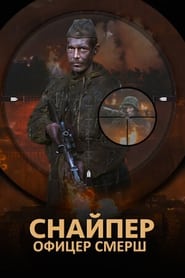
The story of the irreconcilable confrontation between two professional snipers, senior lieutenant of the special department Egorov and Lieutenant Lother Von Dibitz, which began in 1943 in the siege of Stalingrad and continued in 1944 in the forests of Belarus.Hitler's Power
2023
The Korean War
2012
The Korean War
2012
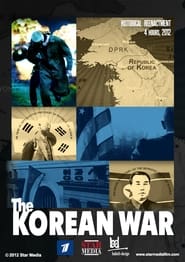
star 10Star Media's award-winning animation studio, Babich Design proudly presents this powerful and dramatic account of the Korean War (1950-1953). Often colloquially referred to as 'The Forgotten War', it was nevertheless one of the most dangerous big-power confrontations and threats to world peace since World War 2 with a bitter legacy of hatred and suspicion enduring to the present day. With a combination of stunning CGI animation, dramatic reconstruction and unique historic library footage, the full and harrowing details of this brutal and bloody war are vividly recreated for today's television audience for many of whom the war is a distant memory or a mere item in the history books.