Popular War Politics TV Series on Pantaflix - Page 63
All Services
Free Services
 Netflix
 Amazon Prime Video
 Apple iTunes
 Apple TV Plus
 Disney Plus
 Google Play Movies
 Paramount Plus
 Hulu
Hulu
 HBO Max
 YouTube
 fuboTV
 Peacock
 Peacock Premium
 Amazon Video
 The Roku Channel
 AMC+
AMC on Demand
AMC+
AMC on Demand
 Kocowa
 Hoopla
 The CW
 Vudu
Vudu
 Starz
Starz
 Showtime
 PBS
PBS
 Pantaflix
 FXNow
FXNow
 Tubi TV
 Kanopy
 Comedy Central
 Crunchyroll
 Microsoft Store
 Redbox
 Sun Nxt
 ABC
ABC
 DIRECTV
 Crackle
 Fandor
 Plex
Plex
Netflix
Amazon Prime Video
Apple iTunes
Apple TV Plus
Disney Plus
Google Play Movies
Paramount Plus
Hulu
HBO Max
YouTube
fuboTV
Peacock
Peacock Premium
Amazon Video
The Roku Channel
AMC+
AMC on Demand
Kocowa
Hoopla
The CW
Vudu
Starz
Showtime
PBS
Pantaflix
FXNow
Tubi TV
Kanopy
Comedy Central
Crunchyroll
Microsoft Store
Redbox
Sun Nxt
ABC
DIRECTV
Crackle
Fandor
Plex

历史的使命
2015
历史的使命
2015
战北平
2009
战北平
2009
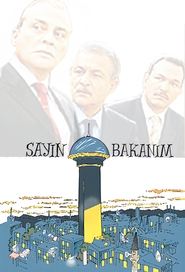
Yes, Minister
2004
Yes, Minister
2004
star 8A Turkish remake of the British series called "Yes, Minister" created by Jonathon Lynn and Anthony Jay.Quanta guerra!
2022
Quanta guerra!
2022
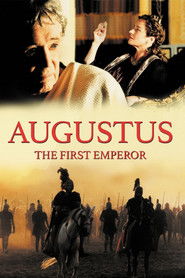
Augustus: The First Emperor
2003
star 5.4Old and ill, Augustus, the man who changed the fortunes and destiny of an empire by completing Julius Caesar's project, recounts the two most important phases of his life: his rise to power and his fight against the pressure of his family.国家公诉
2003
国家公诉
2003
Kennedy
1983
Kennedy
1983
star 6.3Kennedy is a five-hour miniseries written by Reg Gadney and directed by Jim Goddard. The miniseries was produced by Central Independent Television and originally aired in the United States starting on 20 November 1983 around the time of the 20th anniversary of the Kennedy assassination. The TV miniseries was a biography of the 1961-1963 presidency of John F. Kennedy. The mini-series stars Martin Sheen as President John F. Kennedy, John Shea as Robert F. Kennedy, Blair Brown as Jacqueline Kennedy, E.G. Marshall as Joseph P. Kennedy, Vincent Gardenia as J. Edgar Hoover and Kelsey Grammer as Stephen Smith amongst many others. The series was broadcast on NBC, and was also sold to 50 Countries, with 27 of them broadcasting the series simultaneous. The series was nominated for 3 Golden Globes and 4 BAFTA, and won Baftas for Best Drama Series and Best Make Up.Open Talk
0000
Open Talk
0000
Open Talk Azerbaijani: Açıq söhbət is a weekly topical debate ANS TV television program in Azerbaijan. The show typically features politicians from two political parties as well as other public figures. Open Talk is presented by Sevinj Osmanqizi. It is usually recorded about 24 hours prior to transmission, but has been broadcast live.Snaiper 2 Tungus
2012
Snaiper 2 Tungus
2012
Luan Shi Wei Qing
2018
Luan Shi Wei Qing
2018
In 1948 Jiangzhou, a humble foot care master is drawn into an assassination plot and forced to navigate a chaotic world of criminals, officials, and revolutionaries. As he becomes involved in rescuing victims and exposing corruption, he and a group of unlikely allies play a role in recovering lost funds and witnessing the city’s liberation.Real History with Matt Walsh
2026
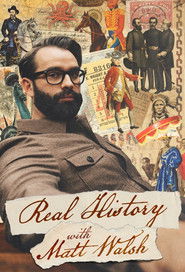
star 7A documentary series that examines controversial interpretations of American history and revisits widely debated historical events and narratives. Each episode explores topics related to politics, culture, and the way history has been presented over time.Arende
1989
Arende
1989
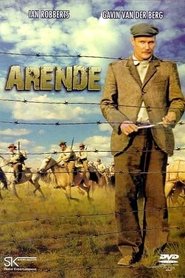
Epic drama follows a group of Boers during significant events in South African history. The first series is primarily set on St. Helena and follows the lives of Boer prisoners-of-war at Deadwood Camp. Among them is Sloet Steenkamp, a Cape Rebel whose death sentence was commuted to life imprisonment on the island. The second series shifts to post-war mainland South Africa, where the Boers, though returned, still struggle for freedom. New characters are introduced, including Meisie, who is mute due to trauma, and her mother Cornelia, who seeks revenge. In the third series, Sloet and his friends, yearning to escape British rule, embark on the Dorsland Trek, a perilous journey across the Kalahari Desert in search of freedom beyond South Africa's borders.14: Diaries of the Great War
2014
star 7.6When war broke out in Europe in 1914, most people thought the conflict would be over by Christmas; they could not imagine how wrong they were. An attack in Sarajevo ended up becoming a snowball that swept the world: a new kind of warfare had begun, waged with techniques and means never seen before. By November 1918, ten million people had died and the political map of the planet had been redrawn.Clash of Futures (1918-1939)
2018
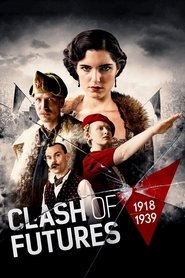
star 7.5From the armistice of 1918, which marked the end of the First World War, to the declaration of war in September 1939, the beginning of the Second World War: an era during which there was an aspiration to create a new world, prosperous and at peace, but which provoked a new tragedy, seen through the destinies of thirteen people who were both actors and witnesses of the upheavals of the so-called inter-war period.Missing
2020
Missing
2020
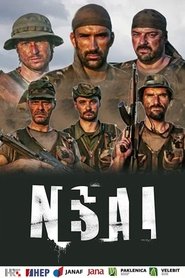
After a military operation of limited operation, six Croatian soldiers (Prka, Sikira, Nervoza, Gradski, Delon and Pape) remained behind the enemy lines for 10 days before being cut off from the enemy lines. Soldiers have not known each other all their lives and have been brought together by war. People of different profiles meet.You Can’t Take From One Who Does Not Have
2010
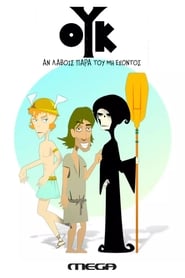
star 6.8You Can’t Take From One Who Does No Have (Ouk an lavois para tou mi ehontos) is a Greek animated mini-series that aired in the 2010-2011 season on Mega. Ouk an lavois para tou mi ehontos develops in modern Athens where Charos goes, wanting to withdraw from his obligations. However, he is short an obolus on his books, what Menippus owes since he died. Hermes, as the carrier of souls and responsible for Menippus not having the obolus, together with Charus try to help Menippus make money to pay him the obolus. The series was scheduled to begin in the 2009–2010 season, but was eventually rescheduled for the following season’s schedule. The series consists of a total of one cycle with 14 episodes.The Real War of Thrones
2017
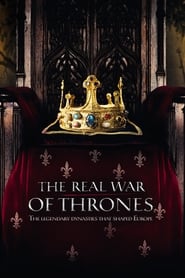
star 7.1In the turbulent formative centuries of early Europe, power-hungry family dynasties fought for domination of the continent.Selim I
2022
Selim I
2022
star 10Sultan of Ottoman Empire Selim I son of Bayezid II nicknamed Yavuz was born on 10th of October 1470 in Amasya. His father was Beyazid II and mother was Gulbahar Hatun. He was ascended to throne in 1512 and ruled the Ottoman Empire for 8 years until 1520. Yavuz Sultan Selim was one of the Empire's most successful and respected sultans. He was tall, strong, brave, fierce, but very modest despite his powers and was writing poems. He never rested during his rule, he worked hard and organized campaigns, filled the treasury with lots of gold. He was an expert on using the sword, archery, and wrestling. He had long mustache but he cut his beard, unlike other sultans.