Popular War Politics TV Series on Pantaflix - Page 96
All Services
Free Services
 Netflix
 Amazon Prime Video
 Apple iTunes
 Apple TV Plus
 Disney Plus
 Google Play Movies
 Paramount Plus
 Hulu
Hulu
 HBO Max
 YouTube
 fuboTV
 Peacock
 Peacock Premium
 Amazon Video
 The Roku Channel
 AMC+
AMC on Demand
AMC+
AMC on Demand
 Kocowa
 Hoopla
 The CW
 Vudu
Vudu
 Starz
Starz
 Showtime
 PBS
PBS
 Pantaflix
 FXNow
FXNow
 Tubi TV
 Kanopy
 Comedy Central
 Crunchyroll
 Microsoft Store
 Redbox
 Sun Nxt
 ABC
ABC
 DIRECTV
 Crackle
 Fandor
 Plex
Plex
Netflix
Amazon Prime Video
Apple iTunes
Apple TV Plus
Disney Plus
Google Play Movies
Paramount Plus
Hulu
HBO Max
YouTube
fuboTV
Peacock
Peacock Premium
Amazon Video
The Roku Channel
AMC+
AMC on Demand
Kocowa
Hoopla
The CW
Vudu
Starz
Showtime
PBS
Pantaflix
FXNow
Tubi TV
Kanopy
Comedy Central
Crunchyroll
Microsoft Store
Redbox
Sun Nxt
ABC
DIRECTV
Crackle
Fandor
Plex

Ana alquds
2010
Ana alquds
2010
Untitled Melania Trump Docuseries
0000
A three-part docuseries about US First Lady Melania Trump, a companion to her 2026 documentary film.In Europa
2007
In Europa
2007
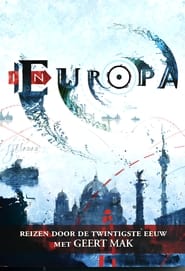
In Europa is a series of television documentaries on Europe in the 20th century, based on the book with the same name by Dutch writer and historian Geert Mak. The series had a budget of 4 million euro and was cofinanced by the Dutch Ministry of Interior Relations. Episodes are available for viewing on the official site. First broadcast on Nederland 2 from 2007 to 2009, quite a few locations important in European history are shown throughout the series, both historical and current. After two episodes the Flemish public channel bought the series, starting broadcasts on January 8, 2008. Swedish public channel Sveriges Television bought the series as well, starting broadcasts from January 2009. Croatian public television also bought the series and begun broadcasting from late 2011 through 2012. Although the series is mainly in Dutch, many of the episodes can be understood, as interviews with eyewitnesses or sons or daughters of contemporary figures tend to be in English.Major Sokolov's Hetaerae
2014
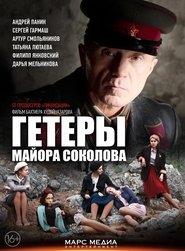
September 1939. The beginning of the Second World War. Major Sokolov of Soviet intelligence arrives in Crimea. His main goal is to identify the agent network of the terrorist anti–Soviet organization ROVS. The head of the counterintelligence of the Russian General Military Union is Staff Captain Semenov, alias Krest.Dead Pool
1997
Dead Pool
1997
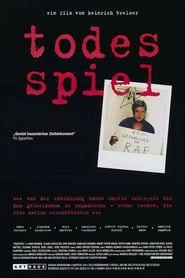
star 5.4Docudrama in two parts, based on the abduction of the president of the employer's association of Germany, Hanns Martin Schleyer, by the Baader-Meinhof gang in the Autumn of '77.Powrót doktora von Kniprode
1966
After the end of the war, the Polish authorities try to detain the head of the Warsaw Gestapo.Insiders
2001
Insiders
2001
Insiders analyses and discusses Australian politics with the use of a panel of political journalists and columnists and interviews with prominent politicians and commentators. Broadcast on ABC1 on Sunday mornings at 9 am, the show also features many regular commentators from various Australian media outlets and think tanks. The program is presented by veteran political journalist Barrie Cassidy as part of the ABC's Sunday morning line-up, commencing with Insiders, followed by Inside Business and then Offsiders, a sports program also hosted by Cassidy.U-Boat Wargamers
2023
U-Boat Wargamers
2023
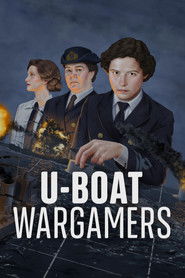
star 6.8January 1943: Admiral Karl Dönitz, head of the Nazis’ U-boat fleet, has brought Britain to the brink of starvation by ruthlessly destroying close to a thousand of their merchant ships. If the transatlantic shipping route is cut off, the Allies will lose their last foothold in Western Europe. The Royal Navy turns to retired war gamer Gilbert Roberts. Roberts is to use war gaming to try to decipher and combat Dönitz’s tactics. To do this, he needs a team, but the Navy can’t spare any men. Instead, he risks the ridicule of high command by turning to the Women’s Royal Navy Service (WRNS) to war game the U-boats’ tactics. In partnership with Jean Laidlaw, one of Britain’s first female chartered accountants, and a small team of resourceful female mathematicians, Roberts acts out naval battles and games the U-boats’ moves on a linoleum floor, using chalk and wooden model ships.39-45 en sol canadien
2021
star 8Claude Legault heads to places infused with memories, wonderful reminders of the country's unsung role during World War II, to gather touching, human and often unimaginable stories about Canada's participation and the people who lived through it.Lutung Kasarung
2004
The Cost of Freedom. Volunteers
2016
TV series tells about 1918 February 16 Signing of the Lithuanian Independence Act and other historical events that followed this important event in Lithuania until the occupation of Lithuania in 1940.Fabrik der Offiziere
1989
Fabrik der Offiziere
1989
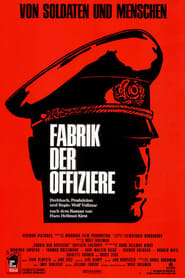
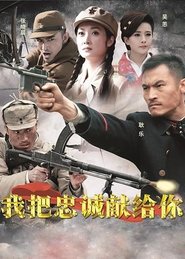
star 3.3This is the story of Lieutenant Karl Krafft in the year 1944, when the war was already lost. He was stationed at the Officers Factory. A training school where the cream of the German youth was prepared to fight as soldiers for the fatherland. At the time of his arrival, a murder was committed at this military academy, which was covered up. A crime with political backgrounds, which must be solved by Lieutenant Krafft during the course of the officer training.我把忠诚献给你
2015
我把忠诚献给你
2015
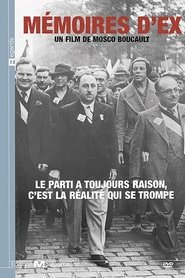
Mémoires d'ex
1991
Mémoires d'ex
1991
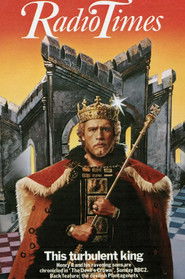
The Devil's Crown
1978
The Devil's Crown
1978
star 7.8The Devil's Crown was a BBC limited series which dramatised the reigns of three medieval Kings of England: Henry II and his sons Richard the Lionheart and John. It was broadcast in thirteen 55-minute episodes between 30 April and 23 July 1978. Henry Plantagenet (latterly Henry II), sees his opportunity to seize the crown of England and create a kingdom of law and order. He cuts a deal with King Stephen in which Stephen will name him his heir, excluding his sons Eustace and William in exchange for a fragile truce. Stephen's sudden death elevates Henry to the throne. He may have been King of England, but the bulk of the Angevin Empire was in France, and it was this that Henry regarded as the Jewel in his Crown, maintained through a series of political marriages and complex allegiances. Henry pays homage to Louis VII, King of the Franks, for these lands, but it is clear that Henry is the shrewder and more ambitious of the two kings, having married Louis' ex-wife Eleanor of Aquitaine.Viki and Me
2017
Viki and Me
2017
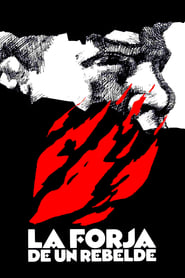
La Forja de un Rebelde
1990
star 6.4An autobiographical account that is also the history of Spain during the dark years of the first half of the twentieth century. Spanish writer Arturo Barea (1897-1957) narrates his childhood in Madrid, his harsh experiences in Morocco during the Rif War and his political commitment to the Republican side during the Spanish Civil War.