Popular Animation TV Series on Tub Tv - Page 354
All Services
Free Services
 Netflix
 Amazon Prime Video
 Apple iTunes
 Apple TV Plus
 Disney Plus
 Google Play Movies
 Paramount Plus
 Hulu
Hulu
 HBO Max
 YouTube
 fuboTV
 Peacock
 Peacock Premium
 Amazon Video
 The Roku Channel
 AMC+
AMC on Demand
AMC+
AMC on Demand
 Kocowa
 Hoopla
 The CW
 Vudu
Vudu
 Starz
Starz
 Showtime
 PBS
PBS
 Pantaflix
 FXNow
FXNow
 Tubi TV
 Kanopy
 Comedy Central
 Crunchyroll
 Microsoft Store
 Redbox
 Sun Nxt
 ABC
ABC
 DIRECTV
 Crackle
 Fandor
 Plex
Plex
Netflix
Amazon Prime Video
Apple iTunes
Apple TV Plus
Disney Plus
Google Play Movies
Paramount Plus
Hulu
HBO Max
YouTube
fuboTV
Peacock
Peacock Premium
Amazon Video
The Roku Channel
AMC+
AMC on Demand
Kocowa
Hoopla
The CW
Vudu
Starz
Showtime
PBS
Pantaflix
FXNow
Tubi TV
Kanopy
Comedy Central
Crunchyroll
Microsoft Store
Redbox
Sun Nxt
ABC
DIRECTV
Crackle
Fandor
Plex

黄逗菌
2021
黄逗菌
2021
Rift
2022
Rift
2022
star 7The Rift between the present world and the another world caused by the instability of energy is the only passage to the present world for the monsters in another world. In order to block the invasion of monsters, in the present world, a group of people with special power bravely stand in the Rift to defend the world.Dragon's Disciple
2022
Dragon's Disciple
2022
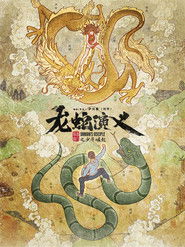
star 5The frail boy but with a strong sense of justice, under the guidance of Tang Zichen, a master of Chinese martial arts, embarks on the road of learning traditional martial arts, how to open up and surpass himself. He will experience the spirit of martial arts people who use martial arts to stop the fight and convince people with morality, and also inherit traditional martial arts and promote righteousness.Supa Team 4
2023
Supa Team 4
2023
star 6.4Four teens are just trying to survive secondary school when an ex-spy recruits them for her superhero team. Their newest assignment? Saving the world.Contraptus
2009
Contraptus
2009
star 10In this animated series, a genius inventor comes up with wacky creations -- and then makes his loyal but clumsy assistant test the new contraptions.Mechanical Arms
2018
Mechanical Arms
2018
star 7Hero was a high schooler living an ordinary life. One day, he meets a very strong and intelligent mechanical arm named "Mecha-ude". After a strange turn of events, the "Mecha-ude" started living inside Hero's hoodie and the two's life full of trouble begins. As the boy and his "Mecha-ude" fights together and strengthen their bonds, the two also meets new friends who also fights along with each of their own unique "Mecha-ude" partners. Out of those, one of the heroine has two "Mecha-ude" which appears out of her skirt. An active girl with a totally opposite characteristics from hero himself, he gradually becomes attracted to her. But the two are confronted with other "Mecha-ude" users who are in search of the secret of "Mecha-ude" relentlessly.The King of Fighters: Another Day
2005
star 7.1The four episodes are set in Southtown, the imaginary city well known to all fans as the stage of numerous death matches throughout the KOF series. Many past heroes of the saga make their appearance here, and the four plots intertwine to create a large-scale drama, that is also linked to the story of KOF Maximum Impact 2.Eva the Owlet
2023
Eva the Owlet
2023
star 4.5Join in on feathery fun as Eva seeks adventure in her treetop community. Each night, she learns lessons, reflects through writing, and lends a helping wing wherever she can.Ninjaman Ippei
1982
Ninjaman Ippei
1982
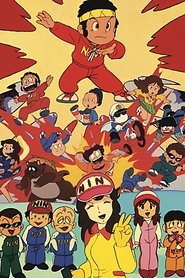
Way out in the sticks, the fourth-graders of the local school in Tokio village all have their own superpowers of doubtful merit, including flying eyeballs and missile-hair. Ippei and his friends study hard to be ninjas, but they are constantly under treat from the arrogant cheats from the neighbouring village of Techno. A strange mix of ninjas and school comedy, based on a children's manga by Kawai Kazuyoshi.Six Roots - Black Myth: Wukong Ending Animations
2024
star 9.5Chapter animations for the game Black Myth Wukong.Togane! Chronicle
2024
Four and a Half Friends
2015
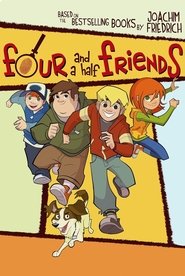
star 7Charly and his friends love solving mysteries while facing the challenges of growing up. This unlikely group of junior detectives – and their dog – will stop at nothing to find and solve cases they uncover in and around their hometown. And between the excitement, action and laughs, they'll find out a bit about themselves and each other along the way. They don't have superpowers, they aren't geniuses and they don't even look like TV stars, but these normal, unexceptional kids and their funny-looking dog achieve amazing things when they get together as the Charly & Co. Detective Agency._Summer
2006
_Summer
2006
star 10Takumi Kaizu is a boy that doesn't have any particular interest in girls. During a school trip, his friend Osamu asks him whether or not he has a girl that he likes. From that point on, Takumi slowly becomes interested in the opposite sex, through the girls that he is accquainted with in his daily life. As the last summer of his high school life begins, Takumi begins to search for the one girl that he can call his girlfriend, while watching Osamu's desperate and relentless search for a girlfriend as well.Crash Canyon
2011
Crash Canyon
2011
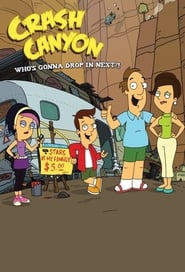
star 4.1Crash Canyon is a Canadian animated series. It tells the story of the community living at the bottom of a canyon. The Wendell family is looking for an original holiday by caravan but their trip ends sooner than expected at the bottom of a canyon in Alberta, Canada. Canyon walls are too high to climb and there is no way out. Soon they find out there is a whole community of 25 survivors from previous crashes down there. Dollars are not accepted and they use golf tees as a currency.Toki no Daichi: Hana no Oukoku no Majo
1998
star 6In the past, the world was bundled with demons by the evil dragon Diabolos, and demons were ferocious. However, 14 years ago, Diabolos is defeated by Zard, a boy who was called a hero at the age of seven at the time. He calmed down the demons, and returned the world back to its peaceful state. Four years later, however, Diabolos was resurrected and the demons began to attack the world once again. Zard headed to fight Diabolos again, but he never came back.... On 4996, Kai, Zard's best friend, traveled to see whether what Zard said about humans and demons coexisting together was possible. During the journey, he meets Izayoi, a strange boy who can speak to demons with his heart; and Gend, a brown-skinned swordfighter who seems to be a survivor of the Dark Elves race. Kai discovers that perhaps, they are the key to the coexistence of humans and demons, which led to him traveling together with them.The Immigrants
0000
The Immigrants
0000
The Immigrants is adult cartoon which was set to debut August 12, 2004 on Spike TV. The series never aired, but it was later compiled into a film and released in October 2008 in Hungary.I'm Joybo
2017
I'm Joybo
2017
star 8Jiang Xiaobai starts his first ever job as an editor. His new work partner, writer Tong Li, continually gives him a hard time. One day he learns that Tong Li is a long-lost friend from his childhood. Gradually, their past is revealed.SuzakiNishi the Animation
2015
star 5.7One day, two transfer students arrive a certain high school in Tokyo: airhead Aya Suzaki and happy-go-lucky Asuka Nishi. For the duo, every day is a happy day in campus.終末のハーレム
2021
終末のハーレム
2021
BeddyByes
2025
BeddyByes
2025
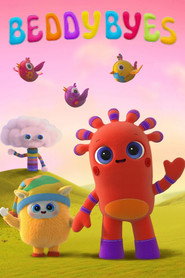
Join best friends MeMo and BaBa as they travel across the remarkable Planet BeddyByes, meeting new and familiar faces on their mindful and soothing journey to bedtime.