Popular Crime TV Series on Tub Tv - Page 159
All Services
Free Services
 Netflix
 Amazon Prime Video
 Apple iTunes
 Apple TV Plus
 Disney Plus
 Google Play Movies
 Paramount Plus
 Hulu
Hulu
 HBO Max
 YouTube
 fuboTV
 Peacock
 Peacock Premium
 Amazon Video
 The Roku Channel
 AMC+
AMC on Demand
AMC+
AMC on Demand
 Kocowa
 Hoopla
 The CW
 Vudu
Vudu
 Starz
Starz
 Showtime
 PBS
PBS
 Pantaflix
 FXNow
FXNow
 Tubi TV
 Kanopy
 Comedy Central
 Crunchyroll
 Microsoft Store
 Redbox
 Sun Nxt
 ABC
ABC
 DIRECTV
 Crackle
 Fandor
 Plex
Plex
Netflix
Amazon Prime Video
Apple iTunes
Apple TV Plus
Disney Plus
Google Play Movies
Paramount Plus
Hulu
HBO Max
YouTube
fuboTV
Peacock
Peacock Premium
Amazon Video
The Roku Channel
AMC+
AMC on Demand
Kocowa
Hoopla
The CW
Vudu
Starz
Showtime
PBS
Pantaflix
FXNow
Tubi TV
Kanopy
Comedy Central
Crunchyroll
Microsoft Store
Redbox
Sun Nxt
ABC
DIRECTV
Crackle
Fandor
Plex

Hikarugake
1977
Hikarugake
1977
The drama depicts the fateful meeting and falling in love between a man living in the glamorous world of the fashion business and a woman living in the social reality of law and order.The Enigma Files
1980
The Enigma Files
1980
star 6The Enigma Files is a British television detective drama that ran for a single series of fifteen episodes in 1980. Detective Chief Inspector Nick Lewis is tasked with investigating unsolved crimes.Drift: Partners in Crime
2023
star 6.1Two brothers and police officers, Ali and Leo, have not spoken to each other for decades after a big family row. But when they suddenly become involved in an international conspiracy, they have to work together again.1890
2017
Damo
2003
Damo
2003
star 6.1Damo is a 2003 South Korean fusion historical drama, starring Ha Ji-won, Lee Seo-jin, and Kim Min-joon. Set in the Joseon Dynasty, it tells the story of Chae-ok, a damo relegated to the low-status job of a female police detective who investigates crimes involving women of the upper class. Chae-ok shares a forbidden love with her mentor and superior Hwangbo Yoon, but while working undercover on a counterfeit ring case, she finds herself drawn to Jang Sung-baek, the mysterious leader of the rebel army she has infiltrated. It aired on MBC from July 28 to September 9, 2003 on Mondays and Tuesdays at 21:55 for 14 episodes.Kaybolan Yıllar
2006
Yılan Hikayesi
1999
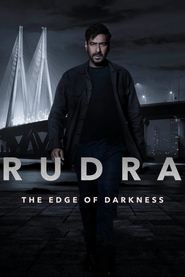
Rudra: The Edge Of Darkness
2022
star 6.8Set in the Special Crimes Unit of the Mumbai Police, Revolving around DCP Rudraveer Singh, who is under the system’s radar despite being one of its best minds at work.Rough Diamonds
2023
Rough Diamonds
2023
star 6.9When a prodigal son sends his family's empire into crushing debt, his estranged brother returns to Antwerp's diamond district to pick up the pieces.Hope Springs
2009
Hope Springs
2009
star 7.7Ellie finds herself in hiding in a remote Scottish village called Hope Springs along with fellow ex-cons Hannah, Josie and Shoo after plans to start a new life in Barbados – courtesy of £3m stolen from her gangster husband – go awry. All the girls have to do is keep their heads down, assume new identities and plan an escape to their Barbados idyll... little do they know that Hope Springs is going to change their lives forever.Killer Cases
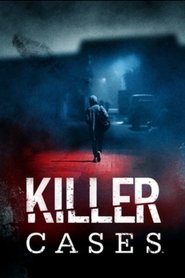
2020
Killer Cases
2020
star 7.8All the emotion, drama and suspense of America's most memorable murder trials are captured. Produced by an Emmy-award winning team, each episode takes viewers through the criminal justice process, from the crime to the investigation to the courtroom testimony and finally, the verdict. It's a journey through the criminal justice process that gives viewers an inside look at real cases like never before.Akui
2001
Akui
2001
Adapted from Keigo Higashino's novel of the same name (Englsih Title: Malice), the TV series explores the complex relationship between a famous novelist found dead and his best friend, under the investigation of Detective Saibara. Set in Osaka, it delves into themes of envy, deceit, and the dark side of human nature, as secrets unravel in a twist-filled plot.Frauds
2025
Frauds
2025
star 5.6Bert and Sam have been living in Spain for the last few years, Sam in the rolling hills and Bert in the slightly less idyllic setting of a prison cell. After a decade behind bars, a cancer diagnosis allows Bert to walk free on compassionate discharge. With only a few weeks to live, she resolves to take on a multi-million-pound art heist that will test her mettle, and prove her worth. Sam reluctantly lets Bert back into her life, and quickly finds herself returning to the life of crime she's tried to leave behind.A Pillow Case of Mystery II
2010
star 7After a radical change in life, Sze Sai-lun becomes dispirited with the political world and spends most of his time travelling around in search of fun. Along the way, he meets a new spirit medium, Ng Kwan-yau, who somehow gets caught up in a mysterious murder case. With fortuitous assistance from the pillow spirit Ngau Tai-lik, he is able to crack the case and prove Kwan-yau’s innocence. Sai-lun has his confidence back and pledges to continue his fight for justice. As time progresses, Sai-lun and Kwan-yau get to know each other better and gradually fall in love. Amidst the various challenges of his new life, Sai-lun realizes that Kwan-yau seems to have something to hide and that there is a malicious plot behind their relationship. Knowing that the couple have fallen out, Sai-lun’s mother has found him a new wife, Luk Siu-tip, who seems to come with ill intentions. Sai-lun is plunged into a complex web of intrigue and things seem to be getting on top of him…Londongrad
2015
Londongrad
2015
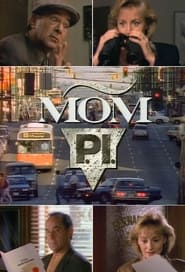
star 6.1Russian comedy detective series centres around a ‘fixing’ agency set up to troubleshoot problems for rich Russians in LondonMom P.I.
1990
Mom P.I.
1990
star 7Mom P.I. is a 1990-92 Canadian television comedy-drama series starring Rosemary Dunsmore, Stuart Margolin, Emily Perkins, and Shane Meier. Dunsmore plays eternal optimist Sally Sullivan, a recently widowed mother of two supporting her family as a waitress in a working-class diner, who talks her way into a job as assistant to grumpy, cynical private eye Bernie Fox, played by The Rockford Files' Margolin. Head writer for the show was Chris Haddock, who later created the much grittier Da Vinci's Inquest and Intelligence, also for the CBC.Reykjavik 112
2025
Reykjavik 112
2025
star 6.3A woman is brutally murdered in front of her young daughter, the sole witness to the crime. The challenging case is assigned to Detective Huldar, who must unravel a web of perplexing clues while dealing with a traumatized child who has been rendered mute. To help unlock the girl's memories, Huldar seeks the expertise of a child psychologist-only to discover it's Freyja, a woman he recently had an awkward date with. Forced to collaborate, Freyja and Huldar must race against time to stop a killer who strikes again and remains perilously close.Kaiketsu Zubat
1977
Kaiketsu Zubat
1977
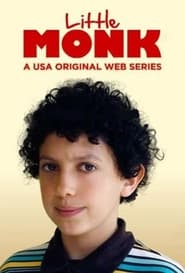
star 7.4Kaiketsu Zubat, translated as Extraordinary Zubat or Magnificent Zubat, was a tokusatsu superhero series that aired in 1977. Created by Shotaro Ishinomori, this 32-episode series, harkens back to tokusatsu superhero shows of the 1950s, but with a late-1970s twist.Little Monk
2009
Little Monk
2009
star 10Monk didn't just become MONK overnight: it took years of emotional trauma, mockery, and bullying to make him the man he is today. But the gift for solving mysteries? That was always there. That and the profound social awkwardness. So if you've ever wondered how Monk's career in crime-solving began – or where that milk phobia originated – prepare to have your questions answered in these brand-new Original Webisodes featuring the adventures of Little Monk and his very first assistant, his big brother Ambrose.Midnight Sun
2016
Midnight Sun
2016
star 7.1Kahina Zadi, 32, a French police officer travels to Kiruna in Sweden to investigate the bestial murder of a French citizen. Together with Anders, a Swedish prosecutor of Sami origin, she begins an investigation. Soon new killings start to happen and the first victim turns out to be the tip of a very dark iceberg. The victims seemingly have nothing in common more than that they are all being killed in a well-planned and vicious manner. In their hunt for the truth, both Kahina and Anders are forced to deal with their own past that they have repressed. A personal journey through a painful past becomes the key to succeed in preventing the violent killings that affects the small mining community of Kiruna.