Popular Crime TV Series on Tub Tv - Page 226
All Services
Free Services
 Netflix
 Amazon Prime Video
 Apple iTunes
 Apple TV Plus
 Disney Plus
 Google Play Movies
 Paramount Plus
 Hulu
Hulu
 HBO Max
 YouTube
 fuboTV
 Peacock
 Peacock Premium
 Amazon Video
 The Roku Channel
 AMC+
AMC on Demand
AMC+
AMC on Demand
 Kocowa
 Hoopla
 The CW
 Vudu
Vudu
 Starz
Starz
 Showtime
 PBS
PBS
 Pantaflix
 FXNow
FXNow
 Tubi TV
 Kanopy
 Comedy Central
 Crunchyroll
 Microsoft Store
 Redbox
 Sun Nxt
 ABC
ABC
 DIRECTV
 Crackle
 Fandor
 Plex
Plex
Netflix
Amazon Prime Video
Apple iTunes
Apple TV Plus
Disney Plus
Google Play Movies
Paramount Plus
Hulu
HBO Max
YouTube
fuboTV
Peacock
Peacock Premium
Amazon Video
The Roku Channel
AMC+
AMC on Demand
Kocowa
Hoopla
The CW
Vudu
Starz
Showtime
PBS
Pantaflix
FXNow
Tubi TV
Kanopy
Comedy Central
Crunchyroll
Microsoft Store
Redbox
Sun Nxt
ABC
DIRECTV
Crackle
Fandor
Plex

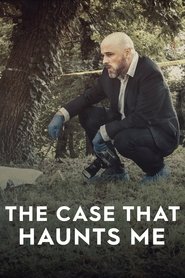
The Case That Haunts Me
2018
star 5.2Detectives recall the career-defining cases that still keep them up at night, from mysterious disappearances to twisted family murders.The Avenging Angel: Caligula
1993
star 7.5Based on the real life incidents of young Peruvian criminal Fernando de Romaña "Caligula", who ran a ring of blackmail, rape, and drugs in Lima during the early 1990s, before being shot to death.Legacy
2023
Legacy
2023
star 5Follows Guy Simmons, a notorious mobster and the patriarch of the Simmons family, the southern underworld's ruling crime family, as he fights for his life, a sibling rivalry erupts, threatening his legacy and criminal enterprise.Place of Execution
2008
Place of Execution
2008
star 7On a freezing December night in 1963, 13-year-old Alison Carter took her dog for a walk and was never seen again. As the entire country watched, newly-promoted Detective Inspector George Bennett turned up enough evidence to see his suspect hanged and was hailed a hero by the people of Scardale. More than four decades later, the lingering cloud left by the missing body of Alison Carter compels controversial filmmaker Catherine Heathcote to turn her camera to Bennett.Magnus
2019
Magnus
2019
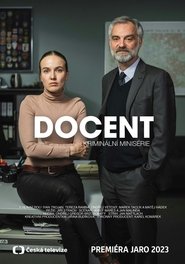
star 6.6Magnus - perhaps the police's worst investigator - is set to solve a murder from another world, and then we mean a completely different world.Docent
2023
案发现场2
2007
案发现场2
2007
Highway Patrol
2009
Highway Patrol
2009
star 7Highway Patrol follows members of the Victoria Police Highway Patrol as they intercept traffic and other criminal offenders on major highways in Victoria, Australia.Viola Tarakanova
2004
Viola Tarakanova
2004
star 4A detective story about the life of a young extravagant person named Viola Tarakanova. Explosions, chases, murders, kidnappings-in short, Viola's life is always on the verge of death... But it's not like Viola didn't like it either. Enthusiastically, taking on each new investigation, she easily unravels the seemingly most unsolvable mysteries, in which her brilliant intuition and undoubted talent help her.Estocolmo
2016
Estocolmo
2016
star 3.6"Stockholm: Lost Identity" narrates over 13 chapters with almost surgical detail the criminal, judicial and media research about the disappearance of a young woman by a network of trafficking. An attorney general, an undercover agent and a journalist will be immersed in a police plot that mixes suspense, drama and action where law and justice are two different sides of the same coin.Munich Games
2022
Munich Games
2022
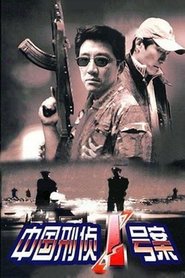
star 6.350 years after the Munich Massacre, Munich is hosting a soccer game between an Israeli and a German football club. When things start to fall apart, it seems history might be repeating all over again.中国刑侦1号案
2002
ホラー アクシデンタル
2013
Unification of Japan: Tokyo Edition
2025
One late night, a masked trio breaks into a house in a wealthy residential area, carefully choosing a time when no one’s home. But just as they’re searching for valuables, the couple—who were supposed to be away on a trip—suddenly returns. Panicking, the robbers make a run for it toward their car. Just then, another vehicle happens to pass nearby…Kiina
2009
Kiina
2009
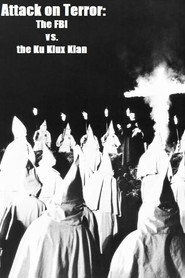
star 7At first glance Haruse Kiina is a completely normal 29-year-old. However, Kiina is the head of a special investigation unit nicknamed "Beppan" which deals with strange cases. With an unorthodox approach to solving crimes, she draws on her exceptional memory and powers of observation, and gets so absorbed in the pursuit of these cases that she forgets to eat or sleep til she solves the mystery.Attack on Terror: The FBI vs. the Ku Klux Klan
1975
After three civil-rights workers are murdered in Mississippi in 1964, a team of FBI agents is sent there to find the killers.Dead End
2019
La hija pródiga
2017
La hija pródiga
2017
La Hija Pródiga begins when the daughter of the Montejo, Alicia, is kidnapped in Acapulco, while her parents are absent for an important business dinner. The girl, who was accompanied by her sister Pamela, is gone, provoking a great sadness in her family for years. Twenty years later, when her family has been able to resume their lives, Alicia reappears at Montejo's house to find answers. This fact will unleash a series of conflicts between the family because Alicia only seeks the truth and in this quest will find love in Salvador, the betrothed of his sister, provoking a love triangle that will lead us to witness the obstacles that Alicia must cross to find out who or who were to blame for his tragedy.Dandelion Dead
1994
Dandelion Dead
1994
star 9This is a dramatisation of the true story of Major Herbert Rowse Armstrong, a solicitor and magistrate's clerk who lived in the small Welsh town of Hay-on-Wye. In 1921 he was arrested and charged with poisoning his domineering wife, Catherine, and later attempting to poison a business rival, Oswald Martin, by administering arsenic to them. At his trial, Armstrong claimed that he had bought the arsenic simply to kill the dandelions on his lawn. However he was convicted of murder and executed in 1922.The Well
2025
The Well
2025
star 7.4The six-part drama directed by Tereza Kopáčová based on a script by Miro Šifra and Kristina Májová returns to a love story that traumatized several generations of Czechoslovaks. What preceded the infamous family tragedy of 1968? What followed it? Where can disrupted relationships in a closed rural community lead? What do we take with us as an inner legacy from our parents?