Popular Documentary TV Series on Tub Tv - Page 25
All Services
Free Services
 Netflix
 Amazon Prime Video
 Apple iTunes
 Apple TV Plus
 Disney Plus
 Google Play Movies
 Paramount Plus
 Hulu
Hulu
 HBO Max
 YouTube
 fuboTV
 Peacock
 Peacock Premium
 Amazon Video
 The Roku Channel
 AMC+
AMC on Demand
AMC+
AMC on Demand
 Kocowa
 Hoopla
 The CW
 Vudu
Vudu
 Starz
Starz
 Showtime
 PBS
PBS
 Pantaflix
 FXNow
FXNow
 Tubi TV
 Kanopy
 Comedy Central
 Crunchyroll
 Microsoft Store
 Redbox
 Sun Nxt
 ABC
ABC
 DIRECTV
 Crackle
 Fandor
 Plex
Plex
Netflix
Amazon Prime Video
Apple iTunes
Apple TV Plus
Disney Plus
Google Play Movies
Paramount Plus
Hulu
HBO Max
YouTube
fuboTV
Peacock
Peacock Premium
Amazon Video
The Roku Channel
AMC+
AMC on Demand
Kocowa
Hoopla
The CW
Vudu
Starz
Showtime
PBS
Pantaflix
FXNow
Tubi TV
Kanopy
Comedy Central
Crunchyroll
Microsoft Store
Redbox
Sun Nxt
ABC
DIRECTV
Crackle
Fandor
Plex

Meerkat Manor
2005
Meerkat Manor
2005
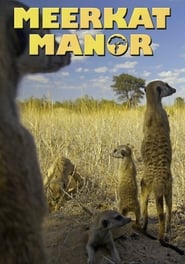
star 7.6Meerkat Manor is a British television programme produced by Oxford Scientific Films for Animal Planet International that premiered in September 2005 and ran for four series until its cancellation in August 2008. Blending more traditional animal documentary style footage with dramatic narration, the series told the story of the Whiskers, one of more than a dozen families of meerkats in the Kalahari Desert being studied as part of the Kalahari Meerkat Project, a long-term field study into the ecological causes and evolutionary consequences of the cooperative nature of meerkats. The original programme was narrated by Bill Nighy, with the narration redubbed by Mike Goldman for the Australian airings and Sean Astin for the American broadcasts. The fourth series, subtitled The Next Generation, saw Stockard Channing replacing Astin as the narrator in the American dubbing.MeatEater
2012
MeatEater
2012
star 8.1Hunter, author, cook and conservationist Steven Rinella treks into the world's most remote, beautiful regions, bringing game meat from field to table.Rétro Découverte
2016
Seven Worlds, One Planet
2019
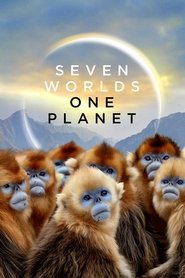
star 8.5Millions of years ago, incredible forces ripped apart the Earth’s crust creating seven extraordinary continents. This documentary series reveals how each distinct continent has shaped the unique animal life found there.Guided Tour
2014
Guided Tour
2014
Guided Tour is a television and radio program about the treasures of the Portuguese cultural heritage. Treasures with recognized universal value, pieces that any western country would be proud to integrate into its heritage, and little known to the Portuguese. From a silver goblet with Mozarabic decoration and a thousand years old to a cloister that is referred to as a masterpiece of European Renaissance, passing through a collection of African art classified as one of the best in the world, the nature of objects, their context geographic location and historical time vary from episode to episode.Pet Star
2002
Pet Star
2002
star 7.9Pet Star was a show on Animal Planet hosted by Mario Lopez. The show is a contest between owners and their trained pets who perform tricks. The tricks are graded by three celebrity judges on a scale of one to 10. In the end, the three pets with the highest score come out as finalists, and the audience votes on who is the episode's Pet Star. Then, at the end of the season, the winners compete to be the year's ULTIMATE PET STAR. The winner of a regular show gets $2,500, while the winner of the finals gets $25,000. There were many celebrity judges, including Gena Lee Nolin, Virginia Madsen, Will Estes, Lindsay Wagner, Matt Gallant, Mackenzie Phillips, Billy West, James Avery, George Wallace, Melissa Peterman, Christopher Rich, John O'Hurley, Vanessa Lengies, Dom Irrera, Carol Leifer, Andy Kindler, Melissa Rivers, Meshach Taylor, Kaley Cuoco, Rosa Blasi, Jeff Cesario, Karri Turner, Peter Scolari, Bruce Jenner, Fred Willard, Shari Belafonte, Josh Meyers, Lori Petty, Ben Stein, Richard Jeni, Ken Howard, Paul Gilmartin,Planet Earth II
2016
Planet Earth II
2016
star 8.6David Attenborough presents a documentary series exploring how animals meet the challenges of surviving in the most iconic habitats on earth.Typisch
2008
Typisch
2008
Barnwood Builders
2013
Barnwood Builders
2013
star 6.8Mark Bowe and his crew of West Virginia master craftsmen salvage antique barns and cabins, reusing the wood to create stunning, modern homes. The Barnwood Builders are devoted to salvaging and will stop at nothing to give 200-year-old structures new life, providing entertainment, inspiration and awe along the way.Seitenblicke
1987
Som Brasil
1981
Aktueller Bericht
2010
Aktueller Bericht
2010
Happy Traveller
2015
Happy Traveller
2015
star 7A unique travel show that combines selfie filming, POV, drone, social media interaction and more other nowadays filming approaches.Thinkerview
2013
Thinkerview
2013
In Search of...
1977
In Search of...
1977
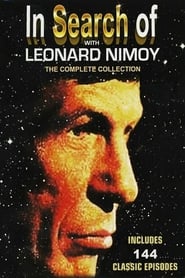
star 8.2In Search of... is a TV series that was broadcast weekly from 1977 to 1982, devoted to mysterious phenomena. It was created after the success of three one-hour TV documentaries produced by creator Alan Landsburg: In Search of Ancient Astronauts in 1973, In Search of Ancient Mysteries and The Outer Space Connection, both in 1975. All three featured narration by Rod Serling, who was the initial choice to host the spin-off show. After Serling's death, Leonard Nimoy was selected to be the host.역전다방
2021
역전다방
2021
The Philosophy of Science
2026
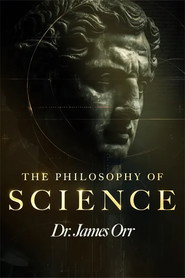
In The Philosophy of Science, an eight-hour course, Dr. James Orr traces the development of science from ancient Greece through the Scientific Revolution to today. He examines how theological, institutional, and philosophical forces shaped science, while tackling key issues like the demarcation problem of science versus pseudoscience, Hume’s problem of induction, Kuhn’s theory of paradigm shifts, and the realism debate. The course also engages fascinating unresolved questions raised by cosmology, neuroscience, and quantum mechanics, ultimately arguing that scientific progress does not eliminate philosophical inquiry but rather deepens it, revealing new mysteries that demand philosophical analysis.Is It OK If We Follow You Home?
2014
In Tokyo, after midnight, many people wander around without destinations. Some were partying, some were working late, and some were just too drunk to catch the train on time. What happens if a camera crew suddenly asks them to let a camera follow them home in exchange of paying the taxi fare? There is no time for preparation for the interviewee. The camera documents their house just as it is. Some starts to talk about their previous dream by showing photo albums. Some start to confess their gratefulness towards their wife in the middle of the night. Why not discover how people react when a TV crew suddenly visits their home after midnight.The Universe
2007
The Universe
2007
star 8From the planets to the stars and out to the edge of the unknown, history and science collide in a wondrous yet deadly adventure through space and time.Rise of Empires: Ottoman
2020
star 7.5Ottoman Sultan Mehmed II wages an epic campaign to take the Byzantine capital of Constantinople and shapes the course of history for centuries.