Popular Reality TV Series on Tub Tv - Page 294
All Services
Free Services
 Netflix
 Amazon Prime Video
 Apple iTunes
 Apple TV Plus
 Disney Plus
 Google Play Movies
 Paramount Plus
 Hulu
Hulu
 HBO Max
 YouTube
 fuboTV
 Peacock
 Peacock Premium
 Amazon Video
 The Roku Channel
 AMC+
AMC on Demand
AMC+
AMC on Demand
 Kocowa
 Hoopla
 The CW
 Vudu
Vudu
 Starz
Starz
 Showtime
 PBS
PBS
 Pantaflix
 FXNow
FXNow
 Tubi TV
 Kanopy
 Comedy Central
 Crunchyroll
 Microsoft Store
 Redbox
 Sun Nxt
 ABC
ABC
 DIRECTV
 Crackle
 Fandor
 Plex
Plex
Netflix
Amazon Prime Video
Apple iTunes
Apple TV Plus
Disney Plus
Google Play Movies
Paramount Plus
Hulu
HBO Max
YouTube
fuboTV
Peacock
Peacock Premium
Amazon Video
The Roku Channel
AMC+
AMC on Demand
Kocowa
Hoopla
The CW
Vudu
Starz
Showtime
PBS
Pantaflix
FXNow
Tubi TV
Kanopy
Comedy Central
Crunchyroll
Microsoft Store
Redbox
Sun Nxt
ABC
DIRECTV
Crackle
Fandor
Plex

Love in the Moonlight
2016
star 7A young Joseon woman who's lived her whole life as a man ends up as a eunuch in the royal palace, where she begins to bond with the crown prince.City on a Hill
2019
City on a Hill
2019
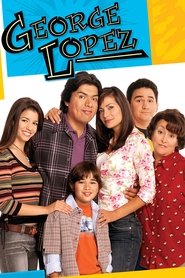
star 7.3In early 90s Boston, an African-American District Attorney comes in from Brooklyn advocating change and forms an unlikely alliance with a corrupt yet venerated FBI veteran invested in maintaining the status quo. Together they take on a family of armored car robbers from Charlestown in a case that grows to encompass and eventually upend Boston’s city-wide criminal justice system.George Lopez
2002
George Lopez
2002
star 7.5George raises daughter Carmen and dyslexic son Max with his wife Angie, after surviving a miserable, dysfunctional childhood at the hands of his neglectful alcoholic mother Benny.Full House
2023
Full House
2023
star 8.2When Ahmed, a plastic surgeon, and Laila, the owner of a cosmetics project, meet, they soon fall in love with each other, but their different family circumstances stand in the way of their relationship, but they decide to get married and defy the circumstances.Transformers: Robots In Disguise
2015
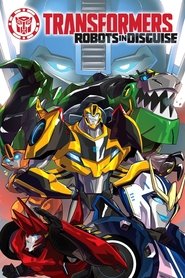
star 7Years after the events of Predacons Rising, Bumblebee is summoned back to Earth to battle several of Cybertron's most wanted Decepticons that escaped from a crashed prison ship and assembles a team of young Autobots that includes Sideswipe (a rebel "bad boy bot"), Strongarm (an Elite Guard cadet), Grimlock (a bombastic Dinobot), and Fixit (a hyperactive Mini-Con with faulty wiring).Chibi Godzilla Raids Again
2023
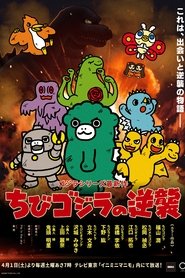
star 7.5Welcome back, Chibi Godzilla! Everyone’s favorite little monster has made its return with the new anime series Chibi Godzilla Raids Again!Perla
1998
Perla
1998
star 3.2Perla is a Mexican telenovela produced by TV Azteca and it starred Silvia Navarro and Leonardo Garcia as protagonists.Bitten
2014
Bitten
2014
star 7.2Elena Micheals thought she left the world of supernatural behind when she left Stonehaven behind 'for good this time' she thought. Until the night she got the mysterious call from her pack leader asking her to come back. So now she is heading back, leaving her life as a normal photographer in Toronto for the moment to re-enter the world of werewolves, rules about protect the pack and a man she has spent years trying to get out of her system. Oh and did she mention she was the only living female werewolf in existence?Shagun
2001
Shagun
2001
Shagun was a Hindi language daily Indian soap opera that was telecast on STAR Plus. It was story of fortune's twists and pitfalls that tear asunder the lives of two cousins tied together by a bond stronger than that of blood - the bond of love.Baby and Me
1996
Baby and Me
1996
star 8.4Young Takuya has it tough. After his mother passed away it has been his job to take care of his baby brother, Minoru while their father, Harumi, works the long hours of a Japanese salaryman. Takuya must sacrifice the playtime usually associated with childhood for the responsibilities of an adult. Cooking, cleaning, sewing and scolding are all now an integral part of the young boy's life. "All work and no play" has Takuya incredibly frustrated and resentful of his little brother. Will Takuya find it in his heart to love the brother who is causing him so much grief?Men at Work
2012
Men at Work
2012
star 6.6Men at Work is an American comedy series that airs on TBS. The series was created by Breckin Meyer and stars Danny Masterson, Michael Cassidy, Adam Busch, James Lesure and Meredith Hagner. The series premiered on May 24, 2012 at 10 pm. TBS second season premiered on April 4, 2013 with another 10 episode season.Dance in the Vampire Bund
2010
star 6.6Mina Tepeş, the Princess of the ancient covenant and ruler of all vampires, wants her race to stop hiding from the humans. Using her vast wealth, she has paid off Japan's entire national debt and by doing so, gained the right to create a district off Japan's coast that is to become the future haven to vampires worldwide. But when she finally attempts to make public the existence of vampires to the world some politicians, terrorists and rival factions are plotting to assassinate Mina before she has a chance to get Japan's and international recognition for the Vampire Bund. Now she must rely on her strength, cruelty and those closest to her, while trying to make a normal life.Border of Worlds
2025
Border of Worlds
2025
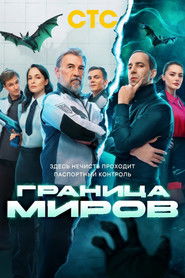
star 7.8After meeting a vampire, the Shilov brothers discover superpowers in themselves. Sergey and Lyokha learn that in the city building of the research institute there is a portal between the worlds of people and evil spirits, which periodically drop in to visit. Werewolves, witches, mermaids and other "tourists" from the dark world are looked after by employees of the secret organization "Border of Worlds"Tieta
1989
Tieta
1989
star 8.2Inspired on Jorge Amado's romance "Tieta do Agreste", the plot is set on the fictional city of Santana do Agreste, at Brazil's northwest, and has as main theme Tieta's life turnarounds. Twenty-five years after being chased out of town by her father Zé Esteves, she returns to her home town seeking revenge against everyone who mistreated her and laugh at her face in the past.Wacky Races
2017
Wacky Races
2017
star 5.1Wacky Races (2017) is a reboot of the classic 1968 Hanna-Barbera animated series, bringing a fresh, modern take on the original premise while retaining much of the core essence that made the original show so beloved. The 2017 version, created by Warner Bros. Animation, aired on the Boomerang network and introduced a new generation to the zany, high-speed races of the characters. In this updated series, the characters from the original Wacky Races return, but with a more contemporary style and new backstories. The vehicles are also revamped with more advanced technology and a few new additions to the roster, though the classic ones like Dick Dastardly’s Mean Machine and Penelope Pitstop’s Compact Pussycat are still present.Kids' Choice Awards
1987
Kids' Choice Awards
1987
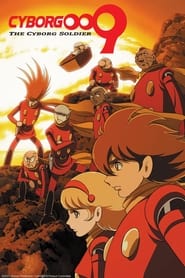
star 8.8Honoring the year's biggest in television, film, music, and sports as voted by viewers worldwide of Nickelodeon networks. Winners receive a hollow orange blimp figurine which also functions as a kaleidoscope.Cyborg 009
2001
Cyborg 009
2001
star 8.3Nine super-powered cyborg soldiers join forces to combat Black Ghost, the terrorist organization which they were originally created to serve.For the Sake of the Republic
2003
star 9.3Towards the Republic, also known as For the Sake of the Republic and Zou Xiang Gong He, is a Chinese historical television series first broadcast on CCTV in China from April to May 2003. The series is based on events that occurred in China between the late 19th century and early 20th century that led to the collapse of the Qing Dynasty and the founding of the Republic of China. Owing to its portrayal of historical issues deemed politically sensitive by the Chinese government, the series has been subject to censorship in mainland China.I Parry Everything
2024
I Parry Everything
2024
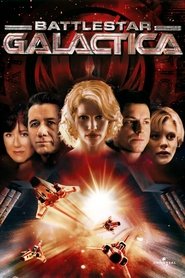
star 7.8Noor's dead set on becoming an adventurer, even if the only skills he possesses are useless ones. Sure, he can [Parry] thousands of swords in the span of a single breath, but you need more than that if you want to be an adventurer! Right?Battlestar Galactica
2003
Battlestar Galactica
2003
star 8.2A re-imagining of the original series in which a "rag-tag fugitive fleet" of the last remnants of mankind flees pursuing robots while simultaneously searching for their true home, Earth.