Top Rated Kids TV Series - Page 109
All Services
Free Services
 Netflix
 Amazon Prime Video
 Apple iTunes
 Apple TV Plus
 Disney Plus
 Google Play Movies
 Paramount Plus
 Hulu
Hulu
 HBO Max
 YouTube
 fuboTV
 Peacock
 Peacock Premium
 Amazon Video
 The Roku Channel
 AMC+
AMC on Demand
AMC+
AMC on Demand
 Kocowa
 Hoopla
 The CW
 Vudu
Vudu
 Starz
Starz
 Showtime
 PBS
PBS
 Pantaflix
 FXNow
FXNow
 Tubi TV
 Kanopy
 Comedy Central
 Crunchyroll
 Microsoft Store
 Redbox
 Sun Nxt
 ABC
ABC
 DIRECTV
 Crackle
 Fandor
 Plex
Plex
Netflix
Amazon Prime Video
Apple iTunes
Apple TV Plus
Disney Plus
Google Play Movies
Paramount Plus
Hulu
HBO Max
YouTube
fuboTV
Peacock
Peacock Premium
Amazon Video
The Roku Channel
AMC+
AMC on Demand
Kocowa
Hoopla
The CW
Vudu
Starz
Showtime
PBS
Pantaflix
FXNow
Tubi TV
Kanopy
Comedy Central
Crunchyroll
Microsoft Store
Redbox
Sun Nxt
ABC
DIRECTV
Crackle
Fandor
Plex

Riding High
1995
Riding High
1995
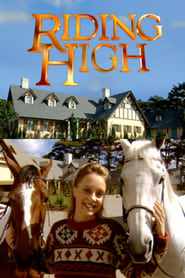
star 8.3Fifteen-year-old Wendy lives at Lindentree, a riding school and horse stud, with her parents Charles and Helen. Mad about horses and fiercely devoted to family and friends, Wendy's life primarily revolves around winning a place on the national junior show jumping team, and saving Lindentree from outside forces.Pita Ten
2002
Pita Ten
2002
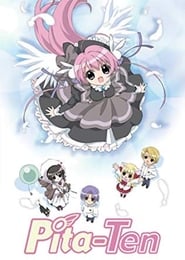
star 7Kotarou starts out as pretty much your usual kid although he lives alone with his father, which forces him to take over some of the chores at home, such as cooking and cleaning. But what starts out as a usual morning changes drastically as he opens his front door to be confronted by a girl named Misha dressed in a voluminous dress and a tendency to shout rather than speak. Kotarou attempts to escape, but this new next-door neighbour is quite persistent... this is the beginning of Misha's stalking of Kotarou. Even though she is a Junior High School student she has chosen Kotarou as her victim and hounds him all day long.Thomas & Senior
1985
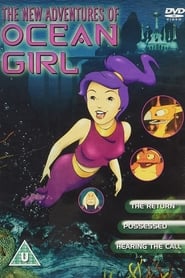
The New Adventures of Ocean Girl
2000
star 8.3The New Adventures of Ocean Girl is an Australian animated television series inspired by the 1994 series Ocean Girl.The Gingerbread Man
1992
The Gingerbread Man
1992
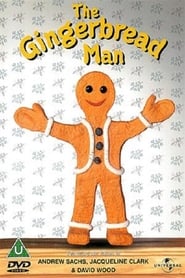
star 7The Gingerbread Man is a stop motion animated children's television series about a gingerbread man and his friends, who come to life in their kitchen home when the people are asleep. The series was written by David Wood, adapted from his two-act musical play The Gingerbread Man, which premiered in 1976 at the Towngate Theatre in Basildon, Essex, and went on to great international success. The play is inspired by "The Gingerbread Man", a 19th-century fairy tale. The screen adaptation was co-produced by FilmFair and Central Independent Television in 1991, and broadcast on ITV On September 24 1992.At 5:40pm Andrew Sachs voiced the roles of the Gingerbread Man, Salt the Sailor, and Herr von Cuckoo. Jacqueline Clarke voiced Miss Pepper.Onegai My Melody
2005
Onegai My Melody
2005
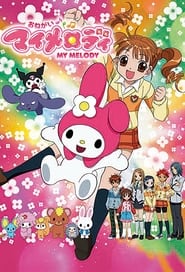
star 6.5My Melody arrives on Earth much to the surprise of her rivals, Kuromi and Baku. Together with one of the junior high school students, Yumeno Uta, they decide to protect the dreams of the people with the help of magic.Dog House
1990
Dog House
1990
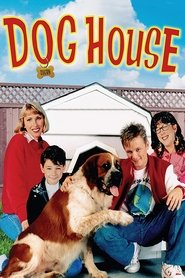
star 6.3Digby is in the Dog House - literally - and none too thrilled about it. Why should he be? After all, he is a police detective, or was... until a car accident transported his brain, voice and personality into Spot the dog. Digby makes for one wisecracking, opinionated St. Bernard who has a unique perspective on humans.Michel Vaillant
1989
Michel Vaillant
1989
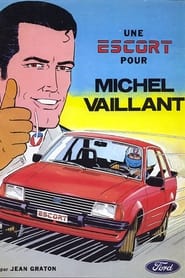
star 8.3In 1967, French TV broadcast a dramatised adaptation of the series, Les Aventures de Michel Vaillant. 13 episodes in total, it featured stories written and filmed around the real life World Sportscar Championship, documenting Henri Grandsire driving an Alpine 110, interspersed with dramatic interludes acted by Grandsire himself. Episodes offer close up rare contemporary footage of races and cars that year at the Rallye Du Nord, Magny Cours, Nürburgring, Monza, Targa Florio, Le Mans, Monaco, Rouen-Les-Essarts, Sebring and Reims.Electroid Zaborger 7
1974
Electroid Zaborger 7
1974
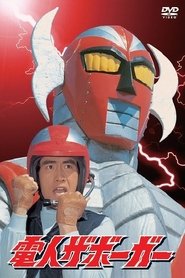
star 9Denjin Zaborger, translated as Electroid Zaborger 7, was a Japanese tokusatsu television series that aired in 1974, produced by P Productions, it was their last Tokusatsu series of the 1970s. Denjin Zaborger stars Akira Yamaguchi as secret agent Yutaka Daimon. The robot Denjin Zaborger has no personality at all, its Akira Yamaguchi as the wild warrior Yutaka Daimon who gives the series its heart. A movie remake titled Karate-Robo Zaborgar was released in 2011.The Secret City
1985
The Secret City
1985
star 6The Secret City was a television program designed to teach children how to draw, starring Mark Kistler as as the fictional ‘Commander Mark’ who led viewers and in-studio club members through various drawing exercises in a sci-fi clubhouse setting full of fun, fantasy, and adventure. While the show’s format essentially prioritizes instruction over narrative, ongoing ‘drama’ is created by the frequent addition of new key features to the emerging scenery of the giant Secret City mural. Often Special Guests would appear on the show to demonstrate other art forms or practical applications for drawing skills. The show was created by John Price & Mark Kistler, based on Bruce McIntyre's AVDP. Much of the series was edited live in-camera and was shot in a somewhat semi-scripted format. It was produced at Maryland Public Television through private funding by Children's Video Associates, and intended for broadcast via national PBS syndication. It also aired on TVOntario.Tractor Tom
2002
Tractor Tom
2002
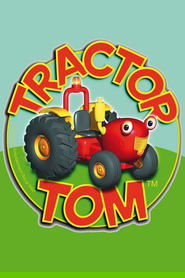
star 7Tractor Tom has adventures on Fi's farm with his friends, Dusty, Matt, Buzz, Wheezy and others.Watt on Earth
1991
Watt on Earth
1991
star 7Watt on Earth is a children's television programme that ran for two 12-episode series, shown as part of Children's BBC. Watt is an alien prince who comes to Earth to escape his evil uncle, who wants to kill him. He befriends a boy named Sean, who helps him hide from the assassin sent by his uncle.Sooty
2011
Sooty
2011
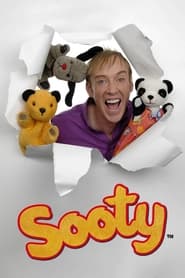
star 7.5The fifth incarnation of 'The Sooty Show' sees Richard, Sooty, Sweep and Soo start a new job as handymen at a seaside holiday park.Girlstuff/Boystuff
2002
Girlstuff/Boystuff
2002
star 4Girlstuff/Boystuff eavesdrops on six young teens who have been friends forever, three girls - Reanne, Talia and Hannah and three boys - Jason, Simon and Ben. The gang is always there for each other, to keep it real, to tease and to be there for when life sucks.Elliot Moose
1999
Elliot Moose
1999
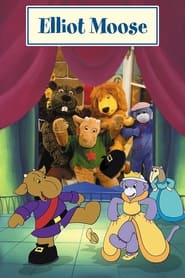
star 7Elliot Moose is a Canadian children's live-action and animated series which was aired on TVOntario in Canada and PBS in the United States as part of the PBS Kids Bookworm Bunch until it was cancelled. Currently, the series airs on the TV station Qubo in the United States. Based on a series of children's books by Andrea Beck, its 104 episodes show the adventures of a young moose named Elliot who lives in a place called "The Big House", and shares adventures while having lots of fun with his friends; Beaverton, Lionel, Socks, and Paisley. The series was produced by Nelvana, then later on Corus Entertainment. The series was developed by Jed MacKay and produced by Marianne Culbert. The series was unique in that half of the stories were animated, and half were live action; reflecting children's real world of play and their imaginary world. The music was composed by Bruce Ley and Jed MacKay.Henry's Amazing Animals
1996
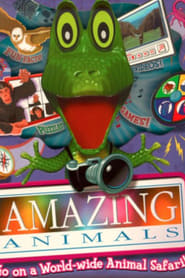
star 7.7Henry's Amazing Animals is an educational children's nature program produced by Dorling Kindersley and originally broadcast on the Disney Channel in 1996. The show centres around the interactions of Henry the Lizard, a green CGI gecko with purple spots, and an unseen narrator. Each episode centers on a theme relating to the episode's subject matter, such as Henry traveling through prehistory in a time machine in an episode about Prehistoric Animals. Henry is usually faced with some kind of predicament or task related to the episode's theme, which he resolves by the end of the episode, often learning a lesson of some sort in the process.CityKids
1993
CityKids
1993
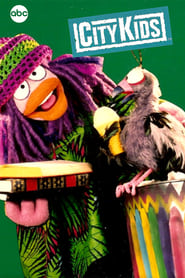
star 5.7CityKids was a television series that aired Saturday mornings on ABC from 1993 to 1994, primarily targeted to a teenage audience. The show consisted primarily of live action performances, interspersed with Muppet segments, courtesy of Jim Henson Productions. The Muppets included original characters designed specifically for the show, serving as a Greek chorus and commenting on the situations of the human characters, but not actually interacting with them. The show's theme song was composed by Malik Yoba &and Raliegh J. Neal II. The duo also composed other songs for the series and served as musical creative supervisors.PythagoraSwitch
2002
PythagoraSwitch
2002
star 7.7PythagoraSwitch is a 15-minute Japanese educational television program by NHK which aired since 2002. It encourages augmenting children's "way of thinking" under the supervision of Masahiko Satō and Masumi Uchino. A five-minute format called PythagoraSwitch Mini is also available. During the beginning, ending, and between each corner, there are Pythagorean Devices. Pythagorean Devices are known in the US as "Rube Goldberg machines", or in Great Britain as "Heath Robinson" contraptions. The main focus of the program is a puppet show, but the subject is mainly advanced by the small corners. World phenomena, principles, characteristics, and the like are introduced in an entertaining way. At the end of each segment "Pitagora Suitchi" is sung as a kind of punchline.The Wayne Manifesto
1997
The Wayne Manifesto
1997
star 7The Wayne Manifesto is an Australian children's television series that aired on the ABC in 1996. Based on the children's books by David McRobbie, it is centred around the life 12-year-old Wayne Wilson, showing the world both as the way he would like it and the way it really is. Filmed in Brisbane, Australia, it aired most weekdays in the afternoon at 4pm on the ABC.