Top Rated Talkshow TV Series - Page 123
All Services
Free Services
 Netflix
 Amazon Prime Video
 Apple iTunes
 Apple TV Plus
 Disney Plus
 Google Play Movies
 Paramount Plus
 Hulu
Hulu
 HBO Max
 YouTube
 fuboTV
 Peacock
 Peacock Premium
 Amazon Video
 The Roku Channel
 AMC+
AMC on Demand
AMC+
AMC on Demand
 Kocowa
 Hoopla
 The CW
 Vudu
Vudu
 Starz
Starz
 Showtime
 PBS
PBS
 Pantaflix
 FXNow
FXNow
 Tubi TV
 Kanopy
 Comedy Central
 Crunchyroll
 Microsoft Store
 Redbox
 Sun Nxt
 ABC
ABC
 DIRECTV
 Crackle
 Fandor
 Plex
Plex
Netflix
Amazon Prime Video
Apple iTunes
Apple TV Plus
Disney Plus
Google Play Movies
Paramount Plus
Hulu
HBO Max
YouTube
fuboTV
Peacock
Peacock Premium
Amazon Video
The Roku Channel
AMC+
AMC on Demand
Kocowa
Hoopla
The CW
Vudu
Starz
Showtime
PBS
Pantaflix
FXNow
Tubi TV
Kanopy
Comedy Central
Crunchyroll
Microsoft Store
Redbox
Sun Nxt
ABC
DIRECTV
Crackle
Fandor
Plex

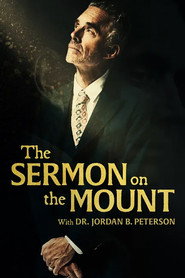
The Sermon on the Mount
2026
In The Sermon on the Mount, an eight-hour course, Dr. Jordan Peterson explores the profound wisdom and symbolism embedded in this foundational biblical text, highlighting the transformative power of living by Christ-like principles. He offers a deep dive into key passages, such as the Beatitudes and the Lord’s Prayer, emphasizing the importance of humility, self-reflection, and the pursuit of meaning when facing life’s challenges. Throughout the lectures, Dr. Peterson masterfully integrates biblical narratives, Jungian psychology, and personal stories, illustrating the enduring relevance of these teachings for navigating the complexities of the human experience.Geen Filter
2024
Geen Filter
2024
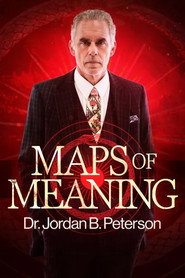
Maps of Meaning
2025
Maps of Meaning
2025
In Maps of Meaning, a twelve-hour course, Dr. Jordan B. Peterson explores the foundations of human consciousness, perception, and the pursuit of meaning. Drawing from psychology, mythology, and neuroscience, he examines how we navigate the tension between order and chaos—not as passive observers, but as active participants guided by goals and values. Central to this exploration is the archetypal hero’s journey, which shows how voluntarily confronting suffering and taking responsibility can transform both the individual and society. Grounded in decades of research and personal experience, Dr. Peterson reveals how religious symbols, archetypal narratives, and social hierarchies shape both the individual mind and collective culture. Through powerful insights, the course demonstrates that proper orientation toward the highest good enables us to transform chaos into meaningful order.The Philosophy of Science
2026
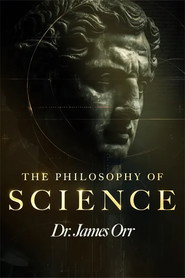
In The Philosophy of Science, an eight-hour course, Dr. James Orr traces the development of science from ancient Greece through the Scientific Revolution to today. He examines how theological, institutional, and philosophical forces shaped science, while tackling key issues like the demarcation problem of science versus pseudoscience, Hume’s problem of induction, Kuhn’s theory of paradigm shifts, and the realism debate. The course also engages fascinating unresolved questions raised by cosmology, neuroscience, and quantum mechanics, ultimately arguing that scientific progress does not eliminate philosophical inquiry but rather deepens it, revealing new mysteries that demand philosophical analysis.Monetary Theory
2026
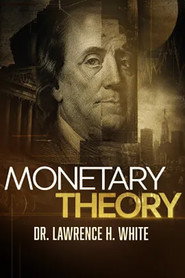
Monetary Theory
2026
In Monetary Theory, a nine-hour course, Dr. Lawrence White explores the debate between market-based and government-controlled monetary systems, combining theory with historical evidence from gold standards to modern fiat currencies. We examine how money can emerge through market forces, the mechanics of fractional-reserve banking, and how central banks influence inflation. The course also addresses banking stability, market failure arguments, and the causes of inflation, including seigniorage. It concludes by evaluating monetary policy rules, inflation targeting, and alternatives like Bitcoin, and asks whether sound money requires commodity backing or if proper institutional design can achieve stability in fiat systems.Intro to Nietzsche
2026
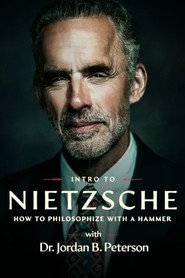
Intro to Nietzsche
2026
In Introduction to Nietzsche, an eight-hour course, Dr. Peterson embarks on a deep exploration of the life, philosophy, and enduring influence of Friedrich Nietzsche. Set against the backdrop of the late 19th century, we examine how Nietzsche's ideas challenged traditional moral and philosophical foundations, paving the way for new perspectives on the human condition. The course delves into key concepts such as the will to power, the critique of truth and morality, and the affirmation of life in the face of nihilism, while also exploring Nietzsche's complex relationship with religion, academia, and the works of other thinkers. Ultimately, we are invited to confront uncomfortable realities, embrace necessary struggles, and cultivate the courage and gratitude needed to realize our full potential.백앤아 고고프렌즈
2024
백앤아 고고프렌즈
2024
TASTE
2026
TASTE
2026
What is Olivia Rodrigo's new album really about, and why is purple her signature color? Why do some artists choose to go through life masked? And did you know that two members of BTS are returning after two years of military service, but isn't Stray Kids simply *the* K-pop act of today? And as a fan, how do you know what fan activities are expected of you at a Taylor Swift concert?Pfarrer Franz Brei
2022
Pfarrer Franz Brei
2022
K푸드트립 우리 지금 맛남
2026
K푸드트립 우리 지금 맛남
2026
五十六年家国 ─ 李敖神州文化之旅全纪录
2005
五十六年家国 ─ 李敖神州文化之旅全纪录
2005
The GLORY Story
2025
The GLORY Story
2025
Lifegoals
2025
Lifegoals
2025
HNM De Podcast
2025
HNM De Podcast
2025
From now on, you can hear and see Hélène Hendriks, Noa Vahle, and Merel Ek weekly in HNM De Podcast: the show where TV, sports, and politics come together.福祿壽大假光臨
2011
福祿壽大假光臨
2011
Grandios
2024
Grandios
2024