Top Rated Family TV Series on Pantaflix - Page 65
All Services
Free Services
 Netflix
 Amazon Prime Video
 Apple iTunes
 Apple TV Plus
 Disney Plus
 Google Play Movies
 Paramount Plus
 Hulu
Hulu
 HBO Max
 YouTube
 fuboTV
 Peacock
 Peacock Premium
 Amazon Video
 The Roku Channel
 AMC+
AMC on Demand
AMC+
AMC on Demand
 Kocowa
 Hoopla
 The CW
 Vudu
Vudu
 Starz
Starz
 Showtime
 PBS
PBS
 Pantaflix
 FXNow
FXNow
 Tubi TV
 Kanopy
 Comedy Central
 Crunchyroll
 Microsoft Store
 Redbox
 Sun Nxt
 ABC
ABC
 DIRECTV
 Crackle
 Fandor
 Plex
Plex
Netflix
Amazon Prime Video
Apple iTunes
Apple TV Plus
Disney Plus
Google Play Movies
Paramount Plus
Hulu
HBO Max
YouTube
fuboTV
Peacock
Peacock Premium
Amazon Video
The Roku Channel
AMC+
AMC on Demand
Kocowa
Hoopla
The CW
Vudu
Starz
Showtime
PBS
Pantaflix
FXNow
Tubi TV
Kanopy
Comedy Central
Crunchyroll
Microsoft Store
Redbox
Sun Nxt
ABC
DIRECTV
Crackle
Fandor
Plex

Génial!
2010
Génial!
2010
star 2.9Two teams composed of a known personality and a contestant chosen from the public battle to guess the outcomes of astonishing scientific experiments.Hank Zipzer
2014
Hank Zipzer
2014
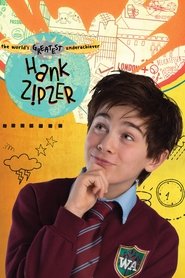
star 7.412-year-old Henry ‘Hank’ Zipzer is a smart and resourceful boy with a unique perspective on the world. Hank has dyslexia, and when problems arise, he deals with them in a way no-one else would – putting him on a direct collision course with his teachers and parents, who don’t seem to appreciate his latest scheme as much as he thought they would... But, Hank always remains positive and convinced that the next big plan will deliver – after all, tomorrow is another day!Gumus
2005
Gumus
2005
star 7.7After the apparent death of his girlfriend, Mehmet Sadoglu is encouraged by his parents to marry Gümüs, a simple girl...Back to 1989
2016
Back to 1989
2016
star 8A young successful young man has always felt something missing in his life because he never knew his father. At 26, Che Chen is already a successful assistant manager for an investment trust. But he was raised by his single mother Chen Mu and never knew the identity of his father, and that void has been nagging at him. But a freak accident sends Che back 27 years into the past, to the year before he was born. When he meets 22-year-old Zhen Zhen Ye, Che realizes that this naïve and trusting young woman is his mother's best friend! When Che realizes that anything he does in the year 1989 could alter his mother’s future, will he do anything to alter the course of his own life?We're Millennials. Got a Problem?
2016
star 8.1Drama series depicts the lives of three men born in 1987 and oppose irrational things of the world through work, love, and friendship. The men are from the "yutori generation", when the Japanese government reformed the education system, emphasizing a pressure-free environment referred to as yutori education.Code Lyoko: Evolution
2013
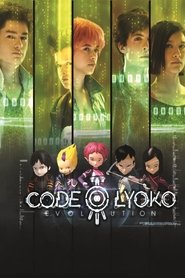
star 6Jérémie, Aelita, Yumi, Ulrich, Odd and William return to their daily lives as students of Kadic College. But XANA, the multi-agent program that had become their mortal enemy and that they had managed to destroy in their previous adventures, reappears. The Lyoko Warriors reactivate the supercomputer in order to return to Lyoko, discover the reasons for this reappearance and put an end to it before the Earth is threatened again.Love in Her Bag
2013
Love in Her Bag
2013
star 7Despite her poverty and lack of education or connections, bright and plucky Eun Jung-soo works her way up in the luxury handbag industry based on sheer talent alone. She encounters Do Jin-hoo, the smart and handsome chaebol heir of a fashion company, and Kim Seo-hyun who has to hide her true identity in order to achieve her dreams.Wer weiß denn sowas?
2015
Beş Kardeş
2015
De Slimste Mens ter Wereld
2003
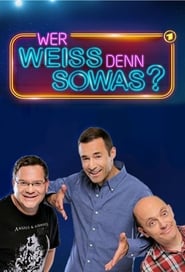
star 7.7Do we still sing the praises of folly like Erasmus, or is it trendy again to be smart? And if so, who is the smartest? Who can talk about the medals won at the Olympic Games in London, but at the same time knows who Captain Haddock is? Who knows whether Lacan was a hair growth product or a psychoanalyst and can also program their own digital television? Who has déjà vu when leafing through the Encyclopedia Britannica and when reading the interviews with the new Miss Waregem Koerse? Who, oh who, is the smartest person in Flanders, Belgium, Europe, and by extension, the world? That is determined by a fierce battle between three fellow human beings. Every day, someone is eliminated, someone who may not be the smartest, but who is perhaps cherished in their family circle because of their many other talents. The others advance and are joined by a new challenger every day.The Freckled Boy
1973
The Freckled Boy
1973
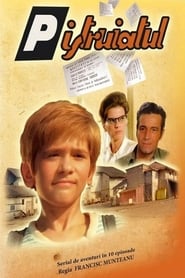
star 8.3During the times of the Second World War in Royal Romania, a street smart kid accidentally becomes part of an organization which will eventually decide the future of his country.Fresh Precure!
2009
Fresh Precure!
2009
star 7.5Love Momozono is a 14-year-old student at Yotsuba Junior Highschool that tends to care more for others than for herself. One day she visits a show of the famous dance unit "Trinity" and decides to become a dancer, too. On the same event, subordinates of the Labyrinth Kingdom show up who want to collect the unhappiness of the audience. Love gets the power to change into Cure Peach and fights them. Soon after, she is joined by her good friends Miki, who is Cure Berry, and Inori, who becomes Cure Pine.The Dumping Ground
2013
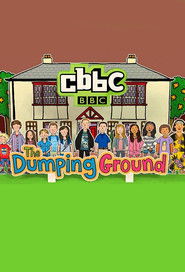
The Dumping Ground
2013
star 7.5Following the exploits and antics of children living in a care home. Growing up in a care home brings all sorts of tough challenges, but the kids know that if they stick together, they can get through anything life throws at them.Trapp Family Story
1991
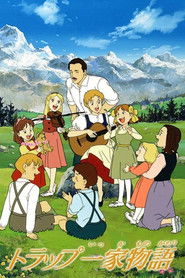
Trapp Family Story
1991
star 6.8Trapp Family Story is a Japanese anime series by Nippon Animation. It was based on the memoir The Story of the Trapp Family Singers by Maria von Trapp, which has also inspired the world famous musical The Sound of Music. While many things were changed from the original story, unlike other adaptations such as The Sound of Music, the children's names are all correct in this version.Silas
1981
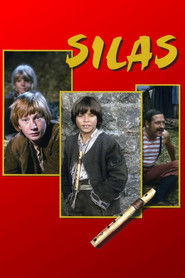
Silas
1981
star 7.9Silas was a 1981 ZDF Adventure TV mini-series based on the Danish children's book „Silas og den sorte hoppe“ by Cecil Bødker who kept on writing instalments until 2001. The series was Patrick Bach's debut and because the series did so well he also starred the very next year in another adventure series about a young orphan: Jack Holborn Silas was a German production and filmed solely in German. Still it received attention beyond German-speaking countries and consequently the successor Jack Holborn involved international producers and was filmed in English.Odd Family 11
2011
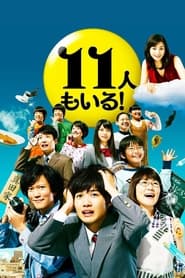
Odd Family 11
2011
star 6.9Minoru Sanada is a cameraman with little skills in his profession. His wife Megumi runs a cafe, but the cafe doesn't have any customers. Yet, the couple has 8 chidren.Hungarian Folktales
1977
Hungarian Folktales
1977
star 6.3Hungarian Folktales is a Hungarian animated series. Each episode is based on a Hungarian folk tale. The creators paid special attention to using Hungarian folk motives in the episodes.Familie Heinz Becker
1992
Familie Heinz Becker
1992
star 7.8Familie Heinz Becker is a German television series that aired from 1992 through 2004. The show revolves around the lives of Heinz Becker and his family, as well as those of neighbors and onlookers, although the focus of the series changed over the course of the series. In the first season, much of the humor was derived from Heinz's petty behavior; the character of his wife, Hilde, was not played for laughs. During seasons 2-4, Hilde's character became more naive but was devoted; much of the humor came from family dialogues. After Season 4, the focus shifted more to public life. Seasons 6 and 7 are not as well esteemed by critics as they repeat a number of older jokes and much of the comedy came from awkward situations, misspeaking, and other more mainstream comedic elements.Sinterklaasjournaal
2001
Szomszédok
1987
Szomszédok
1987
star 8.3Szomszédok was a Hungarian television series, occasionally called the Hungarian Dallas, that ran from 1987–1999 and produced 331 episodes, airing its grand finale on December 31, 1999. The series was a soap opera, dealing with the lives of ordinary people, living and working in or around an average lakótelep. Its characters were explored, over time, in equal depth: ranging from elderly pensioners, busy middle aged professionals, up-and-coming young people, and children growing into their teens. Many consider Szomszédok to be the definitive Hungarian television series, being a period piece of sorts that covers the last few years of the communist era, the rendszerváltozás, and nearly a decade of the new market economy Hungary thereafter.