Top Rated Kids TV Series on Pantaflix - Page 192
All Services
Free Services
 Netflix
 Amazon Prime Video
 Apple iTunes
 Apple TV Plus
 Disney Plus
 Google Play Movies
 Paramount Plus
 Hulu
Hulu
 HBO Max
 YouTube
 fuboTV
 Peacock
 Peacock Premium
 Amazon Video
 The Roku Channel
 AMC+
AMC on Demand
AMC+
AMC on Demand
 Kocowa
 Hoopla
 The CW
 Vudu
Vudu
 Starz
Starz
 Showtime
 PBS
PBS
 Pantaflix
 FXNow
FXNow
 Tubi TV
 Kanopy
 Comedy Central
 Crunchyroll
 Microsoft Store
 Redbox
 Sun Nxt
 ABC
ABC
 DIRECTV
 Crackle
 Fandor
 Plex
Plex
Netflix
Amazon Prime Video
Apple iTunes
Apple TV Plus
Disney Plus
Google Play Movies
Paramount Plus
Hulu
HBO Max
YouTube
fuboTV
Peacock
Peacock Premium
Amazon Video
The Roku Channel
AMC+
AMC on Demand
Kocowa
Hoopla
The CW
Vudu
Starz
Showtime
PBS
Pantaflix
FXNow
Tubi TV
Kanopy
Comedy Central
Crunchyroll
Microsoft Store
Redbox
Sun Nxt
ABC
DIRECTV
Crackle
Fandor
Plex

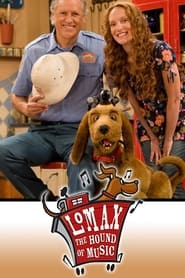
Lomax: The Hound of Music
2008
star 10Lomax, the Hound of Music is a PBS Kids TV series that brings together puppets, humans, live music and animation to promote musical education for children ages 3–7. Created by Christopher Cerf, Norman Stiles and Louise Gikow, and produced by Sirius Thinking, Ltd., Eyevox, Inc., and Connecticut Public Television, Lomax first aired in December 2008, and immediately gained a reputation as a show that follows in the tradition of acclaimed educational children's TV series like Sesame Street, and Between the Lions. Lomax, the Hound of Music follows the adventures of Lomax, a good-natured, melody-obsessed puppet pooch, his feline sidekick Delta, and their human companion, Amy, on a tune-filled train ride crisscrossing the musical landscape of America. With the help - and full participation - of real kids on the train, on location, and the viewers at home, Lomax and his friends track down the wonderful songs that form the heart of our nation's diverse musical heritage.Biz Kid$
2008
Biz Kid$
2008
star 10Biz Kid$ is an educational television show that teaches financial education and entrepreneurship to a preteen audience. It uses sketch comedy and young actors to explain basic economic concepts.The Hot Rod Dogs and Cool Car Cats
1996
star 4The Hot Rod Dogs and Cool Car Cats was a cartoon series which aired between 1995 and 1996 on ITV kids strand CITV, and was recently shown on Scottish children's programme wknd@stv. The series was about anthropomorphic automobiles that bore resemblances to cats and dogs. The main characters are freedom fighters trying to save their homeworld of Autopia from The Crusher. The show ran for two seasons, each consisting of 26 ten-minute episodes. Hot Rod is a bright red animal hybrid. He's part car, part canine, and he's just one of a collection of dog-cars and cat-cars found on the anthropomorphic automotive world of Autopia. And this place would be something of a car utopia, if it wasn't for the fact that Hot Rod has fallen foul of the Autopia police force, who come in the bulldogged shape of the Gridlockers. He's also caught the eye of the all-powerful, megalomaniac machine known as the Crusher, who has a variety of bounty hunters and mean machines at his disposal. And that's our cue for lots of freewheelin' action aLudwig
1977
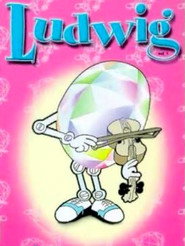
Ludwig
1977
star 6Egg-shaped "Ludwig" arrives to share his music and fun adventures with the friendly animals in the forest. Simple and beautiful cut-out animation from the late 1970s.Spring
2002
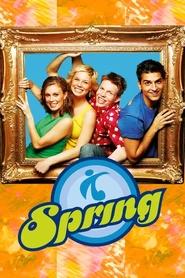
Spring
2002
star 7Spring was a Flemish television soap made by Studio 100 for children's channel Ketnet. Six seasons were taped between 2002 and 2007 during the summer period.Treasure
0000
Treasure
0000
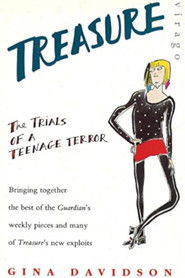
star 6Treasure is an animated television series set in England shown on ABC Kids. It is about the life of a fourteen-year-old girl and her friends. The series was based on the popular newspaper column of the same name by Michele Hanson which became a book, Treasure: The Trials of a Teenage Terror. Treasure chronicles the life of Michele Hanson's daughter, Amy Hanson. The characters were designed by illustrator Christine Roche.Pixcodelics
0000
Pixcodelics
0000
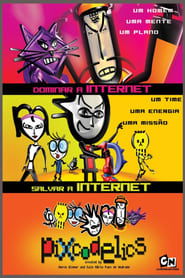
star 10Pix, Nerd, Mary and Hack are the sworn protectors of the Internet and the ASCII art-inspired world they live in. The four work together as they fight against the nefarious Dr. Ping and his feline assistant Katslock.Little Ghosts, There, Here, and Where
1991
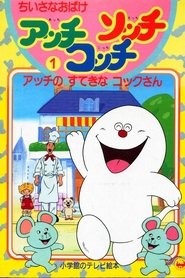
star 1Meet the cutest three ghosts There, Here and Where! There is a ghost chef. Here is a ghost barber. Where is a first grader ghost. Although they are ghosts, they are not the spooky kind that scares and does bad things to people. Friendly and playful, There, Here and Where are just like any human kids who are out there to have fun! Although their occasional ghost tricks like popping on and off and flying can surprise people, they are done for merriment, never in ill will. Though the ghosts do not meet each other, each one weaves his/her own story, developing friendship and leading happy life.Fiddley Foodle Bird
1992
Fiddley Foodle Bird
1992
star 8The Fiddley Foodle Bird was a British children's animated musical series written by Jonathan Hodge, and narrated by Bruce Forsyth. Thirteen episodes of the series were made in total, with one story continuing through the episodes. They were made in 1991 and broadcast in 1992 on BBC One at 4:15. It was produced by H.A.P.P.Y. Animation and Fiddley Foodle Bird Productions in association with HIT Entertainment and was broadcast in over 30 different countries worldwide. The show also continued airing on the BBC until 2001.Seaside Special
1975
Seaside Special
1975
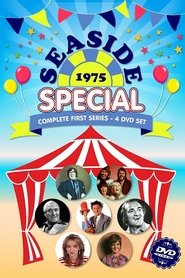
star 2A BBC light entertainment show broadcast from 1975 to 1979, filmed in a big top at various British seaside resorts. Originally the big top belonged to various circuses, but in later seasons, the BBC bought its own to be the venue. The programme was developed by producer Michael Hurll.Rod, Jane and Freddy
1981
Rod, Jane and Freddy
1981
star 7Join Rod, Jane and Freddy from 'Rainbow' as they set off on their own adventures. Sometimes they may be putting on a mini variety show at a theatre, other times they may leap through the pages of a story book trying to get Mary Mary home. It's always musical and mostly educational.Eliminator
2003
Eliminator
2003
star 10Eliminator is a game show in which a group of three children have to answer questions in order to get to the next level of the game, while being chased by a demon named the "Eliminator" who would try to reach them. The show produced two series between 2003 & 2004, and was presented by Michael Underwood. Since 2006, the show has been often repeated on the CITV channel.Sooty Heights
1999
Sooty Heights
1999
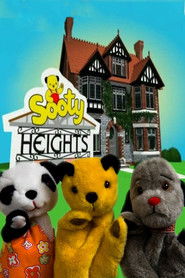
star 2Third incarnation of the Sooty show formula which follows almost directly on from the previous show 'Sooty and Co'. The puppets with Richard Cadell and Liana Bridges decide to leave the 'Sooty and Co.' shop and open a grand seaside hotel.The Minikins
1982
The Minikins
1982
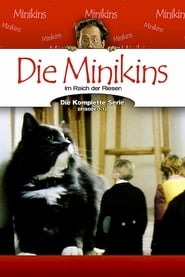
star 9The Minikins was a Canadian children's television show that ran from 1981-82.Standard Deviants TV
2000
Standard Deviants TV
2000
star 8Standard Deviants TV comprised material from the Standard Deviants home videos, edited into 25-minute episodes that aired on PBS. The series also included three episodes with new material on geography.What's Up Doc?
1992
What's Up Doc?
1992
star 6What's Up Doc? was a Saturday Morning children's variety series produced by Scottish Television and aired on ITV from 1992 to 1995 and hosted by Andy Crane, Yvette Fielding and Pat Sharp. The first two series were produced at Maidstone, before transfer to Glasgow.The Great American Dream Machine
1971
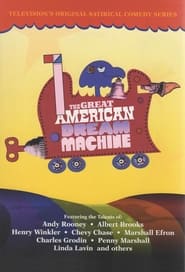
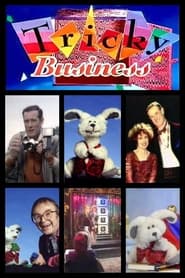
star 10The Great American Dream Machine was a weekly satirical variety television series, produced in New York City by WNET and broadcast on PBS from 1971 to 1973. The program was hosted by humorist and commentator Marshall Efron. The show centered around skits and satirical political commentary. The hour and a half long show usually contained at least seven different current event topics. In the second season, the show was trimmed down to an hour. Other notable cast members included Chevy Chase. Contributors included Albert Brooks and Andy Rooney. Some of the skits would later be revamped for the movie The Groove Tube. There were also occasional short films presented on the show, most of them "experimental" or documentaries about artistic endeavours. Some of these were subtitled.Tricky Business
1989
Tricky Business
1989
star 7Tricky Business was a British children's sitcom which ran for three series from 1989 to 1991. It featured Anthony Davis, Sally Ann Marsh and Una Stubbs in the first series, David Wood, Anthony Davis, Patsy Palmer, a puppet rabbit called Crabtree in the second and Bernie Clifton and Leslie Schofield in the third. Paul Zenon was the longest-surviving cast member, playing Tricky Micky in series two and himself in series three, as well as being the magic consultant for both those series.Rootie Kazootie
1950
Rootie Kazootie
1950
star 10Rootie Kazootie was the principal character on the 1950s children's television show The Rootie Kazootie Club. The show was the creation of Steve Carlin and featured human actors along with hand puppets.The Bellflower Bunnies
2001
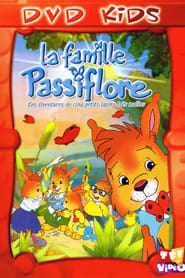
star 8The Bellflower Bunnies is an animated series based on the Beechwood Bunny Tales book series by Geneviève Huriet. The show debuted on the TF1 network with four episodes airing between December 24 and December 28, 2001. It is a co-production between France's TF1 and several Canadian companies. The show centers on the adventures and exploits of the Bellflower family, a clan of seven rabbits who live in Beechwood Grove. The two adults in the family, Papa Bramble and Aunt Zinnia, take care of their five children: Periwinkle, Poppy, Mistletoe, Dandelion and Violette.