Top Rated Reality TV Series on The Roku Channel - Page 108
All Services
Free Services
 Netflix
 Amazon Prime Video
 Apple iTunes
 Apple TV Plus
 Disney Plus
 Google Play Movies
 Paramount Plus
 Hulu
Hulu
 HBO Max
 YouTube
 fuboTV
 Peacock
 Peacock Premium
 Amazon Video
 The Roku Channel
 AMC+
AMC on Demand
AMC+
AMC on Demand
 Kocowa
 Hoopla
 The CW
 Vudu
Vudu
 Starz
Starz
 Showtime
 PBS
PBS
 Pantaflix
 FXNow
FXNow
 Tubi TV
 Kanopy
 Comedy Central
 Crunchyroll
 Microsoft Store
 Redbox
 Sun Nxt
 ABC
ABC
 DIRECTV
 Crackle
 Fandor
 Plex
Plex
Netflix
Amazon Prime Video
Apple iTunes
Apple TV Plus
Disney Plus
Google Play Movies
Paramount Plus
Hulu
HBO Max
YouTube
fuboTV
Peacock
Peacock Premium
Amazon Video
The Roku Channel
AMC+
AMC on Demand
Kocowa
Hoopla
The CW
Vudu
Starz
Showtime
PBS
Pantaflix
FXNow
Tubi TV
Kanopy
Comedy Central
Crunchyroll
Microsoft Store
Redbox
Sun Nxt
ABC
DIRECTV
Crackle
Fandor
Plex

Mantracker
2006
Mantracker
2006
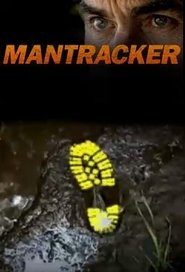
star 5.3Mantracker is a Canadian reality television series created by Ihor Macijiwsky and produced by Bonterra Productions. It premiered in Canada in April 2006 on the Outdoor Life Network. In the United States, the show currently airs on the Science Channel and in the UK on Extreme Sports Channel. The episodes of the first six seasons feature Terry Grant, an expert tracker called the "Mantracker", who pursues two individuals in the remote Canadian or American wilderness. The pursued, referred to as "Prey", must elude capture while attempting to reach a finish line within thirty-six hours. In season 7, Chad Savage Lenz replaces Terry Grant as the Mantracker.A Family at War
1970
A Family at War
1970
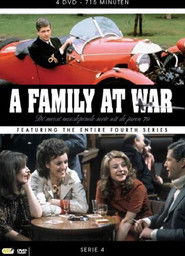
star 6.8A Family at War is a British drama series created by John Finch and produced by Granada Television for ITV. It broadcast from 14 April 1970 to 16 February 1972. 52 episodes were made, all but eight in colour. Episodes numbers 25 to 32 were recorded in black and white because of the ITV Colour Strike (November 1970 — February 1971). The Ashton family struggles to deal with the harsh realities of the Second World War as their sons are sent away to fight. Those who remain at home in Liverpool live in constant fear of a knock on the door with a telegram from the War Office or the Luftwaffe bombs overhead as they sleep at night.Dr. G: Medical Examiner
2004
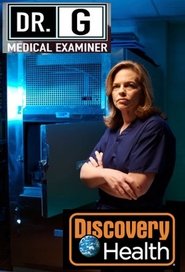
star 7.3Dr. G: Medical Examiner documents cases handled by deputy chief medical examiner Dr. Jan C. Garavaglia (aka Dr. G) of Florida's District Nine Medical Examiner's Office. Each episode features two or three cases Dr. G has handled in the Orlando area, and also in Bexar County, Texas and Jacksonville, Florida where she was previously employed. Some portions of the show have been dramatized and some names have been changed to protect the dignity of individuals and their families.Gigantor
1963
Gigantor
1963
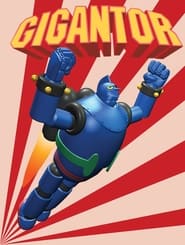
star 7.3Gigantor is an American adaptation of the anime version of Tetsujin 28-go, a manga by Mitsuteru Yokoyama released in 1956. Jimmy Sparks controls a gigantic, powerful robot and uses it to fight crime. It debuted on U.S. television in 1964. As with Speed Racer, the characters' original names were altered and the original series' violence was toned down for American viewers.Man with a Camera
1958
Man with a Camera
1958
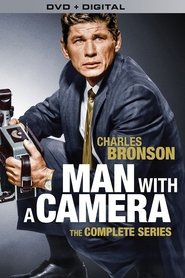
star 5.5Man with a Camera is an American 1950s television crime drama starring Charles Bronson. Former combat cameraman Mike Kovac (Bronson) is now a freelance photographer in New York City, specializing in difficult and dangerous assignments where he can get the kinds of pictures that other photographers can't, or won't take. He sometimes gets help, often reluctantly, from his contact in the police department, Lt. Donovan, and advice from his immigrant father Anton. Throughout the 1950s, Bronson spent most of his early acting career performing in TV shows as well as small parts in films, until he landed the lead in this ABC series. This is the only series in which he played the lead role. He would go on to have supporting roles either as a guest star or a recurring character in dozens of TV shows after this series was cancelled.MotorWeek
1981
MotorWeek
1981
star 5.3This award-winning weekly automotive magazine provides unbiased, consumer-oriented car news with feature stories on related topics.Zeroman
2004
Zeroman
2004
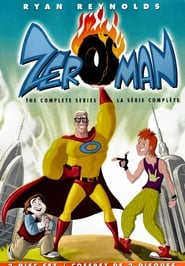
star 5.7Zeroman is a Canadian animated television series that aired on the Canadian cartoon network Teletoon and on Télétoon. It tells the adventures of incompetent sixty-six-year-old postman Les Mutton who also happens to be the superhero known as Zeroman. As Zeroman, Les fights the crime that plagues Fair City in a similar fashion to Nielsen's Lieutenant Frank Drebin character in the Naked Gun series. Although a second season was once announced as in production, the death of Leslie Nielsen guaranteed that another season will not happen.The Lost Saucer
1975
The Lost Saucer
1975
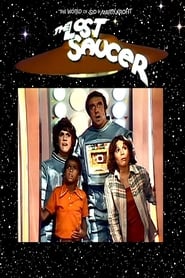
star 6The Lost Saucer is an ABC network television series produced by Sid and Marty Krofft. It first aired September 6, 1975.London's Burning
1986
London's Burning
1986
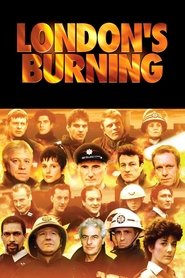
star 7.7London's Burning is a British television drama programme produced by London Weekend Television for the ITV network that focused on the lives of members of the London Fire Brigade, principally those of the Blue Watch at a fictional fire station called Blackwall.Hillside
1991
Hillside
1991
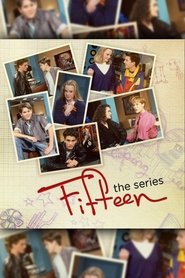
star 6.8Hillside (known as Fifteen in the United States) is a Canadian-American teen drama that aired on YTV in Canada from 1991 to 1993. Created and produced by John T. Binkley, the series was Nickelodeon's only teenage soap opera. The show was shot on videotape, similar to most daytime dramas. The series was first conceived as Fifteen in an improvised form for The Disney Channel, where a 13-episode pilot series was produced and tested in the U.S. After Disney decided not to proceed with the project, Nickelodeon and Canadian partners joined Binkley in producing the series which was known in its first and second seasons as Hillside in Canada, and throughout the 65-episode run as Fifteen in the U.S. The show was subsequently syndicated around the world, with runs in Germany and Israel, among others. The series features a large ensemble cast which underwent several changes over the show's four-season run. Notable cast members include Laura Harris, Enuka Okuma, and Ryan Reynolds.Great British Menu
2006
Great British Menu
2006
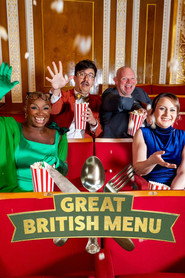
star 6.5Britain's top chefs compete for the chance to cook a four-course banquet for a high-profile figure.The Wubbulous World of Dr. Seuss
1996
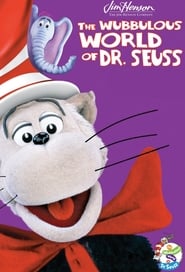
star 7.8The Wubbulous World of Dr. Seuss is an American live-action/puppet television series based on characters created by Dr. Seuss, produced by Jim Henson Productions. It aired for two seasons on the Nick Jr. Block on Nickelodeon. For the first few episodes, the show aired during Sunday night prime time, immediately before Nick News. It also premiered on PBS from January 12, 1998 until May 25, 2002. It is notable for its use of live puppets with digitally animated backgrounds, and in its first season, for refashioning characters and themes from the original Dr. Seuss books into new stories that often retained much of the flavor of Dr. Seuss's own works. It derives its name from wubble, a type of unicycle mentioned in the Dr. Seuss book I Had Trouble in Getting to Solla Sollew.Edgemont
2001
Edgemont
2001
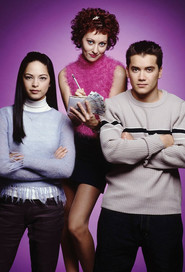
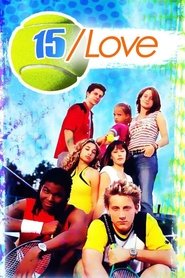
star 6.3The lives of students at McKinley High School in Edgemont, a fictitious suburb of Vancouver, British Columbia.15/Love
2004
15/Love
2004
star 6.715/Love was a Canadian-produced television series that revolves around the lives of aspiring young tennis players at the Cascadia Tennis Academy. The show was created by Karen Troubetzkoy and Derek Schreyer, and was filmed in the city of Montreal during the summer. 15/Love first aired on the television channel YTV on September 6, 2004.Emily's Reasons Why Not
2006
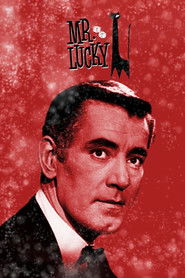
star 5.8Emily Sanders is a successful publisher of self-help books who has terrific instincts in every arena of her life but one—relationships. Determined now to make better choices, Emily employs a "Reasons Why Not" list-making system designed to serve as an internal warning on when it's time to cut bait and move on. Navigating a thriving career, a string of would-be boyfriends and an office rival means that Emily's plate is always pretty full.Mr. Lucky
1959
Mr. Lucky
1959
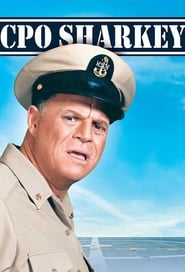
star 6.7Mr. Lucky is a CBS adventure/drama television series that aired from October 24, 1959, to June 18, 1960, with repeats until September 3. Blake Edwards developed the program as a retooling of his Willie Dante character from Four Star Playhouse, where the role was played by studio boss Dick Powell. In the 1960–1961 season, Howard Duff assumed the role of Willie Dante in the NBC adventure/drama series Dante. Mr. Edwards directed and co-wrote the first episode of Mr. Lucky, and the credits of the first eighteen episodes included "Entire production supervised by Blake Edwards." Jack Arnold produced the show and directed fifteen of the thirty-four episodes. Henry Mancini's smooth theme music for the show reached Number 21 in the US singles charts. He released two successful LP's based on the show, Mr. Lucky and Mr. Lucky Goes Latin.C.P.O. Sharkey
1976
C.P.O. Sharkey
1976
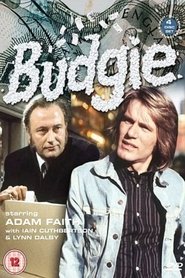
star 6.8C.P.O. Sharkey is an American sitcom which aired from 1976 to 1978 on NBC.Budgie
1971
Budgie
1971
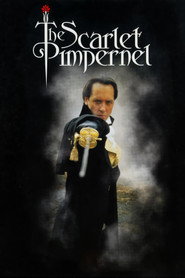
star 7.2Budgie is a popular British television series starring former popstar Adam Faith which was produced by ITV company London Weekend Television and broadcast on the ITV network between 1971 and 1972. The series was created by Keith Waterhouse and Willis Hall . The show was produced by Verity Lambert, Rex Firkin was the Executive producer.The Scarlet Pimpernel
1999
star 7.7A series of television drama programmes loosely based on Baroness Emmuska Orczy's series of novels, set in 1793 during the French Revolution. It stars Richard E. Grant as the hero, Sir Percy Blakeney, and his eponymous alter ego. The first series also starred Elizabeth McGovern as his wife Marguerite and Martin Shaw as the Pimpernel's archrival, Paul Chauvelin. Robespierre was played by Ronan Vibert. It was filmed in the Czech Republic and scored by a Czech composer, Michal Pavlíček.Texaco Star Theater
1948
Texaco Star Theater
1948
star 7.5Texaco Star Theater is an American comedy-variety show, broadcast on radio from 1938 to 1949 and telecast from 1948 to 1956. It was one of the first successful examples of American television broadcasting, remembered as the show that gave Milton Berle the nickname "Mr. Television". The classic 1940–44 version of the program, hosted by radio's Fred Allen, was followed by a radio series on ABC in the spring of 1948. When Texaco first took it to television on NBC on June 8, 1948, the show had a huge cultural impact.