Top Rated War Politics TV Series on The Roku Channel - Page 3
All Services
Free Services
 Netflix
 Amazon Prime Video
 Apple iTunes
 Apple TV Plus
 Disney Plus
 Google Play Movies
 Paramount Plus
 Hulu
Hulu
 HBO Max
 YouTube
 fuboTV
 Peacock
 Peacock Premium
 Amazon Video
 The Roku Channel
 AMC+
AMC on Demand
AMC+
AMC on Demand
 Kocowa
 Hoopla
 The CW
 Vudu
Vudu
 Starz
Starz
 Showtime
 PBS
PBS
 Pantaflix
 FXNow
FXNow
 Tubi TV
 Kanopy
 Comedy Central
 Crunchyroll
 Microsoft Store
 Redbox
 Sun Nxt
 ABC
ABC
 DIRECTV
 Crackle
 Fandor
 Plex
Plex
Netflix
Amazon Prime Video
Apple iTunes
Apple TV Plus
Disney Plus
Google Play Movies
Paramount Plus
Hulu
HBO Max
YouTube
fuboTV
Peacock
Peacock Premium
Amazon Video
The Roku Channel
AMC+
AMC on Demand
Kocowa
Hoopla
The CW
Vudu
Starz
Showtime
PBS
Pantaflix
FXNow
Tubi TV
Kanopy
Comedy Central
Crunchyroll
Microsoft Store
Redbox
Sun Nxt
ABC
DIRECTV
Crackle
Fandor
Plex

The Occult History of the Third Reich
1990
star 6.1Documents both the influences of alternative belief systems on the Nazi ideology and Hitler's personal philosophy, and the history and development of the ideas and symbols that would be used along with eugenicist racial politics to perpetrate the murder and oppression of millions during World War II.Woke
2017
Woke
2017
star 5.4Describes everyday life in a Lyon LGBT centre, examining the initial political, emotional and sexual life of a man who recently came out as gay.Victory at Sea
1952
Victory at Sea
1952
star 6.8Victory at Sea is a documentary television series about naval warfare during World War II that was originally broadcast by NBC in the USA in 1952–1953. It was condensed into a film in 1954. Excerpts from the music soundtrack, by Richard Rodgers and Robert Russell Bennett, were re-recorded and sold as record albums. The original TV broadcasts comprised 26 half-hour segments—Sunday afternoons at 3pm in most markets—starting October 26, 1952 and ending May 3, 1953. The series, which won an Emmy award in 1954 as "best public affairs program", played an important part in establishing historic "compilation" documentaries as a viable television genre. Over 13,000 hours of footage gathered from US, British, German and Japanese navies during World War II were perused in the making of these compelling episodes.Mussolini and I
1985
Mussolini and I
1985
star 6World War II is about to end. Benito Mussolini, il Duce, supreme dictator of Fascist Italy, sees his totalitarian dream crumbling and his power slipping away as the terrible day of his ignominious death at the hands of those he so ruthlessly oppressed for more than two decades draws inexorably near.Soviet Storm: WW2 in the East
2010
star 8.2The epic television history of the Second World War’s Eastern Front giving an unprecedented Russian perspective on the war’s most decisive and bloody theater.Jackie, Ethel, Joan: Women of Camelot
2001
star 4.8The stories of three women who married into America's royal family, and lived in the glory and the glare of the political spotlight.FDR
2023
FDR
2023
star 6.7The new documentary event will provide an epic portrait of President Franklin Delano Roosevelt, unpacking how his own fight with polio prepared him for the challenges of leading the United States through the Great Depression and World War II. Based upon Goodwin's New York Times bestseller, Leadership: In Turbulent Times, viewers will experience a most harrowing, yet heroic time in history when through grit, commitment and shared sacrifice FDR was the right man at the right time to lead the U.S. and the allied nations, projecting confidence in himself and America.Living with Hitler
2021
Living with Hitler
2021
star 8.7The Nazi era from 1993 to 1945 is illustrated through archived material, with insights and anecdotes provided by world-leading experts and commentators.Dates That Made History
2018
star 8.6Historian Patrick Boucheron revisits the most important dates in history through the prisms of memory and collective imagination.History Uncovered
2019
History Uncovered
2019
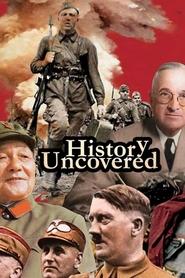
star 7.1Myths die hard, and the history of the 20th century is no exception to this rule. Even today, we hold popular beliefs that we take for Evangelical truths. Thus, we believe that Hiroshima caused Japan to surrender, that the Marshall Plan saved Europe, that Adolf Hitler was a military genius, or that Mao Zedong was a necessary evil for China’s modernization. Of course, these judgements contain some truth; but, too broad-stroked to be accurate, they contradict the historical reality by denying its complexity. What if the truth was slightly different? Through an exploration of great national or international myths, this full archive documentary collection revisits the key moments of the 20th century with a new perspective in order to provide a new, smarter and more subtle interpretation, bringing elements to light that have been forgotten or sometimes overshadowed.The Romanovs
2013
The Romanovs
2013
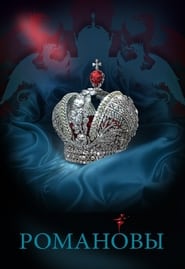
star 6.7An elegantly produced documentary divided into eight parts and running nearly seven hours in length, The Romanovs beautifully encapsulates the epic story of the Russian Dynasty over the course of over three hundred years.Iron Curtain: Life Under Soviet Occupation
2024
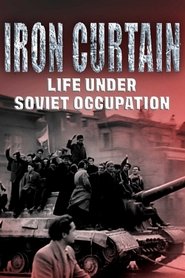
star 7.1How did the Soviet Union impose its communist ideology on the countries of Central and Eastern Europe after World War II? The story of how, from 1945 until the construction of the Berlin Wall in 1961, these countries were gradually subjected to the totalitarian Soviet yoke.A zori zdes tikhie
2005
Sea Power
2021
Sea Power
2021
star 5.8This documentary series delves into the battleships, submarines and aircraft carriers that have changed the history of modern warfare.The Last Journey Of The Vikings
2020
star 7.8Nearly 1,000 years ago, the Vikings left Scandinavia and settled across Europe - giving their name to Normandy along the way - before their Norman descendants seized the English throne at the Battle of Hastings in 1066. But what do we really know about them? By combining expert analysis with compelling drama, 'The Last Journey of the Vikings' (Swedish title: 'Vikingarnas sista resa') tells a new and often surprising story about this complex people.World War Two
2018
World War Two
2018
star 8Follow the deadliest conflict in human history in real time, week by week, blow by blow.The Optimists
2017
The Optimists
2017
star 5.2The early 1960s. The Soviet Union is experiencing a bright Khrushchev-era, full of hope. A group of young diplomats at the Ministry of Foreign Affairs come face to face with world-changing global events. Before long, these wide-eyed idealists find themselves deep in the breathtaking world of spy games, mortal dangers, and brilliant political maneuvering.Wish Me Luck
1988
Wish Me Luck
1988
star 6.5A secret organisation called The Outfit recruits and trains civilians, sending them undercover to aid in the war effort, or placing them in administrative tasks to aid the group. Each person arrives at The Outfit by a different route: Mathilde ('Matty') escaped to London from France and wants desperately to contribute to the war effort; Liz, whose husband is serving overseas and whose brother has just died in the war, stumbles into the group almost by accident. Former actor Colin Beale also trains for undercover work. Vivien's husband was executed when his work with The Outfit was uncovered. But they all come together against the common enemy.A Family at War
1970
A Family at War
1970
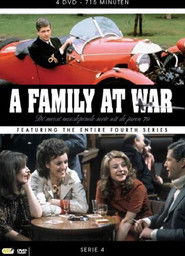
star 6.8A Family at War is a British drama series created by John Finch and produced by Granada Television for ITV. It broadcast from 14 April 1970 to 16 February 1972. 52 episodes were made, all but eight in colour. Episodes numbers 25 to 32 were recorded in black and white because of the ITV Colour Strike (November 1970 — February 1971). The Ashton family struggles to deal with the harsh realities of the Second World War as their sons are sent away to fight. Those who remain at home in Liverpool live in constant fear of a knock on the door with a telegram from the War Office or the Luftwaffe bombs overhead as they sleep at night.Life of a Mistress
2018
Life of a Mistress
2018
star 4.2Polina Lebedeva, daughter of the childless prince Alexei Petrovich Golovin, is the most enviable bride of the Yamburg district. During the ball in honor of her birthday, Alexei Petrovich dies of a heart attack. This grief is only the beginning of hard trials, destined for the girl ..